




KATHMANDU: Nepal’s communist movement is confronting what many party insiders and political analysts describe as its weakest phase in decades, with declining electoral strength, internal divisions, and growing public disillusionment fueling fresh calls for left unity.
Although more than 20 communist parties currently exist in Nepal, only two have representation in the House of Representatives. The CPN-UML holds 25 seats, while the newly formed Nepali Communist Party—created through the merger of the CPN (Maoist Centre) and CPN (Unified Socialist)—holds 17 seats. Most other communist parties suffered heavy defeats in the latest elections, raising doubts about their political future if current trends continue.
The weakening of the communist bloc has prompted renewed discussions on reunification following the political changes brought by the Gen-Z movement and the latest parliamentary elections.
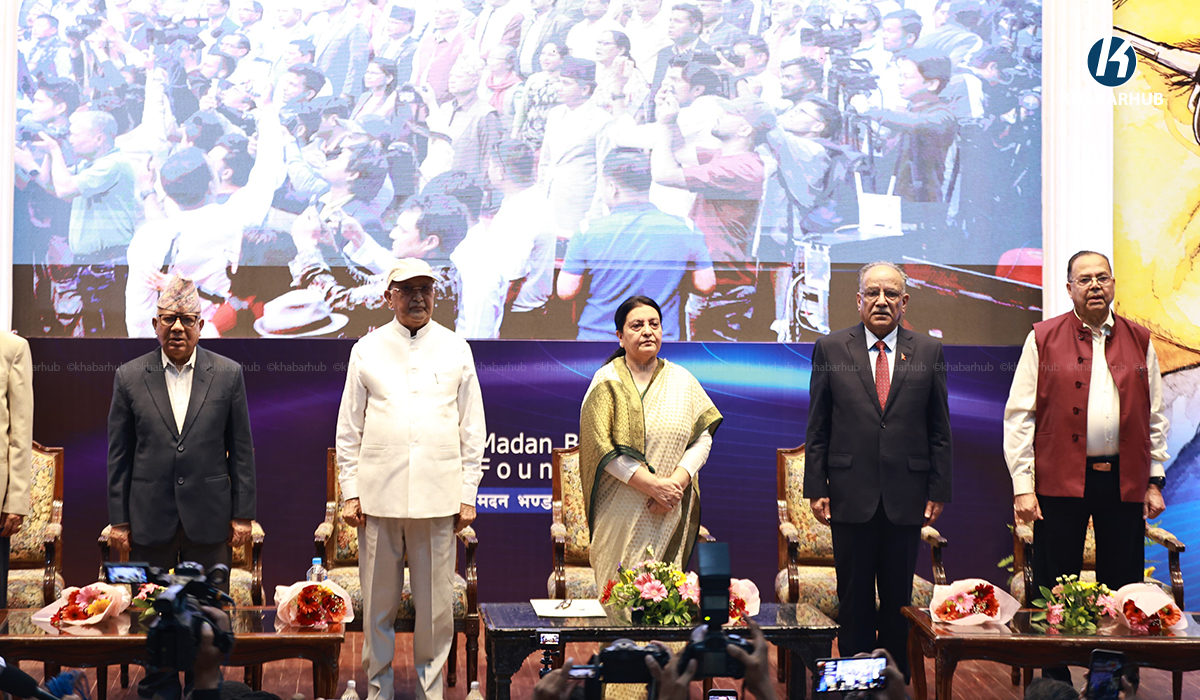
Former President Bidya Devi Bhandari has also been viewed as increasingly active in efforts to revive and unify Nepal’s communist movement. Her participation as chief guest at an event marking the 75th birth anniversary of late communist leader Madan Bhandari brought four former communist prime ministers onto the same stage, signaling a possible push toward greater cooperation.
However, analysts argue that public confidence cannot be restored through symbolic gestures alone. They say communist leaders, who once claimed to represent the working class, have become increasingly associated with power struggles and personal interests, leading to growing public frustration. Critics note that Bhandari herself is not entirely immune from those criticisms.
Younger leaders within various communist parties have also argued that genuine unity will only be meaningful if the founding generation steps aside and transfers leadership to a new generation.
Calls for unity, but no indication of leadership transition
Speaking at Sunday’s event, CPN-UML Chair KP Sharma Oli, Nepali Communist Party Coordinator Pushpa Kamal Dahal ‘Prachanda’, Co-coordinator Madhav Kumar Nepal, and senior leader Jhalanath Khanal all stressed the need for long-term communist unity.
Despite their appeals for cooperation, none of the senior leaders suggested relinquishing their own leadership positions or paving the way for younger leaders.
Khanal urged communist forces to seize the moment and build lasting unity, arguing that if such unity had been achieved before the elections, communist parties could have secured more than 100 seats in Parliament.
Madhav Nepal stressed that any future unity must be accompanied by self-criticism and ideological clarity.
“We failed to understand society and must reflect on the distortions we ourselves created,” he said, adding that emotional appeals alone would not sustain party unity without genuine commitment and principled politics.
Observers interpreted many of his remarks as indirect criticism of Oli, particularly his emphasis that unity without shared ideology and principles would ultimately fail.
Prachanda also acknowledged the bitter history of past splits, saying communist forces should first strengthen cooperation in Parliament and on public issues before pursuing formal unification.
“We need to change ourselves through self-review. The circumstances have changed,” Prachanda said, adding that while communist unity was necessary, the lessons of the failed 2018 merger had not been forgotten.
Oli, meanwhile, lamented what he described as a tendency to ignore positive achievements while focusing solely on criticism. He also called for greater unity among democratic forces, although his remarks reportedly drew loud reactions from sections of the audience.
Former President Bhandari said communist parties must adapt their policies, organizational structures, and working styles to changing public expectations and national priorities.
Internal criticism increasingly focused on senior leadership
Many within Nepal’s left movement argue that the current crisis is largely the result of decisions made by the same senior leaders now advocating unity.
Following the party’s recent electoral review, several provincial leaders within the UML reportedly argued that leadership renewal was essential if the party hopes to recover public trust. However, senior leaders have shown little willingness to step aside.
The newly formed Nepali Communist Party is also facing internal disagreements between factions aligned with Madhav Nepal and Jhalanath Khanal, creating uncertainty among party workers.
While UML leader Mahesh Basnet has expressed confidence that communist unity remains achievable, senior UML leader Gokul Baskota has warned that premature reunification could repeat the mistakes of the 2018 merger.
Several left-leaning politicians and commentators have placed much of the responsibility for the movement’s decline on Oli’s leadership. Some also argue that cooperation with Oli could further damage the credibility of other communist parties in the eyes of voters.
Political analyst Indra Adhikari has described Oli as one of Nepal’s most controversial political figures and argued that public dissatisfaction during recent political protests was closely linked to his leadership. Prachanda himself has acknowledged that the current political situation partly reflects mistakes made by previous governments.
Unity alone cannot restore public trust
Political analyst Shyam Shrestha, who has written extensively on Nepal’s communist movement, believes that simple organizational unity will not be enough to revive the left.
According to Shrestha, communist leaders have only begun discussing unity after becoming politically weak and realizing that continued fragmentation could threaten their future.
He argues that party leaders have yet to conduct a serious self-assessment of the mistakes that led to the movement’s decline.
“The public will not accept unity unless communist parties honestly identify where they went wrong and correct those mistakes,” he said.
Shrestha believes the movement’s biggest mistake was losing its connection with the working class that historically formed its political base. He argues that landless people, informal workers, and other economically vulnerable groups increasingly lack political representation despite making up a large share of Nepal’s population.
According to him, communist parties must reform their political vision, leadership culture, and policy priorities before they can expect voters to trust them again.
He also questioned whether Bidya Devi Bhandari—or any other senior figure—could successfully reunify Nepal’s fragmented communist movement, noting that the country now has more than 20 communist parties with differing interests and leadership ambitions.
Without genuine self-criticism, leadership renewal, and a renewed commitment to representing ordinary citizens, Shrestha argued, even a formal reunification of communist parties would be unlikely to restore their former political strength.




Comment