




KATHMANDU: Shortly before resigning as Home Minister, Sudan Gurung posted a cynical jab on social media: “It’s not your fault if you are born poor, but it is your fault if you die poor!”
The Instagram story, intended to deflect criticism regarding his unexplained accumulation of vast land and gold, didn’t last long. Under public pressure, Gurung deleted the post. Shortly after, following revelations of unethical share dealings with controversial businessmen, he himself was removed from the cabinet.
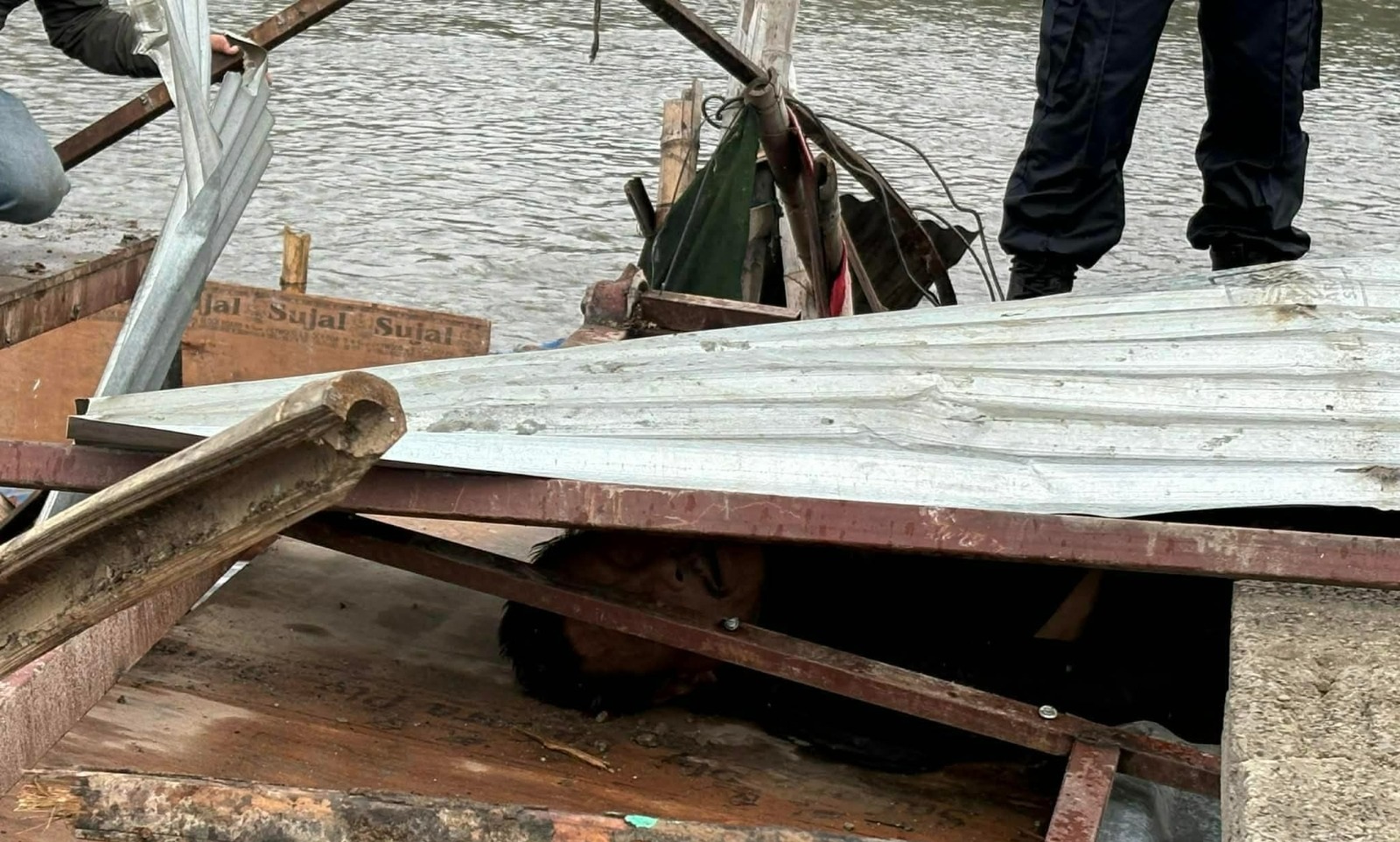
But while Gurung’s exit was political, for 61-year-old Indra Bahadur Rai, the fault of being poor became a death sentence. On International Labor Day, Rai, a laborer at the Balkhu fruit market, ended his life by jumping into the Balkhu River. In the harsh lexicon of the former Home Minister, Rai committed the ultimate mistake: he died poor.
The human cost of ‘urban beauty’
Originally from Khotang, Rai lived in the Balkhu slum settlement. His world collapsed when a massive bulldozer, dispatched under the administration of Prime Minister Balendra Shah, crushed the only roof he had.
According to his wife, Sarita, Rai left home in a state of deep despair as the machines began their work on Friday morning. “He couldn’t bear to watch the house fall,” she sobbed. Hours later, his lifeless body was recovered from the riverbank.
Rai is not the first victim of such beautification drives. Previously, Rabin Tamang took his own life after hearing reports that the Thapathali settlement would be cleared.
The new Nepal
In Republican Nepal, the trend of using heavy machinery to flatten the shelters of the poor, pioneered by Dr. Baburam Bhattarai, has been perfected by Balendra Shah. During his tenure as Kathmandu Mayor, Shah attempted to clear Thapathali but was met with fierce resistance.
However, since assuming the Prime Ministership and taking over the Home Ministry portfolio vacated by Gurung, the gloves have come off. Backed by heavy security, Thapathali was turned into a wasteland within hours.
The current crackdown is unprecedented. In a chilling turn of events, the Nepali Army, which remained a bystander even when Singha Durbar faced arson during the Gen-Z protests, is now actively assisting the government in surveying and clearing settlements. As armed forces surround the poor, one is reminded of JB Tuhure’s haunting lyrics: “This country is a desert for millions, a heaven for only a handful.”
The government has moved the displaced families into temporary camps where conditions are dire. In a blatant violation of press freedom, journalists are barred from entering these camps. Reports have surfaced of police seizing mobile phones and deleting footage to ensure the reality of the “displaced” remains hidden.
The irony is not lost on the public. Prime Minister Balen, who took his oath on the auspicious day of Ram Navami seeking blessings from priests and monks, was expected to usher in a “Ram Rajya” (an ideal state). The man who once sang rap lyrics like “There is no one to speak for the poor…” has now become the primary architect of their misery.
Similarly, before the March 5 elections, RSP Chairman Rabi Lamichhane vowed to stand in front of the bulldozers to protect the landless. Today, entangled in controversies ranging from dual citizenship to cooperative scams, those promises appear to be nothing more than electoral bait.
Accountability or apathy?
No one argues that public land should be permanently encroached upon. The government has a duty to manage public spaces. However, those living there are citizens, not criminals.
The question remains: Is the government responsible for Indra Bahadur Rai’s death?
When 76 citizens died during the Gen-Z protests, the blame was placed squarely on then-PM KP Sharma Oli and Home Minister Ramesh Lekhak. By that same logic, does the accountability for Rai’s “suicide under duress” not fall upon Balendra Shah, who currently holds both the PM and Home Minister chairs?
Nepal’s history is littered with the bodies of the impoverished who felt unheard, from Prem Acharya’s public self-immolation to the quiet tragedies in the riverbanks of Balkhu.
Must urban development always come at the cost of human life? Why was there no plan for resettlement? Why was a one-day notice backed by gunpoint preferred over dialogue?
As the bulldozers move to the next settlement, the government owes the nation an answer. Solving the problem of the landless requires a heart, not just a machine.



Comment