




KATHMANDU: The ruling Rastriya Swatantra Party (RSP) has issued a condolence statement three days after a deadly jeep accident in Rolpa that claimed 20 lives, drawing criticism over the delayed response from the party leadership.
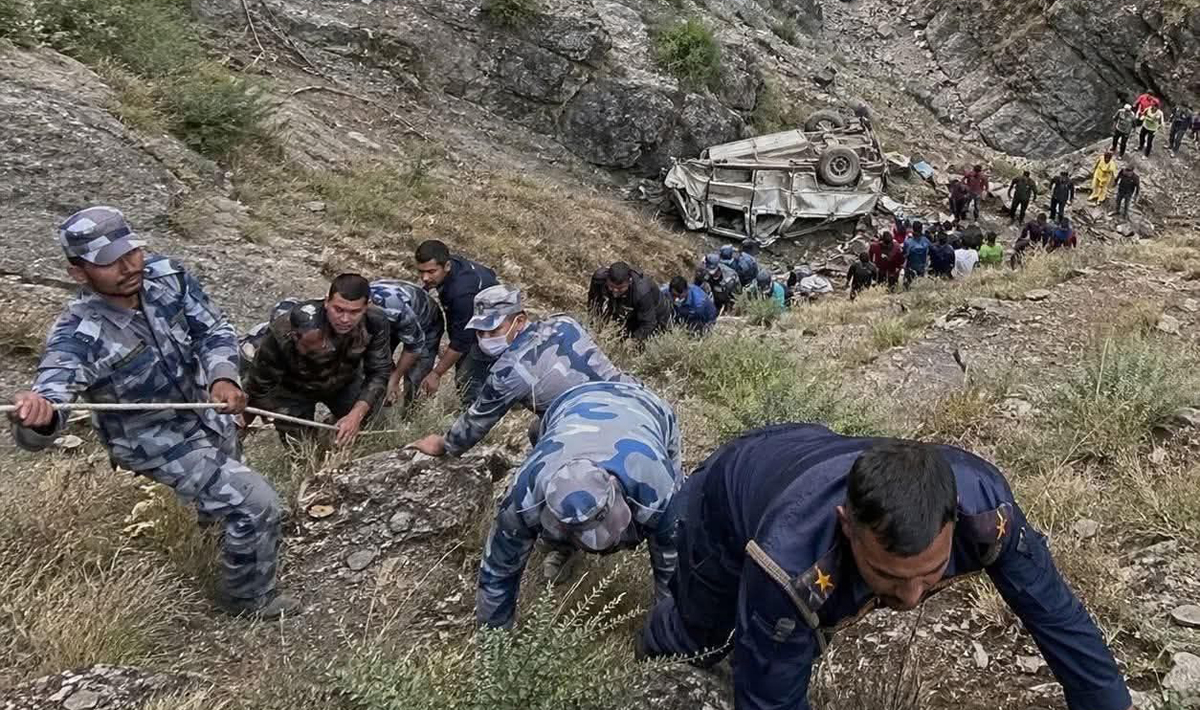
The accident occurred on Thursday in a steep section of Thawang Rural Municipality–1 in Rolpa district, when a jeep (Lu 1 Ja 4167) traveling from Rukum East towards Jaljala plunged around 700–800 meters down a cliff, causing heavy casualties.
RSP spokesperson Manish Jha released the party’s condolence statement on Saturday, expressing grief over the tragic loss of lives and stressing the need for improvements in road safety.
However, the delay has sparked questions, particularly as condolences had already been pouring in from various quarters. Critics have pointed out the silence of top leaders in the ruling establishment.
Prime Minister Balendra Shah and RSP chair Rabi Lamichhane have come under scrutiny for not issuing any immediate statement following the incident. Government spokesperson Sasmita Pokharel has also remained silent, further fueling public dissatisfaction.
In contrast, CPN-UML Chairman KP Sharma Oli, who is currently recuperating after surgery, had expressed grief soon after the incident and issued a brief condolence message. Similarly, CPN Chairman Pushpa Kamal Dahal ‘Prachanda’ also extended condolences, noting that the victims included people from his electoral constituency.
In its statement, the RSP emphasized the urgency of policy reforms, stricter implementation, and infrastructure development to prevent such accidents in the future.
Rescue efforts following the crash were challenging due to the remote terrain. Security personnel and locals had to work extensively to retrieve bodies from nearly 500 meters below the crash site.
Local representatives have also alleged that despite requests, the federal government and the Nepal Army did not provide helicopter support for rescue operations. They further claimed that attempts to contact the Prime Minister’s secretariat went unanswered.
The incident has triggered broader concerns over the state’s responsiveness and accessibility in remote regions, with growing criticism over perceived insensitivity towards citizens living in such areas.



Comment