




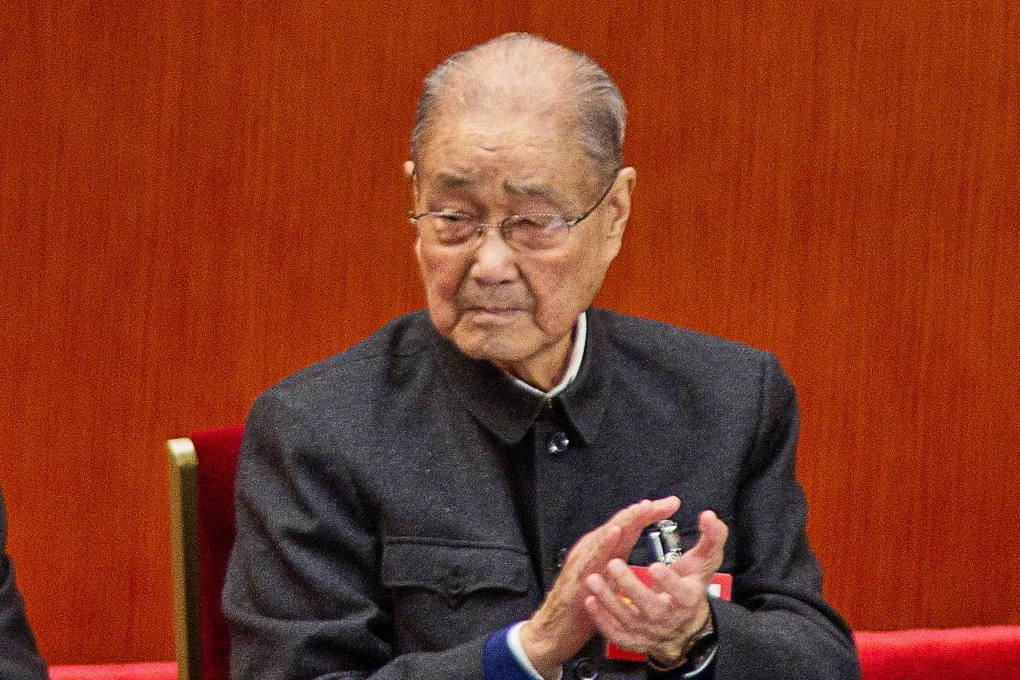
The passing of Song Ping, a 109-year-old veteran of the Chinese Communist Party (CCP), on March 4 the very day the Two Sessions opened has stirred intense speculation both inside and outside China. The timing of the official announcement was not seen as coincidental but rather as a calculated move by Beijing to control the narrative at a politically sensitive moment.
Song Ping was one of the last living links to the CCP’s earlier eras, a figure whose longevity and seniority carried symbolic weight. His death, however, was not simply a matter of biology. In China’s political system, the announcement of a leader’s passing is often carefully choreographed. Families rarely have full control over when life support is withdrawn or when the news is made public. This practice has long been an open secret, but in Song’s case, the timing was strikingly deliberate.
In early January, a letter allegedly written by Song Ping circulated online, criticizing Xi Jinping’s administration for imposing surveillance on retired cadres and restricting their freedom of movement. Though the letter’s authenticity was never confirmed, its contents resonated widely, fuelling speculation about dissent within the Party’s elder ranks. By announcing Song’s death on the opening day of the Two Sessions, authorities effectively shifted attention away from the controversy. Mourning ceremonies replaced political debate, reinforcing the image of unity at a time when the leadership faces mounting challenges.
Those challenges are considerable. China’s local governments are grappling with severe fiscal shortages, public resentment is rising, and the leadership is under immense pressure to maintain stability. Internationally, Beijing has been shaken by the decapitation strike in Iranone of Xi’s key Middle East allies. Domestically, the removal of top military generals in January has intensified factional infighting, leaving the armed forces in disarray. Against this backdrop, the CCP could not afford to let Song Ping’s death become a rallying point for veiled criticism of Xi’s political line.
Independent commentators have noted that Song Ping retained influence long after his retirement. During the Jiang Zemin and Hu Jintao eras, he was active in political circles, often traveling and meeting people. Even in Xi’s era, he appeared spirited in public despite his advanced age. While his direct influence over Xi was negligible, his symbolic presence mattered. With the 21st Party Congress approaching, the leadership likely viewed his continued survival as a potential risk an elderly figure who could be exploited by those with ulterior motives.
The CCP has always excelled at shaping history rather than letting it unfold naturally. Announcing Song’s death at this precise moment was a political calculation designed to eliminate uncertainty. It silenced speculation about his rumoured criticisms, redirected focus to solemn commemoration, and reinforced the narrative of Party unity during the Two Sessions. In effect, it was the removal of a symbolic “time bomb” just as succession debates loom on the horizon.
Critics argue that this episode reflects the broader nature of governance under Xi Jinping. The leadership prioritizes control over transparency, narrative over reality. The heavy-handed management of Song Ping’s death announcement underscores how even the passing of a veteran is politicized to serve the Party’s immediate needs. It also highlights the extent to which dissent real or rumoured is suppressed, not through open rebuttal but through carefully orchestrated silence.
The CCP today faces a paradox. On one hand, it projects strength and unity, showcasing its ability to manage crises and maintain order. On the other, it is beset by internal turbulence, fiscal strain, and international setbacks. The deliberate timing of Song Ping’s death announcement reveals a leadership deeply concerned about optics, wary of any event that could be interpreted as criticism.
Song Ping’s passing closes a chapter in the Party’s history. He was the last heavyweight symbol of the Wen-Hu era, a reminder of a time when collective leadership and elder influence carried weight. His death, announced at a moment of maximum political sensitivity, marks not just the end of an individual life but the erasure of a symbolic counterbalance to Xi’s dominance.
In Beijing, even death is political. The CCP’s handling of Song Ping’s passing demonstrates its relentless focus on narrative control, its determination to eliminate risks, and its willingness to choreograph history to its advantage. As China navigates crises at home and abroad, the silencing of one of its oldest veterans serves as a stark reminder of how power operates in the Xi eracalculated, controlled, and unyielding.




Comment