




At the Nepal Investment Summit 2024, Prime Minister Pushpa Kamal Dahal underscored the promise of robust intellectual property protection as a central incentive for foreign investors.
On paper, this commitment should build confidence among international players; in practice, however, deep-rooted bureaucratic hurdles continue to tarnish Nepal’s business environment.
Despite the glamour of high-profile seminars in Kathmandu, investors often confront a reality where the Department of Industry routinely reveals that their desired trademarks are already registered—frequently by local opportunists exploiting loopholes.
This misalignment between policy promises and administrative practice sets off prolonged legal battles, undermining Nepal’s image as a secure destination for capital.
Trademark Registration Challenges
The current system, governed by the Patent, Design and Trademark Act of 1965, permits pre-emptive registration by local entities before a foreign registration request is thoroughly vetted.
Inefficient prior art searches and a de facto “first-come, first-served” approach allow politically connected interests to secure marks in bad faith, leading to litigation that could be avoided with a digital and transparent registration process.
The situation was vividly illustrated in April this year when Japanese Ambassador to Nepal, Maeda Toru, visited KNP Japan Pvt. Ltd in Birgunj, Madhesh Province.
According to the World Investment Report 2025, released by the United Nations Conference on Trade and Development (UNCTAD), Nepal’s goal of becoming a middle-income nation is in jeopardy because foreign direct investment (FDI) has decreased by nearly 70% in the last six years. In 2024, FDI inflows decreased by 10% for landlocked developing countries (LLDCs) such as Nepal.
While he commended the factory for its operational excellence and the successful collaboration between Japan, India, and Nepal, his candid reference to “unhealthy problems” in the local industrial landscape showcased the disruptive impact of regulatory inertia on multinational ventures.
He added that the possibility of further investment would increase based on the experience of Japanese industries currently operating in Nepal. The term ‘unhealthy problem’ used by the ambassador refers to the persistent difficulties the company faced in Nepal.
Shortly after KNP commenced operations, local firm Rukmini Chemical Industries challenged Kansai Nerolac Paints—a well-respected Japanese brand introduced to Nepal with an Rs 400 million investment.
Initially, lower courts sided with Rukmini Chemical, favoring politically influential local interests. Eventually, in 2015, a joint bench of Justices at the Apex Court reversed the decision, affirming the multinational’s trademark rights to KNP India and establishing a precedent. However, ironically, this matter has been sub judice since 2020.
Yet, the ensuing legal saga continues to loom large, highlighting a system mired in inefficiency.
Crony Capitalism and Investor Sentiment
These cases are not isolated. Trademark disputes involving renowned brands—from Adidas, Nike, and KFC to Casio and Coca-Cola—exemplify how domestic “crony capitalism” and politicized interference derail innovation.
Investors, watching these patterns unfold, question whether the system can evolve to support fair competition and sustainable growth. For Nepal, the stakes are enormous.
It is said that although Nepal has a large number of brand-name products, “branded goods” are not readily available, which confuses ordinary consumers.
With foreign direct investment (FDI) being a crucial lever for sustainable development, job creation, and technology transfer, the country cannot afford a fragmented intellectual property regime. Although the existing law offers theoretical safeguards, outdated provisions, minimal penalties, and persistent administrative delays render it largely ineffective. There is a palpable sense of urgency for reforms—a modern, digitalized trademark registration system aligned with international best practices is imperative.
On the one hand, while Nepali industrialists are being attracted to trade rather than industry, foreign investment does not seem likely to increase.
On the other hand, under the influence of political power in Nepal, ‘crony capitalists’ are focusing on infringing trademarks instead of innovation.
Ultimately, realizing the full potential of FDI in Nepal will remain difficult unless the Prime Minister or provincial chief ministers explicitly address the legal barriers—from trademark infringement to other structural challenges.
According to the World Investment Report 2025, released by the United Nations Conference on Trade and Development (UNCTAD), Nepal’s goal of becoming a middle-income nation is in jeopardy because foreign direct investment (FDI) has decreased by nearly 70% in the last six years. In 2024, FDI inflows decreased by 10% for landlocked developing countries (LLDCs) such as Nepal.
To be truthful, Nepal must abide by the Trade-Related Aspects of Intellectual Property Rights (TRIPS) agreement, as a member of the World Trade Organization (WTO), and be sincere in protecting intellectual property, including trademarks.
Nepal urgently needs to attract foreign investment. In essence, Nepal’s journey toward economic progress hinges on detail-oriented reforms in trademark protection.
By streamlining IP registration and curbing opportunistic infringements, the government can create an environment that not only encourages FDI but also spurs genuine innovation.
As Nepal aspires to reach developmental milestones by 2030, transforming the current IP framework from a stumbling block to a stepping stone remains one of its most pressing priorities.
Since the federalization of Nepal, the Chief Ministers of each province have proposed plans to hold provincial-level investment conferences, but none seem to have materialized.
In Madhesh Province, the circumstances are similar. It remains unclear whether the Madhesh provincial government will organize the planned investment conference during the current fiscal year. Despite efforts made in this regard, insiders from Madhesh Bhavan (the administrative hub of the province) say that before organizing such a conference, top officials and stakeholders conduct informal surveys about the potential for large-scale investments from domestic industrialists and at least from India.
They often find that due to the lack of a convenient legal framework for foreign investment and the dominance of politically backed crony capitalists, almost no one is willing to invest.
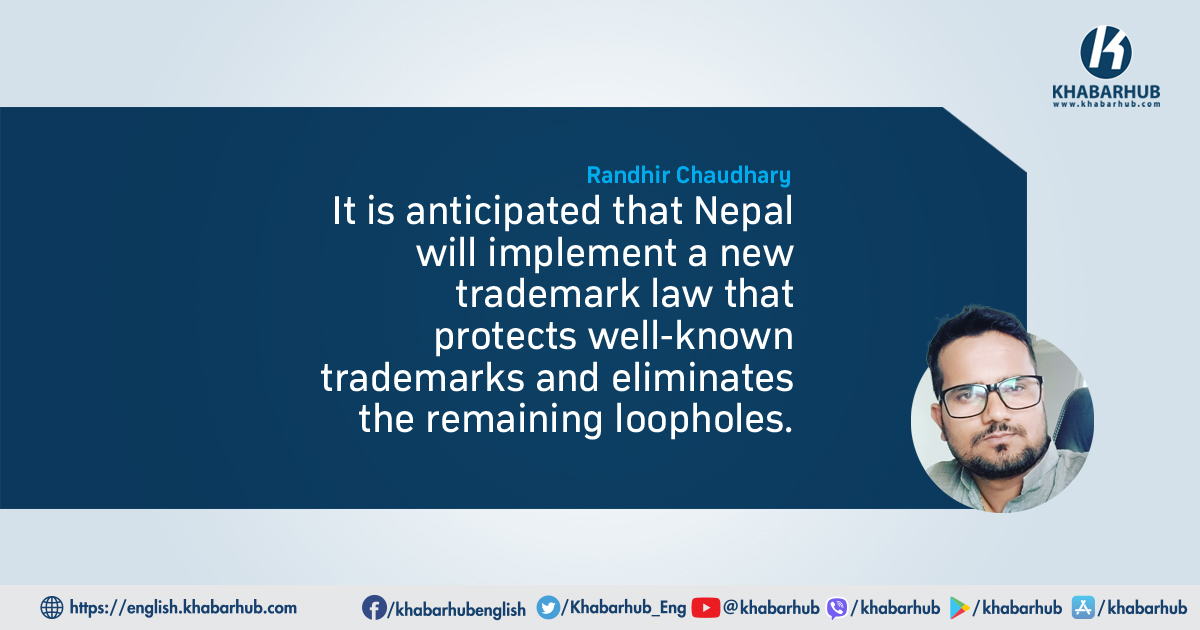
It is anticipated that Nepal will implement a new trademark law that protects well-known trademarks and eliminates the remaining loopholes.
Last but not least, why can’t well-known Indian businesses just across the Tarai border engage in Nepal in significant and profitable ways? This is an issue that requires pragmatic reconsideration.
Ultimately, realizing the full potential of FDI in Nepal will remain difficult unless the Prime Minister or provincial chief ministers explicitly address the legal barriers—from trademark infringement to other structural challenges.






Comment