




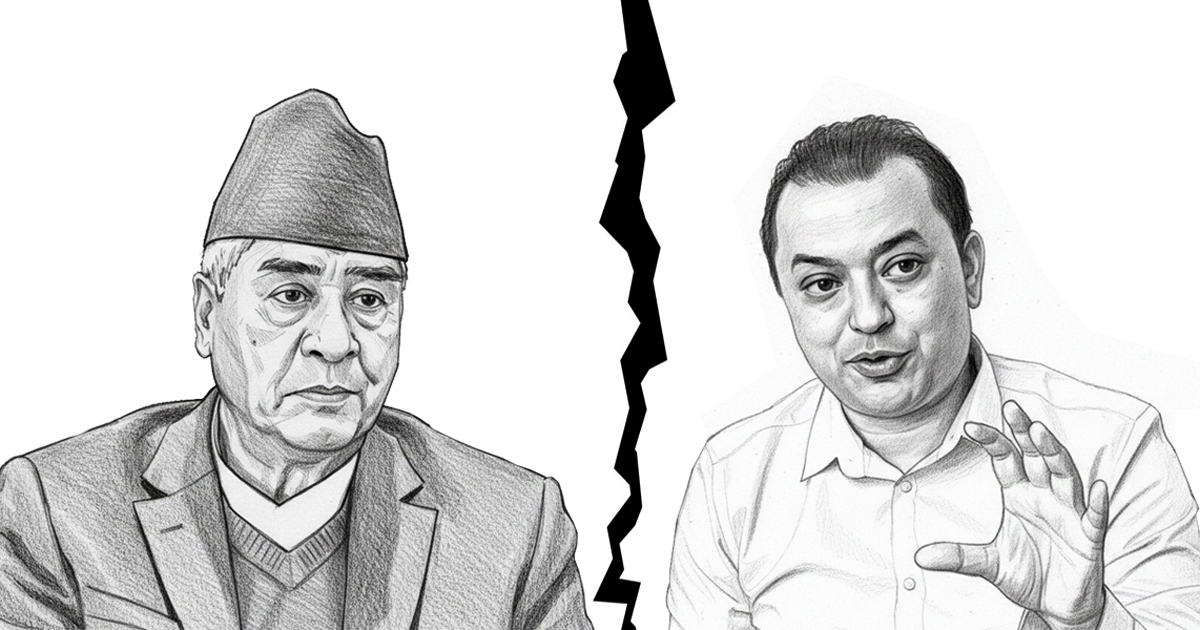
KATHMANDU: The Nepali Congress has rejected the resignation of party president Gagan Thapa, a move that highlights the widening internal divisions following the party’s poor performance in the recent elections.
The decision was taken by the party’s central working committee, which concluded a meeting on Sunday after deliberations that began Friday. Vice president Bishwa Prakash Sharma had tabled a proposal to reject Thapa’s resignation, citing multiple grounds.
Thapa had announced his resignation earlier in the week, taking moral responsibility for the party’s electoral defeat. The party, however, opted to retain him, even as internal disagreements intensify.
Electoral setback and leadership crisis
The Nepali Congress suffered one of its worst electoral performances in history, winning only 38 seats overall, including just 18 under the first-past-the-post system, despite fielding candidates in all 165 constituencies.
The setback came shortly after the party held its second special general convention, which had projected a message of internal reform. Within weeks, however, the leadership faced a major electoral test, and a decisive defeat.
Notably, Thapa and all other office bearers who contested the election lost their races.
Factionalism blamed for losses
The party has attributed defeats in at least 21 constituencies to internal factionalism. According to the leadership, internal divisions affected key races, including Thapa’s own constituency in Sarlahi-4 and another high-profile contest involving Nain Singh Mahar.
Leaders close to Thapa have alleged that rival factions worked against official candidates, with claims that efforts were made to influence outcomes through internal sabotage. Some allegations, including those involving senior leader Sher Bahadur Deuba, have circulated publicly, though they remain disputed.
Mahar, however, has rejected such claims, stating he does not wish to comment further on the matter.
Parallel activities signal deepening divide
The internal divide has become more visible, with rival factions holding separate meetings and advancing parallel strategies.
A group aligned with Deuba has questioned the legitimacy of the leadership formed through the special general convention. Leaders including Shekhar Koirala, Prakash Man Singh, and Bimalendra Nidhi have been actively engaged in discussions aimed at reorganizing the party structure.
In a separate development, a parallel meeting led by Purna Bahadur Khadka signaled efforts to revive an earlier working committee aligned with the Deuba faction.
Meanwhile, Deuba, who is currently abroad for medical treatment, is expected to return to Nepal next week. His supporters have indicated that they will push for a new general convention and organizational restructuring upon his return.
Risk of further split
Political observers warn that the party may be heading toward a formal split if the current power struggle continues.
Analyst Puranjan Acharya said the party risks serious damage if leaders prioritize factional battles over unity.
“Instead of making efforts to unify the party, leaders are engaged in internal confrontation. With major elections approaching, this could weaken the party significantly,” he said.
Another analyst, Jainendra Jeevan, argued that the leadership recognized by the Election Commission cannot be dismissed as illegitimate, urging dissenting factions to seek resolution through dialogue rather than parallel structures.
Uncertain path ahead
The Congress now faces a critical juncture, as competing factions continue to assert influence while the leadership struggles to maintain cohesion.
Observers say the party must move quickly to resolve internal disputes, potentially through an early general convention, to rebuild unity and prepare for upcoming elections.
Failure to do so, they warn, could further erode the party’s organizational strength and political relevance.






Comment