




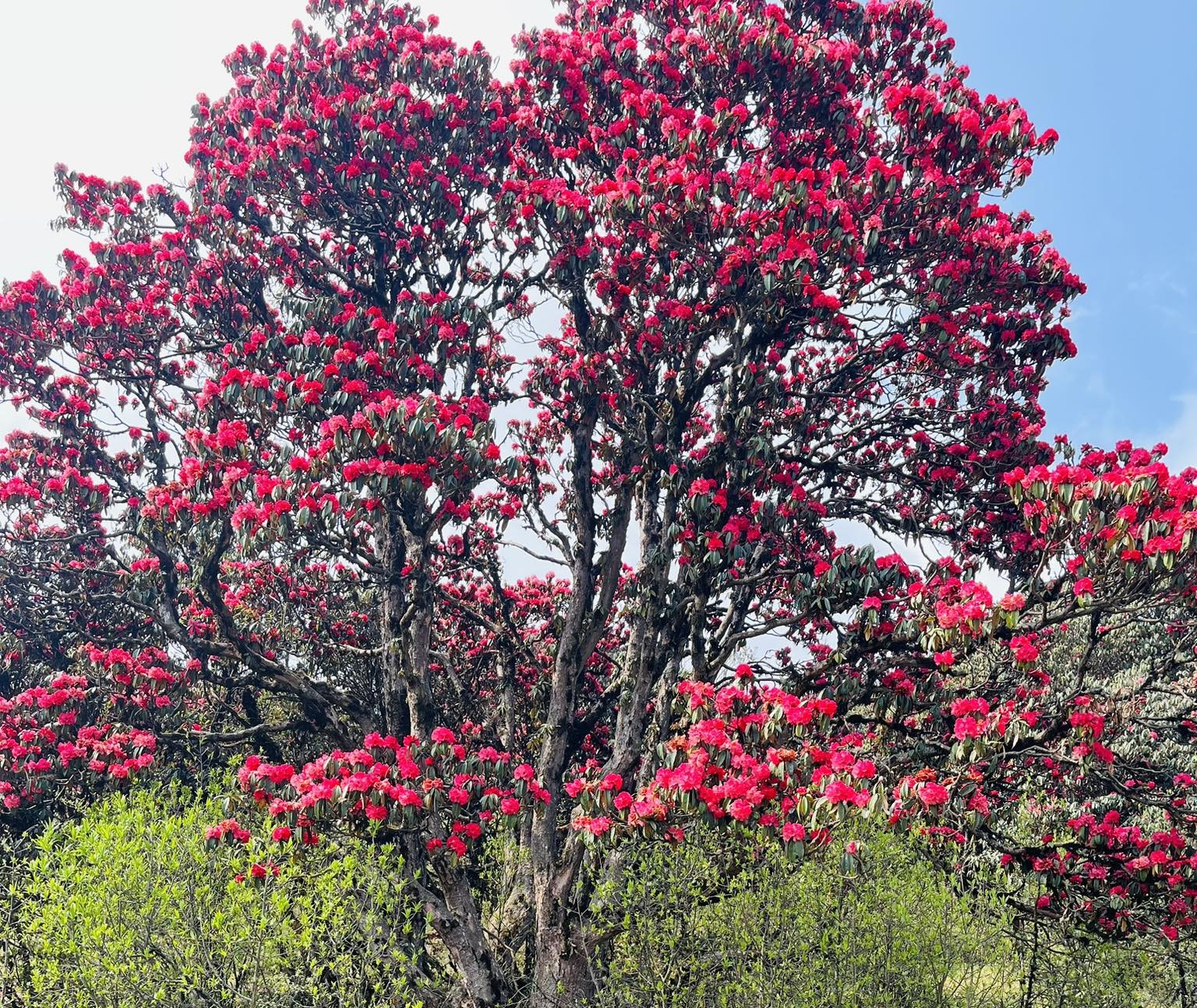
TEHRATHUM: The Tinjure-Milke-Jaljale (TMJ) region—spanning Tehrathum, Sankhuwasabha, and Taplejung in Koshi Province—is currently in full bloom, with vibrant rhododendron forests transforming the landscape into a striking spring spectacle.
Widely recognized as Nepal’s “rhododendron capital,” the region is experiencing a sharp seasonal surge in visitors.
With the onset of spring, TMJ has attracted a growing number of domestic tourists, alongside a modest influx of international travelers. The rise reflects a broader trend of increasing domestic tourism, as Nepali travelers explore natural destinations within the country.
However, the popularity has also exposed infrastructure constraints, with hotels operating at full capacity and many visitors reportedly forced to return due to a lack of accommodation facilities.
The region, considered one of Nepal’s premier spring destinations from March to May, offers a rare combination of rich biodiversity and panoramic Himalayan views. Its forests come alive with rhododendron blooms in shades of red, pink, white, and yellow, creating a unique ecological and visual experience.
The trekking route begins from Basantapur in Tehrathum and passes through Ghurbise, Panchpokhari, Phedi, Chowki, Mangalbare, and Jorpokhari before reaching Taplejung. Along the trail, scenic highlights such as Lampokhari and Gufapokhari, along with numerous alpine ponds, enhance the region’s appeal. The visibility of the revered Pathibhara Devi Temple from several viewpoints also adds a religious dimension, attracting pilgrims in addition to nature enthusiasts.
Ecologically, TMJ holds exceptional global significance. Out of 32 rhododendron species found worldwide, 28 are present in this region alone, making it one of the richest rhododendron habitats on Earth. However, certain species found elsewhere in Nepal—such as Rhododendron lowndesii and Rhododendron kowanianum—are absent here, highlighting both the uniqueness and ecological specialization of the area.
Despite its growing popularity and biodiversity value, the lack of adequate tourism infrastructure, including accommodation and managed transit facilities, remains a key challenge. Experts suggest that strategic investment in eco-friendly infrastructure and sustainable tourism management could help TMJ fully realize its potential as a world-class tourism destination while preserving its fragile ecosystem.





Comment