




As of 26 June 2026, the U.S.–Iran Memorandum of Understanding (MoU) remains in force, but implementation is proving difficult. The agreement has halted the immediate military confrontation and opened a 60-day negotiation period for a comprehensive settlement, yet several key provisions remain contested.
The most important strategic message from the recent U.S.–Iran MoU, reached after 110 days of conflict, lies not simply in the fact that a ceasefire has been achieved but also in demonstrating that even bitter adversaries can choose diplomacy over prolonged war.
More fundamentally, it marks a transition from open military confrontation to negotiated strategic coexistence and underscores a central lesson of contemporary geopolitics: no power—not even a superpower—can indefinitely sustain a military strategy that threatens the foundations of the global economy.
The agreement demonstrates that geopolitical influence rests not only on military superiority but also on the capacity to preserve economic stability and manage strategic interdependence. In an increasingly interconnected world, the ability to disrupt critical energy flows, maritime trade routes, and global economic networks can become as strategically decisive as success on the battlefield.
Equally significant, however, is that the MoU is not a final peace settlement but a framework for sustained negotiations. While active hostilities have ceased, difficult issues—including Iran’s nuclear program, sanctions relief, missile and drone capabilities, regional proxy networks, frozen assets, and maritime security in the Strait of Hormuz—remain contested, while disagreements have already emerged over how the MoU should be interpreted.
Washington has granted only limited sanctions relief, and broader economic normalization remains conditional on Iranian compliance and verification. At the same time, Gulf Arab states have cautiously welcomed the reduction in tensions but continue to insist that any permanent agreement must also address Iran’s missile program, drone capabilities, and regional proxy networks.
The experience illustrates an important strategic lesson: modern conflicts are rarely concluded by military victory alone, while diplomacy rarely produces immediate solutions. Instead, it creates the political space for prolonged diplomacy, confidence-building measures, and negotiated compromises that reconcile strategic realities with economic imperatives.
The U.S., Israel, and Iran were locked in a confrontation that threatened to destabilize the entire Middle East, disrupt global energy and agricultural supplies, and trigger a broader international crisis.
What began as a dispute over Iran’s nuclear program gradually evolved into a wider contest over regional influence, deterrence, sovereignty, and the future security architecture of the Middle East. Yet despite intensive military operations and significant destruction, neither side achieved a decisive victory.
The outcome, or the agreement that emerged, does not resolve these underlying disputes. Rather, it reflects an enduring reality of international politics: military power can shape the battlefield, but it cannot always determine the political end state.
There is a growing recognition among all parties that the costs of continued escalation had exceeded the potential benefits of pursuing outright victory. In this sense, the MoU may prove to be less important as a ceasefire agreement than as a marker of a broader geopolitical transition—from direct military confrontation to managed strategic competition.
The Middle East’s Complex Power Balance
Understanding the U.S.–Iran conflict requires understanding the broader context of the Middle East’s evolving power structure. The region remains one of the world’s most complex geopolitical arenas, where energy resources, religious identities, strategic maritime routes, regional rivalries, and external interventions intersect.
Stretching from North Africa to the Persian Gulf, the Middle East is home to 18–20 countries, if countries such as Sudan, Libya, Algeria, Cyprus, or Türkiye are included under the broader Middle East and North Africa (MENA) framework.
Since 1948, the Middle East has experienced more than fifteen major wars, alongside countless proxy conflicts, insurgencies, security crises, and political crises.
The persistence of conflict reflects not only local rivalries but also the intersection of regional power competition, energy security, religious identities, and the strategic interests of global powers. Gaza, Lebanon, Syria, Iraq, Yemen, Sudan, the Red Sea, and the Persian Gulf collectively form one of the most volatile geopolitical environments in the world.
Beneath these conflicts lies a complex power struggle involving competing visions of regional order among four principal powers: Iran, Saudi Arabia, Türkiye, and Israel. Iran has expanded its influence through what it calls the “Axis of Resistance,” a network of state and non-state partners stretching across Lebanon, Syria, Iraq, and Yemen.
Saudi Arabia sees itself as the leading Arab and Sunni power and seeks to maintain stability in the Gulf while advancing its ambitious economic transformation agenda. Türkiye has increasingly pursued an independent foreign policy aimed at restoring influence across areas once connected to the Ottoman sphere. Israel remains focused on preserving military superiority, guaranteeing national security, and achieving broader regional acceptance.
Overlaying these rivalries are sectarian divisions, ethnic tensions, competition for energy resources, and disputes over political legitimacy. The interaction among these four actors largely shapes the region’s strategic environment.
Complicating these rivalries is the enduring Sunni-Shia divide. Although contemporary Middle Eastern politics cannot be reduced solely to sectarian identities, religious affiliations continue to influence alliances, security perceptions, and regional conflicts.
Iran remains the principal center of Shia political influence, while Saudi Arabia is widely regarded as the symbolic leader of the Sunni Arab world. These identities often overlap with geopolitical competition, making regional disputes more difficult to resolve.
External powers remain deeply engaged as well. The U.S. continues to serve as the region’s primary external security guarantor, seeking to protect global energy flows, ensure Israel’s security, maintain regional stability, and prevent any hostile power from dominating this strategically vital region. China approaches the Middle East primarily through the lens of energy security, trade, and economic connectivity, expanding its influence while avoiding large-scale military commitments. Russia has re-established itself as an important regional actor, particularly after its intervention in Syria, positioning itself as a counterweight to Western influence.
The extensive network of American military bases stretching from Bahrain and Qatar to Kuwait, Saudi Arabia, Jordan, Iraq, and the United Arab Emirates reflects a larger geopolitical reality: the U.S. is not merely defending individual allies but safeguarding a regional order built around energy security, maritime trade, and balance-of-power politics.
The agreement also reinforces a recurring pattern in international politics: successful diplomacy often emerges from demonstrated military capability.
Yet the recent U.S.–Iran conflict demonstrated that even this vast military architecture has limits. Despite maintaining tens of thousands of troops and multiple strategic bases across the region, Washington ultimately confronted a reality that military power alone could not overcome—the vulnerability of the global economy to disruptions in critical chokepoints such as the Strait of Hormuz.
The conflict therefore highlighted a fundamental shift in modern geopolitics: control over strategic economic arteries can provide leverage comparable to that of traditional military superiority.
Geography further magnifies the region’s importance. The Strait of Hormuz remains one of the world’s most critical energy chokepoints, carrying a substantial share of global oil exports and providing Iran with considerable strategic leverage.
The Bab el-Mandeb Strait connects the Red Sea to the Indian Ocean and serves as a vital artery for international commerce. The Suez Canal remains indispensable to trade between Europe and Asia. Any disruption to these routes carries global economic consequences, explaining why regional conflicts frequently attract international attention.
The current balance of power reflects an increasingly multipolar regional order. The United States remains the dominant external security actor; Israel possesses the region’s most advanced military capabilities; Iran exercises significant asymmetric influence through its regional networks; Saudi Arabia remains the leading Arab economic power; and Türkiye continues to expand its strategic reach.
No single actor enjoys overwhelming dominance. Instead, the Middle East is evolving into a complex multipolar system characterized by overlapping rivalries, shifting partnerships, and continuous competition for influence. Viewed in this context, the U.S.–Iran conflict was not merely a dispute over nuclear enrichment. It was a manifestation of a broader struggle over who will shape the future security order of one of the world’s most strategically important regions.
For the U.S., the Middle East remains strategically important for three reasons: safeguarding global energy flows, protecting Israel and its regional partners, and preventing any hostile power from dominating one of the world’s most critical geopolitical crossroads.
Consequently, the U.S.–Iran confrontation was never simply about nuclear enrichment. It represented a contest over the future balance of power in a region where local rivalries, regional ambitions, and great-power interests intersect with extraordinary intensity.
Viewed through this wider lens, the recent agreement is not merely a ceasefire between two adversaries. It is an attempt to stabilize a regional system under strain, prevent a broader geopolitical realignment, and establish rules for managing competition in one of the world’s most volatile strategic theaters.
Why the War Happened
The immediate trigger for the war was the collapse of diplomacy surrounding Iran’s nuclear program. Washington and Tel Aviv increasingly believed that Tehran was approaching a threshold capability that could eventually enable it to produce nuclear weapons. Iran, meanwhile, maintained that its nuclear activities were peaceful and viewed external pressure as an attempt to undermine its sovereignty and strategic autonomy.
The war was never solely about centrifuges, uranium enrichment, or nuclear inspections. At its core lay a deeper geopolitical contest over the future balance of power in the Middle East. The central question was whether Iran would be accepted as a major regional power capable of exercising influence across the Middle East or whether a U.S.-led regional order would continue to constrain its ambitions.
The U.S. and Israel sought to prevent Iran from emerging as a dominant regional power with nuclear potential and extensive regional influence. Iran, meanwhile, sought to preserve its strategic autonomy, maintain its deterrence capabilities, and secure recognition as a major regional actor whose security interests could not simply be ignored.
The war became the military expression of this broader strategic contradiction.
As often happens in international politics, both sides entered the conflict believing that sufficient pressure would compel the other to back down. Instead, the confrontation evolved into a costly and prolonged contest that demonstrated the limits of military power.
The Recognition of Strategic Limits
One of the most important lessons from the conflict is that neither side achieved a decisive victory.
The U.S. and Israel succeeded in inflicting substantial damage on Iran’s military infrastructure, nuclear facilities, missile capabilities, and regional proxy networks. Iran, however, retained sufficient capabilities to impose costs on its adversaries and disrupt regional stability.
Neither side achieved its maximal objectives.
The agreement therefore reflects a recognition that continued escalation would impose unacceptable military, economic, and political costs on all parties involved.
This is perhaps the most important strategic message emerging from the conflict: military superiority does not automatically produce political victory.
History repeatedly demonstrates that wars often end not when one side achieves complete dominance but when all sides conclude that the costs of continuing exceed the benefits of fighting. Strategic exhaustion, rather than decisive victory, frequently creates the conditions for diplomacy.
The U.S.–Iran agreement appears to fit this pattern.
Economic Security Became the Decisive Factor
The reopening of the Strait of Hormuz reveals another crucial lesson.
As the conflict intensified, disruptions to shipping routes and energy supplies threatened the global economy. Oil markets reacted sharply, concerns about inflation increased, and governments around the world began to recognize that the consequences of prolonged instability could extend far beyond the Middle East.
The Strait of Hormuz is not merely a regional waterway. It is one of the most strategically important energy corridors in the world.
Once the conflict began threatening the free flow of energy, economic security became inseparable from national security.
This transformed the strategic calculations of all major actors.
Military objectives that may have appeared achievable on the battlefield suddenly had to be weighed against the risks of global economic disruption, rising energy prices, market instability, and broader geopolitical uncertainty.
The resulting pressure for de-escalation illustrates a defining feature of contemporary geopolitics: in an interconnected world, economic vulnerability can become as powerful a constraint on state behavior as military weakness.
Regional Diplomacy Is Replacing External Dominance
Another major strategic development concerns who helped bring the parties to the negotiating table.
Reports highlighting the roles of Pakistan and Qatar suggest an important shift in the regional balance of diplomatic influence.
For decades, major Middle Eastern crises were managed primarily by external powers, particularly the U.S. and European governments. Today, however, regional middle powers are increasingly shaping diplomatic outcomes.
This reflects a broader transformation occurring throughout the international system.
As power becomes more diffused, regional actors are assuming greater responsibility for conflict management and security arrangements within their own neighborhoods.
The U.S.–Iran agreement demonstrates that regional diplomacy is becoming a critical component of international crisis management.
The growing influence of the Gulf states, Pakistan, and Türkiye suggests that future Middle Eastern security arrangements may be shaped not only by global powers but also by increasingly confident regional stakeholders.
The Turkish-Saudi agreement of 9 June, involving the signing of two MoUs in Riyadh to revive the Ottoman-era Hijaz Railway, is more than an infrastructure project; it is a powerful symbol of the geopolitical realignment reshaping the Middle East after the wars in Gaza, Lebanon, and Iran.
The initiative reflects a broader regional effort to reduce dependence on the vulnerable Strait of Hormuz by developing alternative trade and energy corridors while exposing diverging Gulf approaches toward engagement with Israel. It also signals the fading prospects of the U.S.-backed India–Middle East–Europe Economic Corridor (IMEC), which envisioned Israel as a critical transit hub, alongside the diminishing momentum for Saudi-Israeli normalization.
For countries such as Nepal, this lesson is particularly relevant. Smaller states operating within an increasingly competitive geopolitical environment must learn to navigate rivalries without becoming trapped by them.
At the same time, the project underscores Türkiye’s expanding regional influence and Syria’s gradual reintegration into regional connectivity following the fall of Bashar al-Assad. More broadly, it illustrates how the Iran war has accelerated the search for more resilient transport networks and hardened critical infrastructure, reshaping the strategic geography and economic architecture of the Gulf and the wider Middle East.
A Strategic Acceptance of Iran’s Role
Perhaps the most consequential aspect of the agreement is what it may reveal about Washington’s evolving approach toward Iran.
Notably, reports suggest that Iran’s missile program and support for allied regional groups were not placed at the center of the immediate negotiating agenda.
This is strategically significant.
It suggests that the U.S. may have concluded that immediate de-escalation, nuclear containment, and regional stability are more achievable objectives than fundamentally transforming Iran’s regional position.
This should not be interpreted as acceptance of Iranian dominance.
Rather, it reflects an emerging recognition that Iran is likely to remain a major regional actor regardless of external pressure.
The practical question therefore becomes how to manage competition with Iran rather than how to eliminate its influence altogether.
This distinction matters enormously.
It marks a transition from strategies focused on confrontation toward strategies centered on containment, deterrence, and coexistence.
Diplomacy Backed by Force
The agreement also reinforces a recurring pattern in international politics: successful diplomacy often emerges from demonstrated military capability.
Negotiations became possible not because the parties suddenly developed trust or mutual goodwill. They became possible because each side demonstrated both its capabilities and its willingness to impose costs.
The resulting agreement reflects a balance of power rather than reconciliation.
Neither Washington nor Tehran abandoned its strategic objectives.
Instead, both sides appear to have concluded that those objectives can be pursued more effectively through negotiation than through continued warfare.
This is an important distinction.
The agreement does not signal friendship. It signals deterrence.
It does not eliminate rivalry. It institutionalizes it.
The emerging relationship is therefore better understood as managed competition rather than genuine reconciliation.
The Emergence of a New Security Architecture
Another strategic message concerns the possibility of a broader regional stabilization framework.
References to Lebanon and interconnected regional theaters suggest that policymakers increasingly recognize the need to manage multiple fronts simultaneously.
The conflict demonstrated how quickly tensions in one arena can spill over into others.
Iran, Israel, Lebanon, Syria, Iraq, Yemen, and the Gulf are not isolated security environments. They form an interconnected strategic ecosystem.
Future stability therefore requires a framework capable of reducing tensions across multiple fronts rather than merely ending hostilities between two states.
Whether such a framework can be successfully developed remains uncertain.
However, the agreement suggests that policymakers are increasingly thinking in terms of a regional security architecture rather than isolated bilateral disputes.
Why the Agreement May Endure—But Not Resolve the Rivalry
Despite its many shortcomings, the U.S.–Iran Memorandum of Understanding is more likely to endure than many observers expect because both Washington and Tehran have stronger incentives to preserve it than to return to war.
History shows that peace agreements rarely fail because negotiators cannot reach an accord; they fail when implementation exposes unresolved political and strategic contradictions. Those contradictions remain substantial. Future disputes over the sequencing of sanctions relief, the release of frozen Iranian assets, compliance with nuclear commitments, and verification mechanisms could easily generate renewed tensions.
The nuclear issue itself has been deferred rather than resolved, while Iran’s missile program, regional proxy networks, and the broader security architecture across the Middle East remain largely outside the agreement. Any major regional crisis—whether involving Israel, Hezbollah, or instability in Lebanon, Syria, Iraq, or Yemen—could place enormous strain on the fragile arrangement.
Yet the incentives for both sides to preserve the MoU are stronger than the incentives to abandon it.
For the U.S., continuing the conflict had become increasingly costly. Rising oil prices threatened the global economy, the war was losing domestic political support, and the administration faced the prospect of either escalating into an unpredictable regional conflict or accepting a negotiated compromise. The MoU represented the least costly strategic option.
Iran also had compelling reasons to reach an agreement. Its economy had been severely weakened by war and sanctions, and despite possessing substantial missile and drone capabilities, it lacked the conventional naval and air power necessary to sustain a prolonged confrontation with the U.S.
The agreement is therefore favorable to Tehran in several respects: it imposes no restrictions on Iran’s missile program, leaves the nuclear issue largely unresolved, avoids addressing its regional proxy network directly, and opens the door to sanctions relief, the release of frozen assets, and significant economic recovery.
These mutual incentives make the agreement more durable than its critics assume. The principal risk comes from external spoilers, particularly a major Israeli military confrontation with Hezbollah or another Iran-backed group that could force Tehran to reconsider its commitments.
Even so, recent tensions between Washington and Israel suggest that the U.S. has become increasingly reluctant to be drawn into another open-ended regional conflict. Nevertheless, durability should not be confused with resolution. If this MoU represents only the first phase of diplomacy, there is little reason to assume that a comprehensive second phase will necessarily follow.
The Trump administration’s previous negotiations in Gaza and Venezuela illustrate a pattern in which limited agreements are used primarily to halt immediate crises rather than resolve their underlying causes. The most likely outcome, therefore, is not a lasting strategic settlement but a managed rivalry in which diplomacy contains conflict without eliminating it.
Strategic Lessons for South Asia
For South Asian observers, the conflict offers several important lessons.
The first is that middle powers increasingly matter. Pakistan’s reported mediation role demonstrates how regional actors can leverage crises to enhance diplomatic relevance. Qatar, Saudi Arabia, and Türkiye have similarly expanded their influence through diplomacy rather than military intervention.
The future of the Middle East is unlikely to be defined by outright victory for any single power. Rather, it will be shaped by a continuing process of competition, deterrence, negotiation, and accommodation among rival actors operating within an increasingly multipolar world.
The second lesson concerns economic security. Just as disruptions in the Strait of Hormuz influenced strategic calculations in the Middle East, economic interdependence is increasingly shaping political decision-making across Asia.
The third lesson is that geopolitical competition is evolving. The future international system is unlikely to be defined by absolute victories or rigid alliances. Instead, it will increasingly be characterized by managed competition, strategic balancing, and issue-based cooperation among rivals.
For countries such as Nepal, this lesson is particularly relevant. Smaller states operating within an increasingly competitive geopolitical environment must learn to navigate rivalries without becoming trapped by them.
Strategic autonomy, economic diversification, and diplomatic flexibility will become increasingly valuable national assets.
Beyond the Ceasefire
The greatest threat to the U.S.–Iran memorandum is not the ceasefire itself but the unresolved question of Iran’s future strategic role in the Middle East and Israel’s security.
If the parties cannot reconcile security concerns with Iran’s desire for sovereignty, influence, and strategic autonomy, the agreement may become merely another pause in a continuing rivalry.
Yet even if it ultimately falls short of delivering lasting peace, the agreement has already revealed something important about the changing nature of international politics.
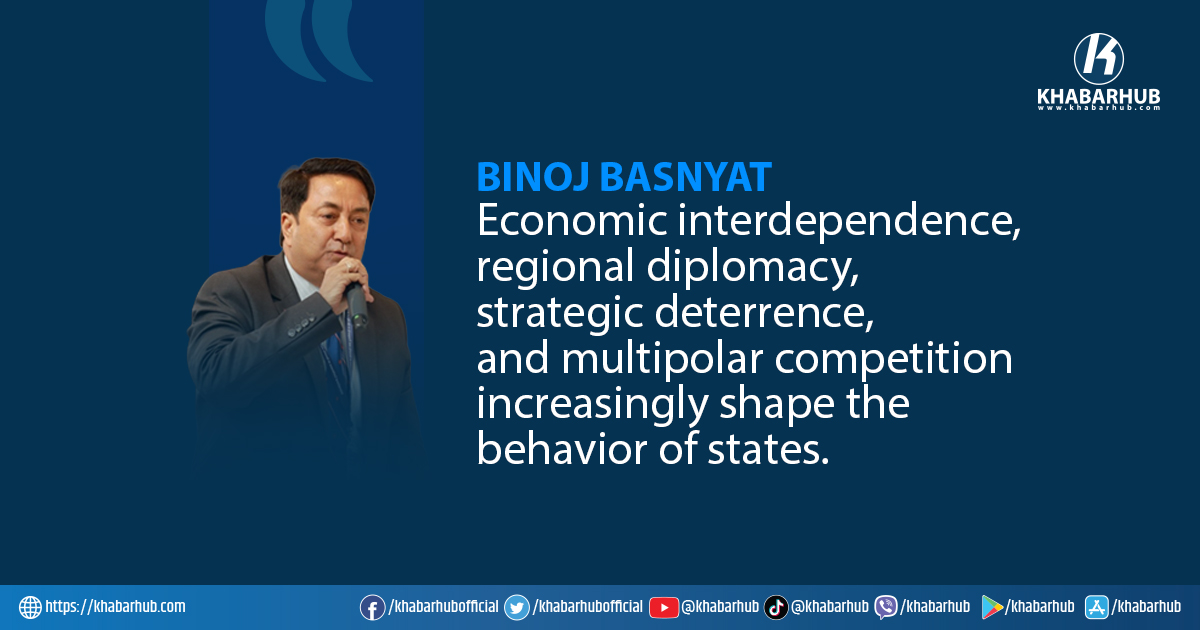
The era in which military power alone could determine political outcomes is fading. Economic interdependence, regional diplomacy, strategic deterrence, and multipolar competition increasingly shape the behavior of states.
The U.S.–Iran memorandum therefore represents more than a ceasefire. It signals a transition from military confrontation to managed competition while highlighting the growing role of regional powers in shaping Middle Eastern security and protecting global economic stability.
The conflict began because diplomacy failed to reconcile competing visions of regional order. The agreement does not resolve that contradiction. Instead, it manages it.
That may ultimately be the most important strategic message of all.
The future of the Middle East is unlikely to be defined by outright victory for any single power. Rather, it will be shaped by a continuing process of competition, deterrence, negotiation, and accommodation among rival actors operating within an increasingly multipolar world.
The ceasefire, therefore, should not be viewed as the end of the conflict. It is better understood as the beginning of a new phase—one in which strategic coexistence replaces open warfare, diplomacy manages rivalry, and regional powers play an increasingly decisive role in shaping the future security order of the Middle East.
(Basnyat is a Maj. Gen. (Retd.) of the Nepali Army and writes on international affairs and geopolitical strategy. He is also a researcher affiliated with Rangsit University in Thailand.)





Comment