




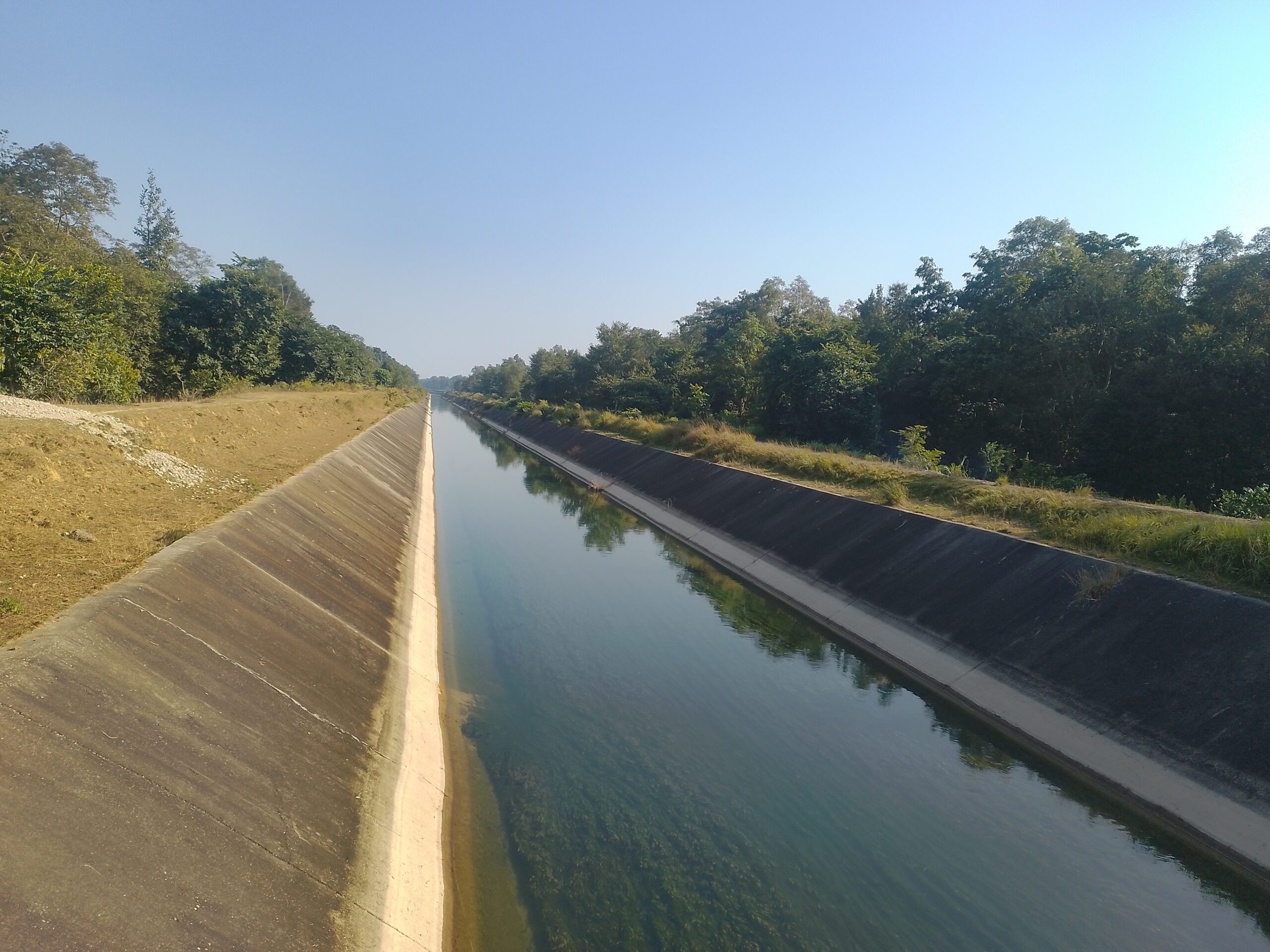
BANKE: The under-construction Sikta Irrigation Project has raised serious environmental concerns, with its western main canal increasingly becoming a death trap for wildlife.
Officials say the canal is not designed to be wildlife-friendly, with animals frequently getting trapped while attempting to access water. A significant stretch of the canal passes through forested areas, including Banke National Park, as well as community and government-managed forests.
With the onset of summer, incidents have risen as animals approach the canal almost daily in search of water, according to Tanka Gurung, Information Officer at the Division Forest Office.
In a recent incident on Saturday, four spotted deer were trapped in the canal near Haralaphanta Community Forest. They were later rescued through coordinated efforts involving forest officials, park staff, and local residents.
However, not all cases end in rescue. Authorities arrested three individuals on Friday for allegedly killing a deer that had been trapped in the canal in Rapti Sonari Rural Municipality-2. The suspects were caught red-handed while carrying portions of the meat home.
Senior Forest Officer Sushil Subedi said that wild animals often enter the canal to drink water but are unable to escape due to its steep and rigid structure. He added that recent forest fires in Banke and surrounding areas have further worsened the situation, forcing animals such as deer, nilgai, and wild boar to flee toward the canal, where many end up trapped.
“Much of the canal passes through habitats traditionally used by wildlife, including areas linked to Bardia National Park. The lack of wildlife-friendly design has already resulted in hundreds of animals getting trapped,” Subedi said, adding that while some are rescued, others fall victim to poaching.
Although ponds have been constructed within forest areas to provide water sources for wildlife, officials say these are insufficient, especially during the dry season. Existing water bodies in areas such as Trishakti and Bhagawati community forests are unable to meet demand.
Local community leader Madan Oli said that while the project has built some access points (ghats) along the canal, these are neither safe nor reliable for animals.
He suggested that long-term solutions include constructing wildlife-friendly access structures and installing wire mesh fencing along both sides of the canal, except at designated safe entry points.
Experts warn that unless immediate mitigation measures are adopted, the project could continue to pose a significant threat to biodiversity in the region.






Comment