




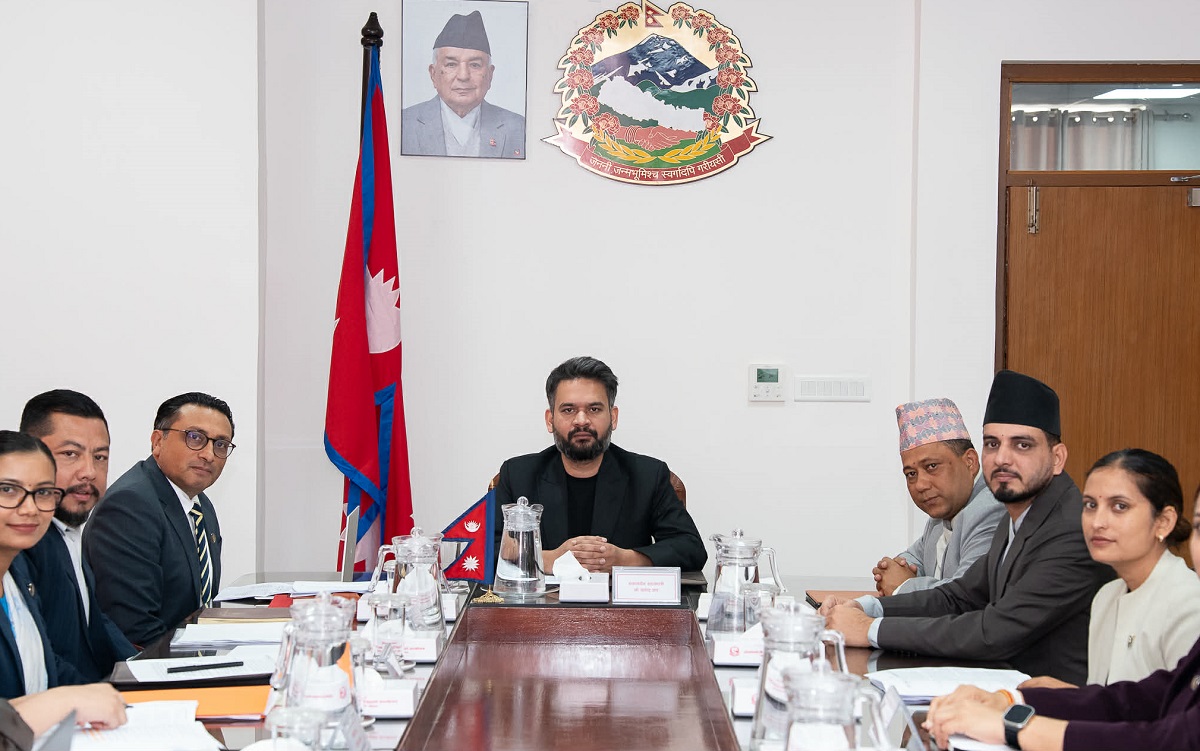
KATHMANDU: The government led by Prime Minister Balen Shah has completed one month in office after being formed with the support of nearly a two-thirds majority in the House of Representatives following the March 5 elections.
In its first month, the government has initiated a wide range of measures—from constitutional amendment discussions to immediate governance reforms. However, some of its decisions have also sparked controversy and criticism from opposition parties and stakeholders.
Push for constitutional amendment and governance reform
Often described as a celebrity model figure in Nepali politics, Shah began his tenure on Chaitra 13 by endorsing a 100-point governance reform agenda in the first Cabinet meeting.
The reform package includes reducing the number of federal ministries, merging financially burdensome boards and committees, separating civil servants and teachers from political parties, and introducing home delivery of services such as passports, licenses, and citizenship documents through the postal system.
The agenda also incorporates implementation of a report prepared by a commission led by Gauri Bahadur Karki, formation of committees to resolve issues in underperforming projects, digitisation of service delivery in investment and industry sectors, and preparation of an energy export strategy.
Although the legal framework is yet to be finalised, the government has already formed a 15-member Cabinet. A separate task force led by Prime Minister’s advisor Asim Shah has been formed to prepare a discussion paper on constitutional amendments.
The government has also made key appointments, including Dr. Gunakar Bhatta as Vice-Chairperson of the National Planning Commission and Kiran Pandit as Deputy Governor of Nepal Rastra Bank.
Diplomatic outreach takes new approach
In a departure from past practices, Prime Minister Shah held a collective meeting with ambassadors instead of one-on-one bilateral meetings. The move has been interpreted as an attempt to introduce a new diplomatic approach.
Two ministers recalled
Within a month of formation, two ministers have exited the Cabinet.
Labour Minister Deepak Sah was recalled after controversy over the appointment of his spouse to the Health Insurance Board. Similarly, Home Minister Sudan Gurung resigned following criticism over alleged links with businessman Deepak Bhatta, who is currently under investigation.
Observers say the government’s decision to remove ministers amid controversy has helped maintain its moral standing.
Encroachment removal drive gains momentum
The government has intensified efforts to remove encroachments on public land and riverbanks, particularly in the Kathmandu Valley. The campaign, which began over the weekend, is progressing largely peacefully despite minor protests.
Similar actions have been taken outside the Valley as well, including the removal of structures around Phewa Lake in Pokhara. Local governments across the country have also begun similar drives.
While the move has received positive public response, some political parties and organisations have criticised the government for evicting squatters without adequate rehabilitation plans.
Not free from controversy
Despite its reform push, the government has faced criticism over several decisions.
The implementation of the Karki Commission report related to the Gen Z protests became controversial from the outset. The government ordered the arrest of former Prime Minister KP Sharma Oli and former Home Minister Ramesh Lekhak for investigation. However, the court later ordered their release, and no formal charges have been filed so far.
Similarly, Nepali Congress leader Deepak Khadka was released following a prolonged detention due to lack of sufficient evidence.
The government’s decision to grant public holidays on both Saturdays and Sundays has also drawn mixed reactions. Several local governments and private education organisations have said the policy is difficult to implement, citing challenges in completing academic curricula.
Other decisions—such as mandating government advertisements to be published only in state-owned newspapers and removing political student unions from universities—have also triggered protests from media organisations, student groups and political parties.
Changes in financial and regulatory bodies
Nepal Securities Board Chairman Santosh Narayan Shrestha resigned following the formation of the new government. Meanwhile, Prabin Pandak was recalled from Nepal Stock Exchange, amid criticism from investors over policy decisions.
The government has also recalled Gajendra Thakur, Director General of the Department of Money Laundering Investigation, following controversy linked to his spouse’s business connections.
Public-focused measures
Among decisions directly affecting citizens, the government has tightened regulations along the Nepal-India open border by enforcing mandatory customs duties on imports. The move has been opposed by the Nepali Congress and some Madhes-based parties.
The government has also decided to provide a 50 percent waiver on customs revenue and infrastructure tax on petroleum products. While this has provided short-term relief to Nepal Oil Corporation, concerns remain over long-term price implications.
Efforts have also been made to ease the long-standing backlog in driving license distribution by accelerating mass printing. Although this has improved accessibility, complaints regarding the quality of licenses have emerged.
Analysts say while the government has demonstrated strong intent in initiating reforms, consistency in implementation and addressing public concerns will be key to sustaining its momentum.


Comment