




KATHMANDU: The newly formed government, under the active leadership of Prime Minister Balen Shah, has intensified efforts to manage squatter settlements and structures built on encroached public land.
The campaign, which began from riverbank settlements in the capital, has gathered pace since Saturday. Authorities have mobilized personnel ranging from municipal police to the Armed Police Force and Nepal Police to carry out the operation.
Dozers were deployed early Saturday morning at the Thapathali riverbank in Kathmandu Metropolitan City–11. The settlement, home to around 150 households, was cleared peacefully by around 12:30 pm the same day. Security forces and municipal teams facilitated the relocation process, assisting residents in managing their belongings.
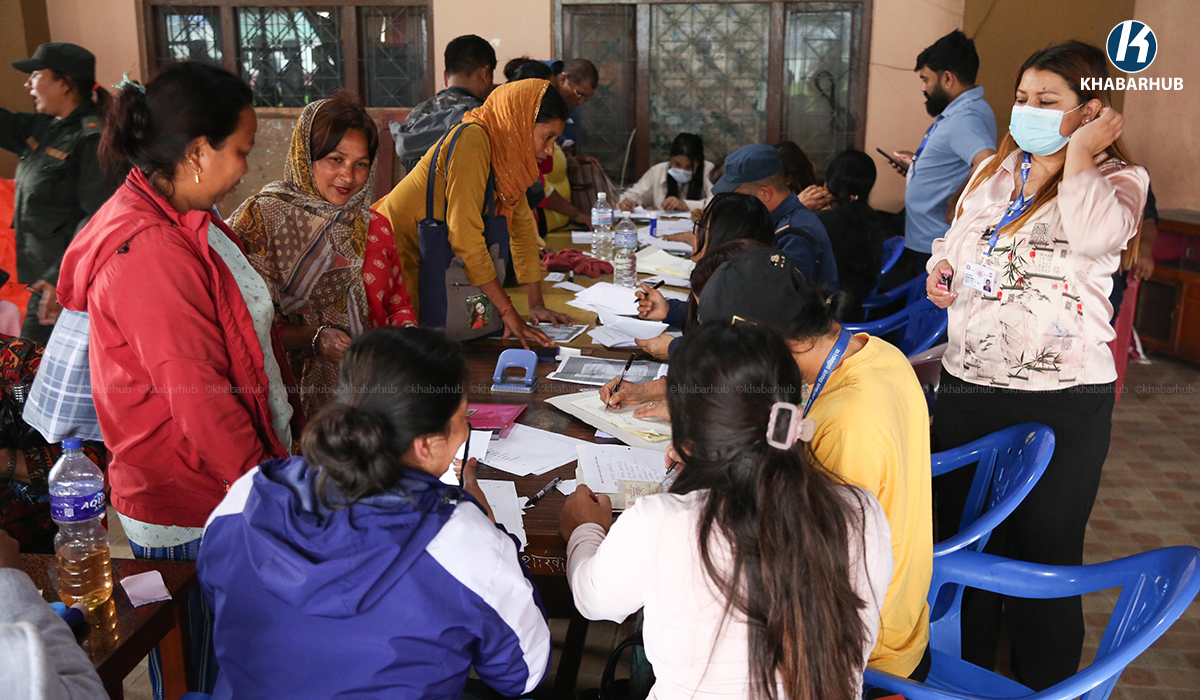
Similar operations are underway in other parts of Kathmandu, including Manohara, Gairigaun and Sinamangal. The government has set up a temporary support system at Dasharath Stadium in Tripureshwor, where displaced residents are undergoing document screening and receiving primary healthcare and psychosocial counseling.
Officials said arrangements are being made to house the affected families in hotels and other safe locations. The government aims to ensure long-term settlement solutions within the next 15 days.
“We have begun by clearing settlements in high-risk areas. The campaign will soon expand nationwide, and in the second phase, we will identify landless individuals and ensure proper housing arrangements,” said Januka Dhakal, Development Commissioner at the Kathmandu Valley Development Authority.
Authorities are also collecting preliminary data on displaced families while arranging temporary shelter.
Human rights activists and animal welfare groups have also been deployed in the affected areas. Animal rights activists have raised concerns over the lack of attention to stranded animals during the eviction process, prompting independent rescue efforts.
The campaign, initially launched in the Kathmandu Valley, has now expanded to other districts, including Rupandehi, Parsa and Nuwakot.

In Butwal Sub-Metropolitan City–4 of Rupandehi, structures built on public land were demolished on Sunday after prior notice was issued. In Nuwakot, the Galchhi–Rasuwagadhi road project has removed 12 government and 86 privately built illegal structures in Bidur Municipality. Similarly, irrigation authorities in Parsa have cleared encroachments along the Gandak canal.
According to the Land Problem Resolution Commission, around 1.27 million families across the country lack formal land ownership. This includes 96,339 landless Dalit families, 175,109 landless squatters, and over 914,000 unmanaged settlers.
More than 1.1 million applications have been registered so far, with a significant portion already documented. However, officials stress that verification is still required to determine genuine landless status.
“Registration is only the first step. We need proper research and verification before certification,” said Sanjeev Kumar Sah, Information Officer at the Commission. He added that around 50,000 individuals are yet to be fully recorded.
Despite the scale of the problem, only around 9,300 landless families have so far received land ownership certificates.
Encroachment of public land by informal settlements has long been a contentious issue, with allegations that previous governments overlooked or even enabled such practices. Experts say the challenge has evolved into a broader national concern linked to land reform, urban management and social justice.
Over the past three decades, 14 commissions have been formed to address landlessness and unmanaged settlements. However, critics argue that frequent political interference and lack of continuity have hindered meaningful progress, raising concerns over transparency and effectiveness in resolving the issue.






Comment