




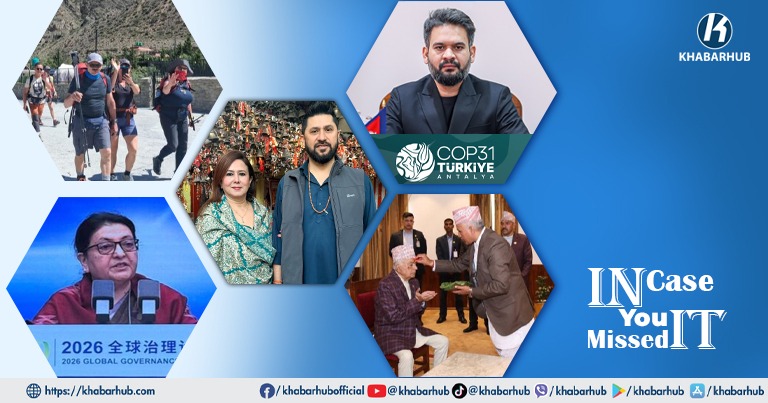
KATHMANDU: The past week’s developments have offered a glimpse into Nepal’s competing priorities: securing international support for climate-related losses, strengthening democratic accountability, expanding sporting opportunities, preserving cultural traditions and protecting livelihoods affected by natural disasters. While these events belong to different sectors, they share a common question: how effectively can Nepal translate public commitments and emerging opportunities into lasting benefits for its people?
From preparations for the upcoming UN climate conference to international recognition for domestic cricket and the decline in tourist arrivals in Mustang, the developments highlight both Nepal’s potential and the practical challenges confronting the country.
Climate justice must deliver tangible results
Nepal’s preparations for the 31st Conference of the Parties to the United Nations Framework Convention on Climate Change (COP-31) have placed climate justice and Himalayan protection at the centre of its international agenda. Scheduled for November 9–20 in Antalya, Türkiye, the conference will provide Nepal with an opportunity to press for greater international support for climate adaptation, disaster recovery and loss and damage.
In a democratic society, leaders have the right to personal lives, while citizens and the media have an interest in matters involving public responsibilities. Maintaining a clear distinction between the two is important for informed public debate.
The argument behind Nepal’s position is straightforward. The country contributes relatively little to global greenhouse gas emissions, yet its mountain communities, infrastructure, agricultural systems and ecosystems face considerable climate-related risks. Floods, landslides and other disasters have repeatedly demonstrated the vulnerability of settlements and transport networks.
However, presenting the country’s vulnerability internationally is only the first step. The more difficult task is securing financing that can be accessed quickly and used effectively.
Nepal needs grants, concessional financing, technical expertise and reliable mechanisms to support communities affected by disasters. Climate finance should also help strengthen early warning systems, improve disaster preparedness and develop infrastructure capable of withstanding extreme weather.
The government’s plan to prepare a national position paper and bring together representatives from ministries, civil society, development partners and the private sector is therefore important. A coordinated position can help Nepal present consistent priorities and credible evidence of its needs.
Yet the success of COP-31 should not be measured by the number of meetings attended or declarations issued. It should be assessed by the resources secured, the accessibility of those resources and the improvements they make possible for vulnerable communities.
Nepal must also demonstrate how climate finance will be used, with clear project priorities, transparent implementation and measurable outcomes. A strong international argument requires equally strong domestic planning.
Himalayan protection requires regional cooperation
Former President Bidya Devi Bhandari’s call for international cooperation on climate justice reinforces the need to view Himalayan protection as a shared regional concern.
The Himalayas influence water systems, biodiversity and ecological processes across national boundaries. Changes affecting glaciers, river flows and mountain environments can have consequences extending well beyond Nepal.
Cooperation among Nepal, China and India on climate data, glacier monitoring, early warning systems and disaster response could improve preparedness and reduce the consequences of climate-related hazards. Such collaboration is particularly important where rivers, watersheds and mountain ecosystems cross borders.
At the same time, regional cooperation must complement, rather than replace, national responsibility. Nepal needs stronger disaster-risk assessments, better coordination among government agencies and sustained investment in local preparedness.
The former president’s broader emphasis on international law, multilateralism and the needs of vulnerable countries also reflects a challenge facing smaller states: ensuring that their concerns receive attention in international decision-making.
For Nepal, climate diplomacy will be most effective when international advocacy is supported by practical domestic measures and consistent regional engagement.
Political messages must be matched by public confidence
Political developments during the week also highlighted the importance of public trust and institutional credibility.
Prime Minister Balendra Shah’s Dashain message called for collective efforts to address corruption, misgovernance, inequality, negligence and political unrest. Rastriya Swatantra Party Chairman Rabi Lamichhane, meanwhile, urged citizens to turn the grief caused by recent disasters into hope, resilience and a commitment to rebuilding the country.
Such appeals for unity are relevant at a time when disaster recovery, economic uncertainty and public expectations place pressure on political leadership.
However, unity cannot depend on speeches alone. Citizens are likely to judge political leaders by the quality of public services, the transparency of government decisions, the handling of corruption allegations and the speed with which commitments are implemented.
Calls to eliminate corruption and improve governance need to be supported by effective oversight, fair investigations and accountability across institutions. Similarly, appeals for national reconstruction must be accompanied by practical support for displaced families, damaged communities and people whose livelihoods have been affected by disasters.
Lamichhane’s clarification that his visit to India was personal, rather than political, also illustrates how public figures operate under close public scrutiny. His explanation addressed speculation about the purpose of the visit, but the broader lesson is that political communication can influence public perceptions even when an activity is presented as private.
Authorities should prioritise durable repairs to vulnerable road sections, improve information for travellers and strengthen coordination between infrastructure agencies and tourism businesses. Alternative access arrangements should also be considered where practical.
In a democratic society, leaders have the right to personal lives, while citizens and the media have an interest in matters involving public responsibilities. Maintaining a clear distinction between the two is important for informed public debate.
Cricket offers an opportunity for institutional growth
A more encouraging development came from cricket, with the International Cricket Council granting official List A T20 status to all matches in the third edition of the Nepal Premier League (NPL). The tournament is scheduled to run from October 26 to November 21 at the Tribhuvan University International Cricket Ground in Kirtipur.
The recognition means players’ performances in the tournament can count towards official T20 statistics. It represents a step forward for Nepal’s domestic cricket structure and could strengthen the league’s appeal to players, supporters and potential commercial partners.
Nepal’s selection to host the ICC Men’s Cricket World Cup Qualifier Playoff from December 4 to 21 offers another opportunity to develop the country’s standing as a cricket venue. The tournament will provide participating teams with a route towards the 2027 ODI World Cup Qualifier, while giving Nepal experience in hosting an international competition.
These developments are significant, but international recognition alone cannot guarantee sustained progress. The Cricket Association of Nepal must continue investing in grounds, player development, coaching, officiating and competition standards.
Domestic leagues need to provide meaningful opportunities for emerging players rather than focusing exclusively on short-term commercial returns. Stronger pathways from grassroots cricket to professional competition will be essential if Nepal is to convert growing interest in the sport into consistent international performance.
Hosting international tournaments also requires attention to spectator facilities, security, transport, accommodation and event management. If organised effectively, such competitions can benefit local businesses and strengthen Nepal’s reputation as a sporting destination.
Mustang illustrates the economic cost of disasters
The challenges facing tourism in Mustang provide a reminder that natural disasters affect more than physical infrastructure.
Respect for cultural diversity, equal access to public services and practical support for people affected by disasters are important ways to translate shared values into action.
Tourist arrivals in the district fell by 41.52 percent during the first three months of the current fiscal year, declining from 118,685 to 69,403 compared with the same period a year earlier. Damage to the Beni-Jomsom road following floods and heavy rainfall disrupted access during an important tourism season.
The decline affects a broad network of local economic activities, including hotels, restaurants, transport operators, guides, shops and suppliers. For businesses that depend heavily on seasonal visitors, prolonged disruptions can mean lost income that is difficult to recover later.
Although the road has reopened following repairs, the return of normal traffic and tourist confidence may take longer. The episode highlights the importance of resilient transport infrastructure and effective contingency planning.
Authorities should prioritise durable repairs to vulnerable road sections, improve information for travellers and strengthen coordination between infrastructure agencies and tourism businesses. Alternative access arrangements should also be considered where practical.
Tourism promotion alone will not solve the problem if visitors remain uncertain about road conditions or travel reliability. Restoring confidence requires dependable access, timely information and continued attention to safety.
The recent decline also raises a broader development question: how can Nepal protect tourism-dependent communities against recurring climate and weather disruptions? Diversifying local economic opportunities and improving disaster preparedness could help reduce dependence on a short peak season.
Culture and social solidarity remain important
Dashain celebrations, including Bijaya Dashami rituals and President Ram Chandra Paudel’s participation in religious observances, provided another prominent feature of the week.
Festivals offer opportunities for families to reconnect, communities to maintain traditions and people to express goodwill across social and geographic boundaries. Political leaders’ messages during Dashain also placed emphasis on solidarity, hope and mutual respect.
These traditions have social significance, particularly during periods of hardship. However, national unity is strengthened most meaningfully when it extends beyond ceremonial occasions into everyday public life.
For Nepal, the challenge is not a lack of priorities. It is ensuring that commitments across different sectors produce visible, measurable and lasting results.
Respect for cultural diversity, equal access to public services and practical support for people affected by disasters are important ways to translate shared values into action.
Turning commitments into results
Taken together, the week’s events point to a common priority: implementation.
Nepal has an opportunity to use climate diplomacy to secure resources, regional cooperation to improve disaster preparedness, political leadership to strengthen public confidence, cricket to expand sporting opportunities and infrastructure investment to support tourism-dependent livelihoods.
Each opportunity requires more than an announcement. Climate commitments need accessible financing and accountable implementation. Political promises require transparent institutions and measurable progress. Sporting achievements need sustained investment, while tourism recovery depends on reliable infrastructure and effective coordination.
The country’s progress will ultimately depend on how these different priorities are connected to the needs of ordinary citizens.
International recognition, public statements and cultural celebrations all have value. Their lasting significance, however, will be determined by whether they help build safer communities, stronger institutions, more resilient livelihoods and greater opportunities for future generations.
For Nepal, the challenge is not a lack of priorities. It is ensuring that commitments across different sectors produce visible, measurable and lasting results.





Comment