




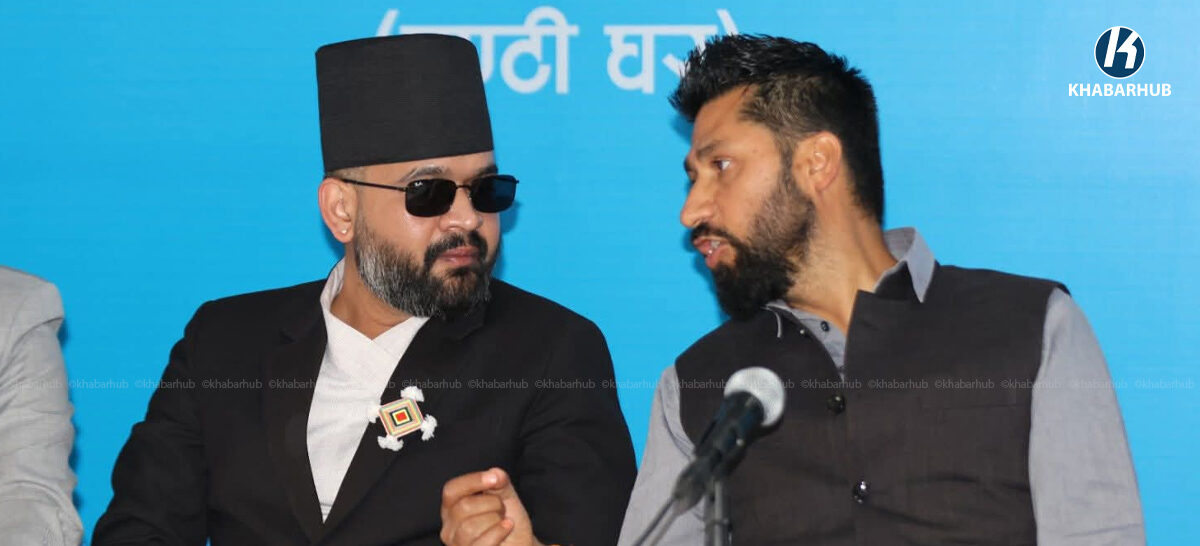
KATHMANDU: Nepal’s Rastriya Swatantra Party is set to hold its first general convention in Chitwan from June 21 to 23. Founded on June 21, 2022, the party is preparing for its first national convention four years after its establishment, amid growing interest over who will lead the party in the coming term.
Political discussions have intensified over whether current chair Rabi Lamichhane will continue in the position or whether senior leader Balen Shah could emerge as a contender for the leadership.
Shah joined the party through a seven-point agreement signed on December 28, 2025, alongside Lamichhane, Vice Chair Swarnim Wagle and former Vice Chair and current Speaker DP Aryal. Since then, some party members have argued that Shah should take on the party leadership, while others insist Lamichhane should continue after leading the party to become the country’s largest political force in a short period.
According to party leaders and sources close to both Lamichhane and Shah, Lamichhane is confident about securing another term as chair. Sources from Shah’s secretariat say he has not shown interest in contesting for the chairmanship so far, although some leaders believe he may still be observing the political situation closely.
Several leaders have also claimed that the party is likely to select its office bearers through consensus rather than a competitive election. Leaders close to Lamichhane say the consensus model would ultimately ensure his continuation as party chair, while leaders aligned with Shah have remained publicly silent, saying there is still a month left before the convention.
A leader close to Shah said the political situation could still change before the convention. “At the moment, Balen Shah is leading the government while Rabi Lamichhane is leading the party,” the leader said.
Leaders close to Lamichhane maintain that there was already an understanding within the party that Lamichhane would continue leading the organization. One senior leader claimed that two positions are almost certain: Lamichhane as party chair and Shah as senior leader.
Despite speculation, party leaders have publicly denied any possibility of conflict between those leading the government and those leading the party organization. Parliamentary party deputy leader and secretariat member Ganesh Parajuli said there would be no disagreement between the two leadership roles.
Consensus leadership gains momentum
General secretaries Bhupadev Shah and Kabindra Burlakoti have also expressed confidence that leadership selection will happen through consensus. Leaders say most office bearers support maintaining the existing understanding in which Shah focuses on government leadership while Lamichhane leads the party.
According to party treasurer Lima Adhikari, around 2,400 convention representatives are expected to attend the gathering. Under the party statute, the central committee will first be elected, after which the committee members will select the party secretariat and office bearers.
Assistant General Secretary Bipin Acharya said discussions regarding leadership selection are still ongoing as the party is currently focused on amending its statute. He said recommendations from provincial, district and central bodies are being incorporated and the amendment proposal is expected to be finalized by June 24.
Acharya added that a consensus-based leadership would send a positive message from the country’s largest party, although the democratic process would remain open if needed.
Party statute does not bar either leader
Party leaders say the current statute does not prevent either Lamichhane or Shah from contesting for the chairmanship. However, senior leaders insist Shah has no intention of claiming the position.
Under the current statute, the central committee will consist of 129 elected members, with the party chair authorized to nominate an additional 22 members. Provincial chairs will serve as ex-officio members, and one-third of the committee must be women.
The party structure includes one chairperson, one senior leader, three vice chairs — including at least one woman — two general secretaries, one assistant general secretary, one treasurer, one deputy treasurer, one spokesperson and two deputy spokespersons.
Party leaders say there are no plans to change the two-stage election system outlined in the statute, where central committee members are elected first and office bearers are chosen afterward.
Leadership to include all political groups
Senior leaders say efforts are underway to ensure representation from all groups that have joined the party over the years. This includes factions close to Balen Shah, members from Bibeksheel Sajha Party, Hamro Nepal Party led by Khagendra Sunar, Gen-Z campaigners and leaders from the Nagarik Unmukti Party.
Leaders are currently discussing how to build an inclusive central committee and secretariat that accommodates representatives from different political and generational backgrounds.
A coordination committee led by Bhupadev Shah has reportedly been formed to manage the integration process and ensure broad participation and representation at the convention.



Comment