




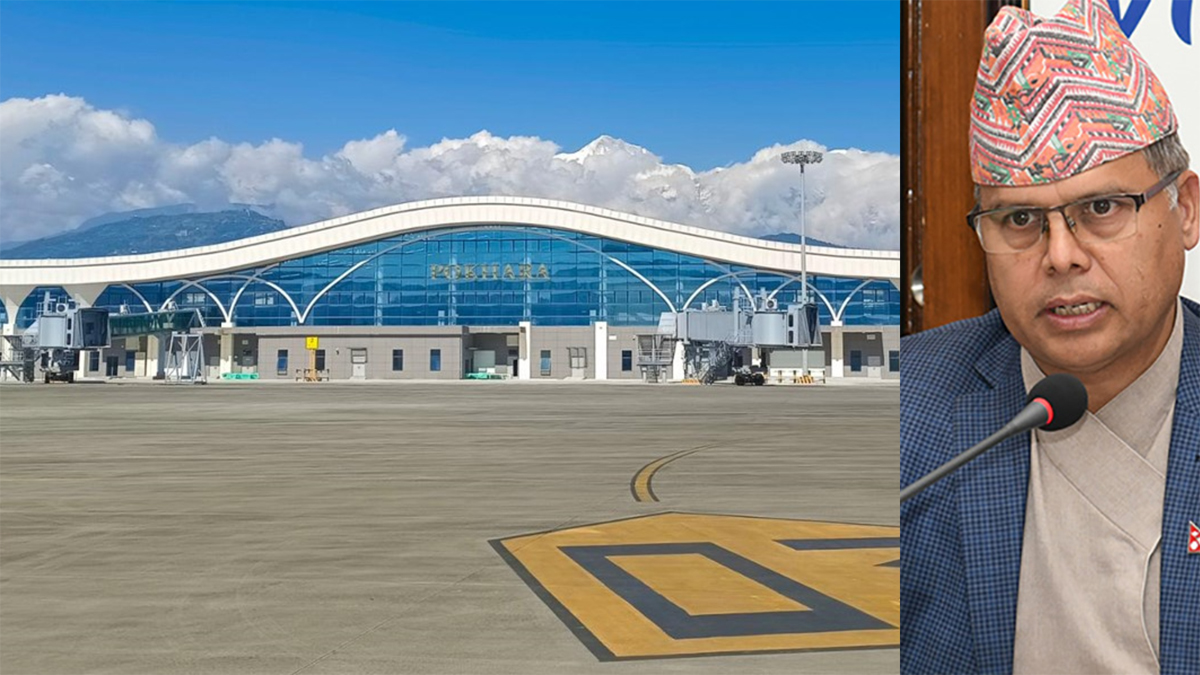
KATHMANDU: The Commission for the Investigation of Abuse of Authority has filed a corruption case at the Special Court against 21 individuals and two companies over alleged irregularities in the construction of Pokhara Regional International Airport.
According to CIAA spokesperson Suresh Nyaupane, the charge sheet accuses officials of collusion, bad faith, and unlawful conduct in the consultant appointment process under the Civil Aviation Authority of Nepal, causing significant loss to public property.
The case names former tourism secretary Kedar Bahadur Adhikari, along with former CAAN directors general Sanjiv Gautam, Rajan Pokharel, and Pradeep Adhikari, among other senior officials. Consultant firm ERMC/A-Not/Sleet JV and contractor China CAMC Engineering Co. Ltd. have also been made defendants.
The airport project was being developed under an EPC model with loan assistance from Export-Import Bank of China. As per the agreement, USD 2.8 million (excluding tax) had been allocated for consultancy services.
However, the CIAA found that instead of utilizing this provision, a separate process was initiated with a cost estimate exceeding Rs 500 million from CAAN’s own budget. A contract worth Rs 428.9 million was later signed for the same work, with over Rs 400 million already paid.
Investigations also revealed that USD 2.79 million out of the allocated “provisional sum” was reallocated under other headings through an “updated price schedule,” allegedly in collusion between officials and the contractor.
The anti-graft body has concluded that public property worth Rs 461.584 million was misappropriated, misused, or lost in the process. This includes an inflated contract amount of Rs 89.5 million and over Rs 370 million spent in violation of contractual provisions.
The CIAA stated that the consultant selection process violated Nepal’s public procurement laws by limiting international competition, artificially inflating costs, and altering contract conditions.
The commission has sought imprisonment, fines, and recovery of the embezzled amount under the Prevention of Corruption Act, 2002, concluding that the case involved systematic misuse of public resources through collusion among government officials, consultants, and the construction company.


Comment