




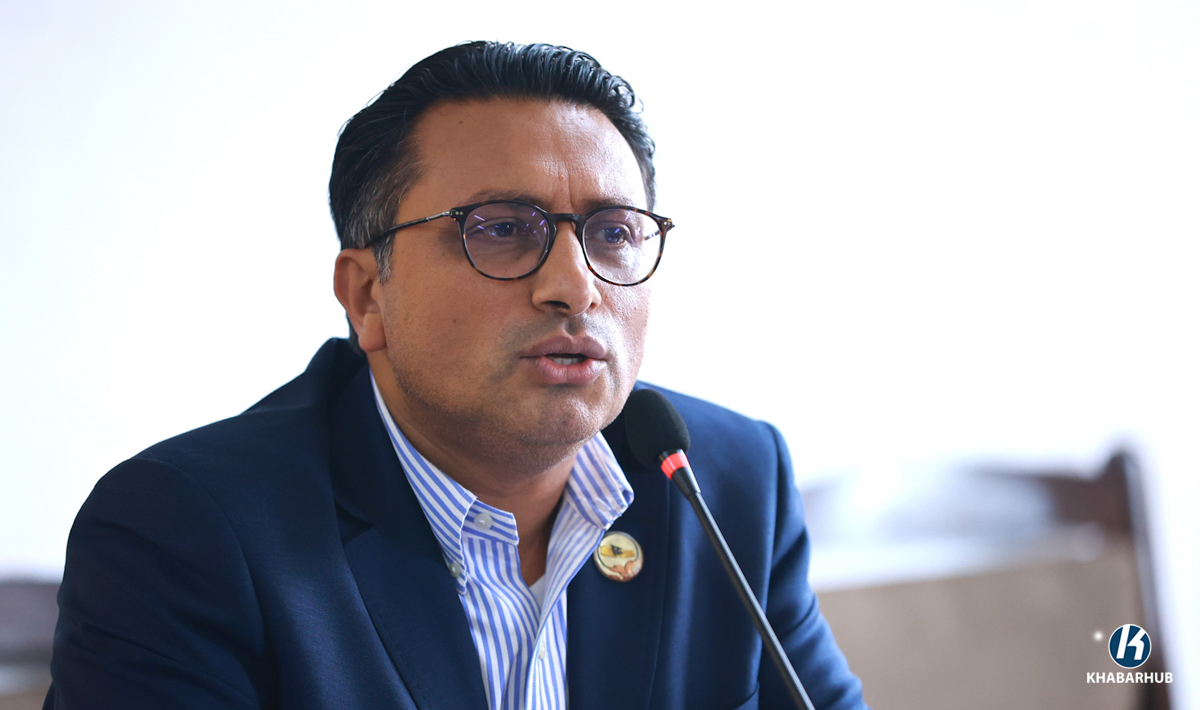
KATHMANDU: Finance Minister Swarnim Wagle on Thursday held discussions with eight former finance ministers to seek suggestions for the upcoming national budget, focusing on economic reforms, realistic revenue targets and expenditure cuts.
Stating that preparations for the next fiscal year’s budget are in the final stage, Wagle said the government is preparing a budget aimed at improving the living standards of citizens on the foundation of good governance.
During the meeting, the finance minister said the upcoming budget would incorporate past experiences and positive policy practices while addressing present economic realities.
He said all former finance ministers had worked for the country and the people under different circumstances, adding that the broader goal of national prosperity remained common.
“We will move forward by following the good work carried out by our predecessors. We must achieve prosperity through this system and these political achievements,” Wagle said.
Former finance ministers and economists participating in the discussion stressed the need for structural economic reforms, realistic revenue targets, reduction in government spending, restoration of private sector confidence and increased investment in productive sectors.
Former finance secretary Rameshore Khanal urged the government to implement the report prepared by the high-level economic reform task force and avoid scattering the budget across poorly prepared and fragmented projects. He also suggested not imposing value-added tax on the electricity sector.
Former finance minister Shankar Koirala recommended studying previous economic reports while formulating policy. He also suggested opening electricity trade to the private sector, expanding industrial zones and advancing hedging policies.
Former finance minister Yubaraj Khatiwada advised against setting overly ambitious revenue targets, saying annual revenue growth should remain within 10 to 12 percent.
Khatiwada suggested bringing a budget of around Rs 2 trillion while prioritizing financial sector reforms and boosting private sector confidence. He also called for ending disorder in national pride projects, improving agricultural subsidies and coordinating closely with Nepal Rastra Bank on financial reforms.
Former finance minister Prakash Chandra Lohani emphasized stronger cooperation between the government and private sector and said policies should equally encourage small, medium and large industries. He also stressed the need for economic dialogue to secure Indian markets for Nepali agricultural products.
Former finance minister Surendra Pandey suggested reducing the number of large projects and focusing only on selected national pride projects. He also stressed the need for land-use law reform and special plans for tourism development.
Former finance minister Prakash Sharan Mahat said social security allowances should be limited to targeted groups and proposed operating state-owned enterprises and government assets under lease models. He also suggested reducing foreign debt and preventing collusion in major contracts.
Former finance minister Barshaman Pun said returns from past infrastructure investments had remained weak and called for greater investment in tourism infrastructure. He suggested developing hill stations and wedding destinations to attract India’s middle class.
Former finance minister Bishnu Prasad Paudel stressed that budgets should be based on realistic expenditure estimates and called for bold decisions regarding the use of mines and natural resources. He also urged the government to move ahead with major projects such as the Budhigandaki hydropower project.
Former finance minister Janardan Sharma described the budget as a tool for implementing political commitments and stressed the need to reduce government expenditure. He also called for increased investment in mining, pharmaceutical industries, chemical fertilizer industries and skilled human resource development.
Most participants shared a common view that Nepal must accelerate economic reforms, rebuild private sector confidence, control public spending and increase investment in productive sectors.





Comment