




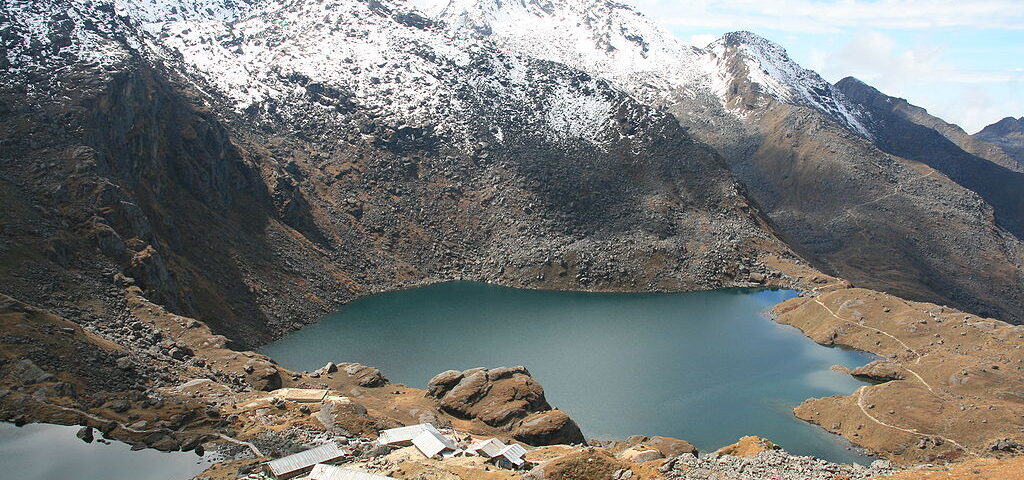
RASUWA: Thousands of devotees are expected to visit Gosainkunda during the annual Ganga Dashahara fair, which has begun at the sacred Himalayan lake revered by both Hindus and Buddhists.
Pilgrims from across Nepal and abroad have started arriving at the holy site to offer prayers to Lord Shiva and take ritual baths in the lake, which is believed to purify sins and grant spiritual salvation.
According to local hotelier Subba Lama, more than 300 pilgrims have already reached the area, while around 5,000 visitors are expected during this year’s festival.
The fair, which began on May 17, will continue until May 26. Religious scholars describe Gosainkunda as one of the most sacred pilgrimage destinations associated with Lord Shiva. According to Hindu mythology, the lake was formed when Lord Shiva struck the mountain with his trident after consuming the deadly Kalakut poison produced during the mythical churning of the ocean.
Unable to bear the heat of the poison, Shiva is believed to have sought relief in the Himalayan region, giving Gosainkunda its spiritual significance.
Religious belief holds that bathing in the lake during Ganga Dashahara removes ten types of sins, while bathing during Janai Purnima is believed to cleanse sins accumulated over many lifetimes. Many devotees consider a pilgrimage to Gosainkunda at least once in a lifetime essential for attaining spiritual merit and salvation.
The journey to the high-altitude lake, situated at around 14,100 feet above sea level, begins from Dhunche and passes through locations including Shiva Temple, Trishuli River Bank, Chandanbari, Cholangpati, Lauri Binayak, and Ganesh Gounda before reaching the sacred lake.
To manage the expected influx of visitors, local hoteliers have arranged food and accommodation facilities in advance. Chairman of the Gosainkunda Area Development Committee, Sanjeev DM, said priests would be available in the lake area to conduct special worship ceremonies.
Security and rescue services have also been put in place. District Police Chief Ashok Thapa said the Nepal Army, Nepal Police, and Armed Police Force Nepal would remain on standby for emergency rescue operations during the pilgrimage.
Health workers have advised travelers to take precautions against altitude sickness, especially above Lauri Binayak. Pilgrims, particularly senior citizens, have been encouraged to acclimatize by staying overnight in Dhunche before continuing the journey.
Locals also recommend carrying ginger, lemon, garlic, and traditional remedies while ascending slowly to avoid health complications. Helicopter services from Kathmandu are also available for those unable to complete the trek on foot.
Authorities and conservation officials have urged pilgrims to protect the fragile Himalayan environment by avoiding littering, refraining from damaging vegetation, and respecting wildlife along the route.
Senior Conservation Officer Shyam Kumar Shah said preserving the Himalayan ecosystem is an important part of religious responsibility and devotion.
Religious leaders say the spiritual atmosphere, glacier-fed waters, Himalayan landscape, and devotional chants make Gosainkunda more than just a pilgrimage site, describing it as a destination for faith, self-purification, and spiritual awakening.



Comment