




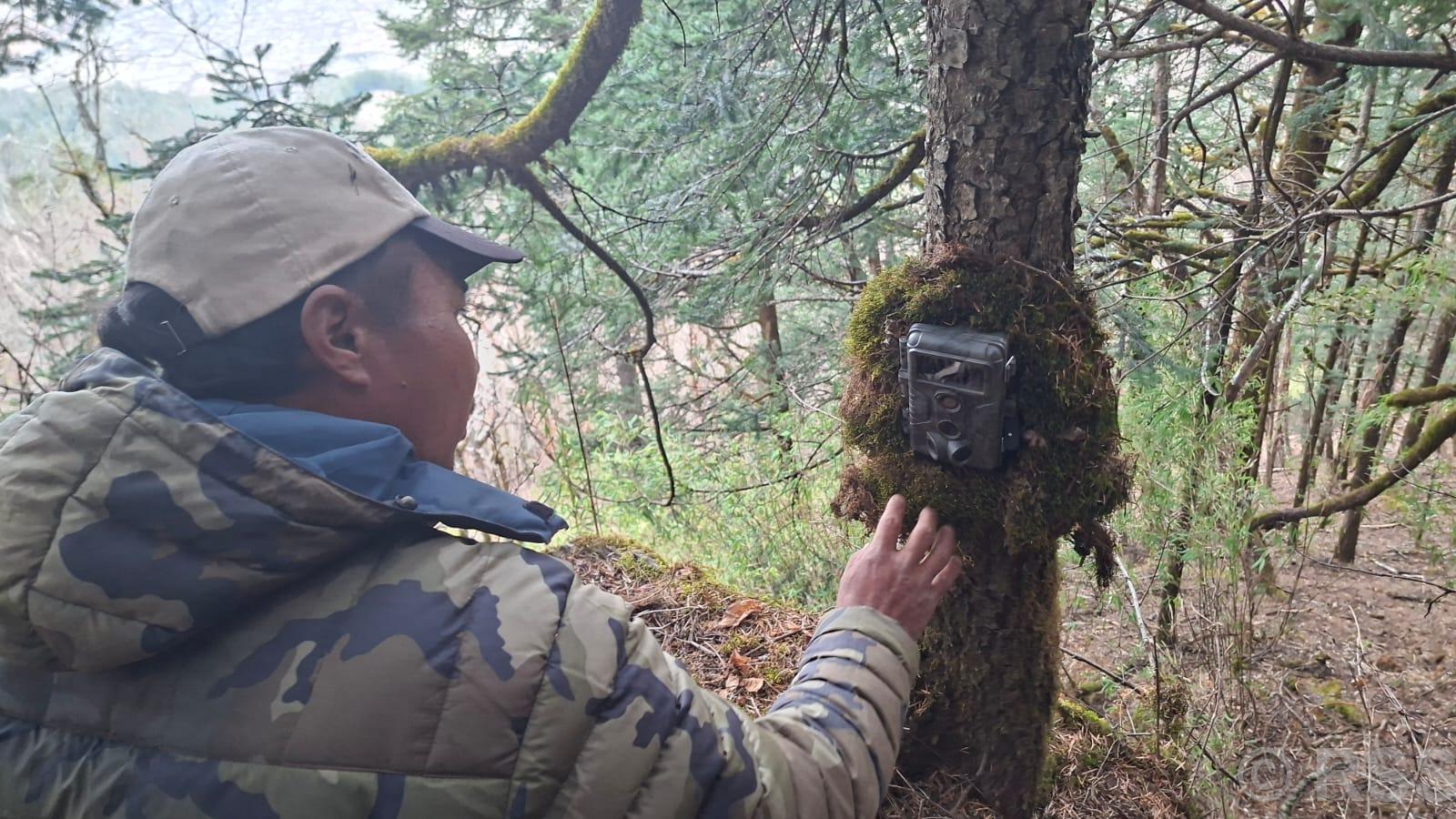
MYAGDI: Automatic cameras have been installed in the Jaljala area and Dhorpatan Hunting Reserve in Dhaulagiri Rural Municipality of Myagdi to study the status of the endangered red panda, locally known as ‘Habre’.
With support from donor agency Toledoju, Biodiversity Conservation Society Nepal (BIOCAS Nepal) has initiated a red panda monitoring programme using the “camera trapping” method in Jaljala, Muna, Mareni, and the Dhorpatan Hunting Reserve areas of Dhaulagiri Rural Municipality-2 and 3, which are known habitats of the species.
BIOCAS Nepal Programme Officer Pawan Rai said that 12 motion-sensor cameras have been installed in areas where red pandas are likely to move and where their feces have been found.
“The images captured by the cameras will help estimate the red panda population in the area,” Rai said. “At the same time, studies are also being conducted on parasites affecting the stomach and intestines of red pandas.”
A technical team has also been mobilised to examine red panda feces in order to assess their health condition and support conservation efforts. The government has listed the red panda, found at altitudes between 2,200 and 4,500 metres above sea level, as an endangered wildlife species.
According to Rai, three cameras had previously been installed near water sources, and red pandas were detected in two of them. He estimated that between six and 25 red pandas may inhabit the area.
Local residents had earlier captured photos and videos of red pandas in Gurjaghat of the Dhorpatan Hunting Reserve in the Bancharedanda area of Dahapatal Community Forest in Muna.
Earlier studies conducted in 2073 BS with financial support from the World Wildlife Fund and the Green Forest Programme, in collaboration with the Red Panda Network and the Himalayan Conservation Forum, had also confirmed the presence of red panda feces in the Mareni area.
Red pandas are nocturnal animals that typically sleep in treetops at night and rest on tree branches during the day. They descend to the ground in search of bamboo shoots and other vegetation for food. Their diet mainly consists of bamboo, palingo, and vegetation found in the forests of Gurja, Lulang, and Muna.
The red panda is listed as a protected species under the National Parks and Wildlife Conservation Act, 2029. Under the law, individuals involved in poaching red pandas can face imprisonment ranging from one to 10 years, fines between Rs 100,000 and Rs 500,000, or both.
According to recent studies, Nepal is estimated to have between 500 and 1,000 red pandas. The species is found only in Nepal, China, India, Bhutan, and Myanmar.




Comment