




KATHMANDU: The final results of the House of Representatives election held on March 5 have been officially concluded, paving the way for the formation of a new government.
The Election Commission Nepal is set to submit its comprehensive report, including the final vote tally, to President Ramchandra Paudel today.
Following the submission of the report, the country will formally enter the process of government formation.
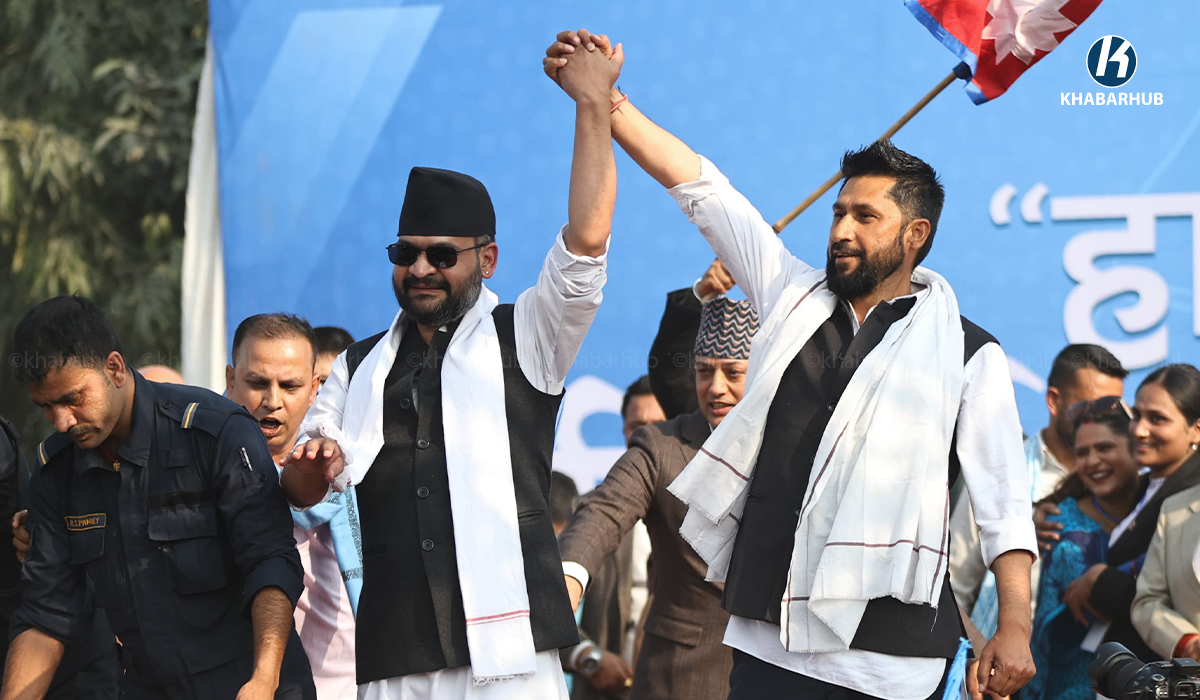
According to the final results, the Rastriya Swatantra Party (RSP) has emerged as the dominant force in the 275-member House of Representatives, securing nearly a two-thirds majority with 182 seats.
Of these, 125 lawmakers were elected under the first-past-the-post system, while 57 were elected through the proportional representation system.
Other parties have secured significantly fewer seats. The Nepali Congress won 38 seats, the CPN-UML secured 25, and the Nepali Communist Party obtained 17 seats. Similarly, the Shram Sanskriti Party won seven seats, while the Rastriya Prajatantra Party secured five. One independent candidate was also elected.
Article 76 of the Constitution of Nepal outlines the provisions for the formation of the Council of Ministers. Clause (1) of the article states that the President shall appoint the leader of the parliamentary party that commands a majority in the House of Representatives as the Prime Minister.
The RSP had contested the elections by projecting its senior leader Balen Shah as its prime ministerial candidate. As per constitutional requirements, the Prime Minister must be a member of the House of Representatives and the leader of the parliamentary party. The party is preparing to appoint Shah as its parliamentary leader.
With the RSP alone holding a near two-thirds majority in Parliament, constitutional experts say that the party’s parliamentary leader will be appointed Prime Minister in accordance with Article 76 (1).
“The constitutional process is clear, after lawmakers take the oath, the parliamentary party leader will be selected, and the President will appoint the leader of the majority party as Prime Minister,” said constitutional expert Khimlal Devkota. “The Prime Minister will then proceed to form the Council of Ministers.”
This marks the first time since the promulgation of the Constitution that a single party with a clear majority will form a government under Article 76 (1).
Devkota noted that if no party had secured a majority, the President would have invoked Article 76 (2) to call for the formation of a coalition government. “That situation has not arisen this time,” he added.
The Federal Parliament Secretariat has scheduled the oath-taking ceremony for newly elected lawmakers on March 26. Preparations are underway, and an informal discussion with representatives of six political parties is being held today to finalize arrangements related to oath-taking, orientation, and parliamentary party formation.
As per legal provisions, the Election Commission must submit its report to the President within seven days of the publication of the final results. The Commission has already issued certificates to all 110 lawmakers elected under the proportional representation system.
According to constitutional provisions, the President must convene a session of the Federal Parliament within 30 days of the announcement of the final results, as stipulated in Article 93 (1) of the Constitution.
The first meeting of the House of Representatives will be chaired by the senior-most member, during which the process to elect the Speaker and Deputy Speaker will begin within seven days.
The upcoming parliamentary sessions are expected to be held at the newly constructed Parliament building in Singha Durbar.




Comment