




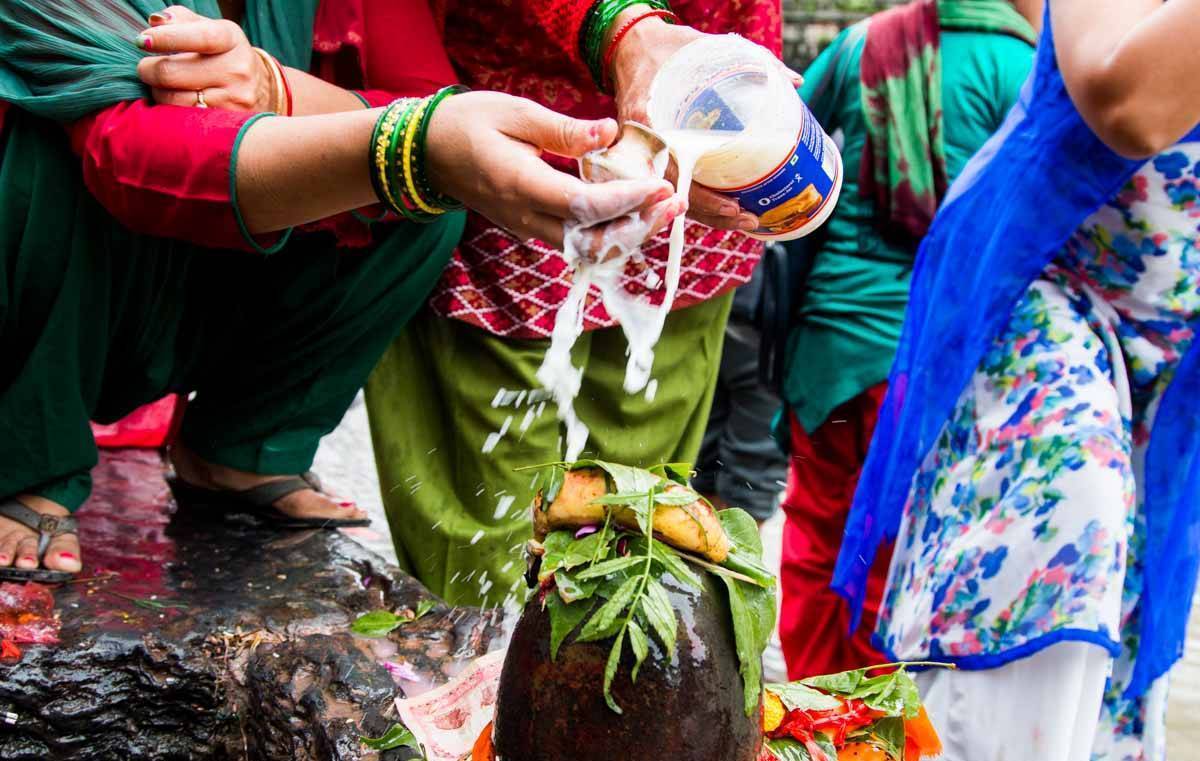
KATHMANDU: Saune Sankranti, observed annually on the first day of the month of Nepali month of Shrawan in the solar calendar, is being celebrated across Nepal today with ritual bathing, religious worship, and charitable donations.
The festival marks the day when the Sun completes its transit through Gemini and enters Cancer (Karkat), signifying the beginning of Dakshinayan—the Sun’s six-month southward journey.
In the Vedic Sanatan tradition, both Uttarayan, which begins on the first day of Magh, and Dakshinayan, which begins on the first day of Shrawan, hold special religious significance.
As most Nepalis are engaged in farming, the month of Asar is typically spent in intensive agricultural work. According to Prof. Dr. Devmani Bhattarai, there is a long-standing tradition of applying or throwing mud on this day, which is believed to help prevent skin diseases caused by prolonged exposure to mud during paddy cultivation.
Traditionally, people also worship a demon known as Kandaraka by preparing an amulet made from medicinal plants such as Kaag Bhalayo, Kukurdaino, Lutejhar, Pani Amla, lemon, mango, and pear leaves before discarding it as part of the ritual.
In many communities, the ceremony is accompanied by dancing, blowing conch shells, ringing bells, and closing the doors of homes according to local customs.
The month of Shrawan is also regarded as especially auspicious for the worship of Lord Shiva. Women traditionally wear green bangles and green attire during the month as a symbol of their connection with nature. Devotees throng Shiva temples across the country, including the Pashupatinath Temple, to offer prayers throughout the holy month.




Comment