




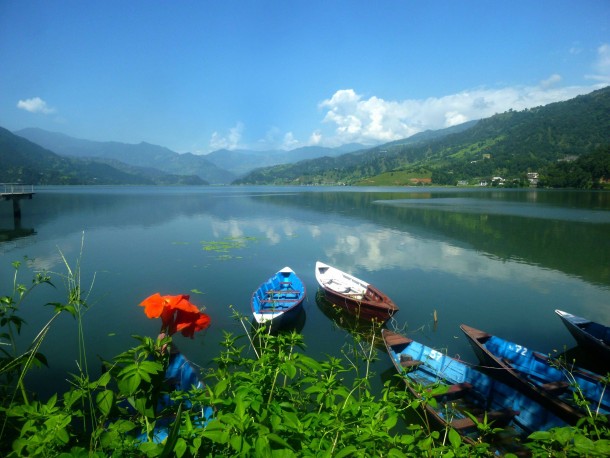
POKHARA: Tourism entrepreneurs have expressed optimism following the government’s decision to add a public holiday on Sunday, creating a two-day weekend. They believe the move will encourage domestic travel and help revive the tourism sector.
Entrepreneurs in Pokhara, widely regarded as the country’s tourism capital, say the decision has generated fresh enthusiasm. The government introduced the additional holiday with the aim of reducing the growing trade deficit and fuel consumption. Previously, Saturday was the only weekly public holiday.
Tourism stakeholders say that consecutive days off tend to increase the number of overnight visitors, benefiting businesses ranging from homestays to large hotels. They expect the measure to have a positive ripple effect across the broader economy.
Pokhara’s tourism industry, which relies heavily on domestic visitors, views the two-day weekend as a strong opportunity for business recovery. Although a similar policy was introduced earlier on a trial basis, it was not fully implemented. Entrepreneurs say effective implementation this time could bring meaningful and lasting improvements to the sector.
Laxman Subedi, President of the Hotel Association of Pokhara, said the move would help promote a “weekend travel” culture. “A similar announcement was made before, but there were challenges in implementation. If the current government approaches this from a tourism perspective—not just fuel consumption—it could have a significant positive impact,” he said.
Subedi noted that during previous periods with a two-day weekend, tourist numbers rose by around 50 percent compared to regular days. He added that the policy would particularly benefit domestic travelers, who often struggle to find sufficient time for trips.
“Tourism activity is always higher during holidays, and with two consecutive days off, the number of visitors is bound to increase,” he said.
He also recalled that hotel occupancy in Pokhara reaches up to 90 percent during major holidays such as Dashain and Tihar. According to him, a regular two-day weekend could foster a stronger travel culture and provide relief to small and medium-sized hotels. However, he cautioned that rising fuel prices and the need for a balanced economic environment remain concerns.
Similarly, Pokhara Tourism Council Chairman Tara Pahari said the decision would significantly promote domestic tourism. Citing global practices, he said, “Weekend culture has played a key role in making tourism dynamic in many developed countries. Easier short-trip planning will increase tourist flow to natural and peaceful destinations like Pokhara.”
Despite some short-term challenges, he expressed confidence that the policy would have a positive long-term impact on the tourism sector.
Maniraj Lamichhane, chief of the Nepal Tourism Board, Gandaki Province, said the practice of a two-day weekend has already shown positive signs in the region, particularly in Pokhara.
“The impact of the extended holiday is visible. Alongside Pokhara, domestic tourist movement has increased in other districts as well, including Mustang, Nawalpur, Tanahun, Parbat and nearby rural tourism villages,” he said. “For sustainability, we now need to focus on improving service quality and promoting new destinations.”
He added that the tourism board is working in coordination with the private sector to make “weekend tourism” more systematic.
Rewan Pokhara Chairman Bishwaraj Poudel stressed that holidays alone are not enough and must be supported by tourism-friendly policies.
“Holidays help promote short-break travel, but that alone is not sufficient,” he said. “Infrastructure development, ease of transportation and effective promotion must go hand in hand. Only a long-term policy can ensure sustainable tourism growth.”
Similarly, Shobha Sapkota, president of Village Tourism Promotion Forum, Gandaki, said the two-day holiday has opened new opportunities for rural tourism.
“The trend of taking short weekend trips to nearby villages and destinations is gradually increasing,” she said. “Homestays and local tourism activities, especially in villages around Pokhara, have already seen some positive impact.”
She noted that domestic travel culture has been growing after the COVID-19 pandemic and expressed confidence that the two-day weekend will further support this trend.
“We are working to link rural tourism with weekend travel to boost local employment and income,” Sapkota added, emphasizing the need for better infrastructure, service quality and promotion to sustain the momentum.
Despite the optimism, concerns remain among the business community. Some entrepreneurs point out that the government’s primary objective behind the decision is to reduce fuel consumption. They warn that if fuel shortages arise or stricter vehicle restrictions are imposed, it could discourage tourists—especially those traveling in private vehicles—from visiting Pokhara.
There are also concerns about policy instability. In the past, the decision to implement a two-day weekend has been introduced and withdrawn multiple times, raising questions about its continuity.
Pokhara Visit Year Coordinator Gopi Bahadur Bhattarai said frequent policy changes create uncertainty in the tourism sector.
“If such policies keep changing, hotels cannot prepare long-term packages, travel companies cannot make clear plans, and uncertainty among tourists will increase,” he said.
He highlighted that Pokhara is not just a city but the main gateway to the Annapurna region. Attractions such as Fewa Lake, paragliding and trekking have established it as an international tourism destination.
“If weekend tourism is developed in a systematic way, it can directly benefit a wide range of people—from café operators and travel guides to taxi drivers and micro-entrepreneurs,” he said.
Bhattarai added that many countries around the world have long adopted a two-day weekend, allowing people time for family, travel and rest. He noted that Nepal’s diplomatic missions also follow a five-day workweek, making the model relevant for improving productivity, health and family life.
“This should be viewed not only from an economic perspective but also as a social and cultural opportunity,” he said. “Traveling to new places exposes people to diverse cultures, broadens perspectives and promotes domestic tourism.”
TAAN Gandaki Chairman Krishna Acharya also welcomed the decision, saying it has brought new energy to the tourism sector.
“This arrangement will significantly support trekking tourism, which is central to Nepal’s global identity,” he said. “A two-day weekend encourages short trips to nearby trekking routes.”
He added that short treks in the Annapurna region, village-based trails and homestay destinations can now be more easily explored, attracting more domestic tourists.
Calling it a “golden opportunity” for promoting domestic tourism, Acharya said its success will depend on reliable fuel supply, efficient transportation, policy continuity, and trekking-friendly infrastructure and safety measures.
“If these aspects are managed well, Pokhara can be established as the leading weekend trekking destination in South Asia,” he said.





Comment