




KATHMANDU: The government has decided to relocate people displaced from settlements along Kathmandu’s riverbanks to the districts listed on their citizenship certificates as part of its land management process.
According to Bal Bhadra Bastola, chairperson of the Land Problem Resolution Committee, the Ministry of Land Management has provided details of displaced families staying in holding shelters, and the committee will verify their land ownership records before forwarding recommendations to district-level committees for land ownership certificates.
“The ministry sent us the details of the people staying in holding shelters only today. We will now verify through the Land Revenue Office whether they already own land and recommend eligible beneficiaries to the respective district committees for land ownership certificates,” Bastola said.
He said the committee had not yet reviewed the full list and could not confirm the exact number of beneficiaries.
The Cabinet led by Prime Minister Balendra Shah dissolved the previous Land Commission on March 22 and later, on June 9, formed the Land Problem Resolution Committee to replace it.
The committee has since digitized around 1.256 million applications submitted by landless people to the former commission and has already distributed land ownership certificates to 33 families in Bardiya and Jhapa.
According to Bastola, 29 families in Bardiya’s Badhaiyatal Rural Municipality received certificates on July 2, followed by five landless families in Buddhashanti-4 of Jhapa on July 13.
The details of displaced families were provided to the committee by the High-Powered Bagmati Civilization Integrated Development Committee, which was assigned to collect information on people staying in holding shelters.
Executive Chairperson Ananda Singh Bhat of the Bagmati committee said 388 families are currently staying in holding shelters. Of them, 327 families have accepted government relief until they receive land.
He said 61 families have refused the relief package, insisting they should be provided land before leaving the shelters.
According to Bhat, 30 families at the Radhaswami holding center in Kirtipur remained at the site without accepting relief and were affected by flooding on Saturday. Some families, he added, have accepted relief but continue to stay in the shelters.
Currently, 35 families are staying at the Ichangu shelter in Nagarjun Municipality, 23 families at Bode in Bhaktapur, and 82 families at Kharipati.
The government initially provided Rs 25,000 per family as relief to help arrange temporary accommodation, followed by a commitment to provide Rs 15,000 per month until permanent land is allocated.
The committee will now verify applicants’ details, identify genuine landless households, distinguish between landless families, unmanaged settlers, and landless Dalit households, and recommend eligible cases to district committees for land allocation.
The condition of displaced families living in temporary shelters has sparked widespread public concern, with complaints ranging from inadequate food and healthcare to a lack of clothing, employment opportunities, and educational support for children.
Many families also experienced flooding in the shelters after being relocated from riverbanks. Following the flooding in Kirtipur on Saturday night, the government moved affected families to Kharipati in Bhaktapur, where six ministers visited them on Sunday.
During the visit, Minister for Land Management and Federal Affairs Pratibha Rawal assured the families that land ownership certificates would be distributed only after completing all legal procedures to ensure a secure and permanent settlement.
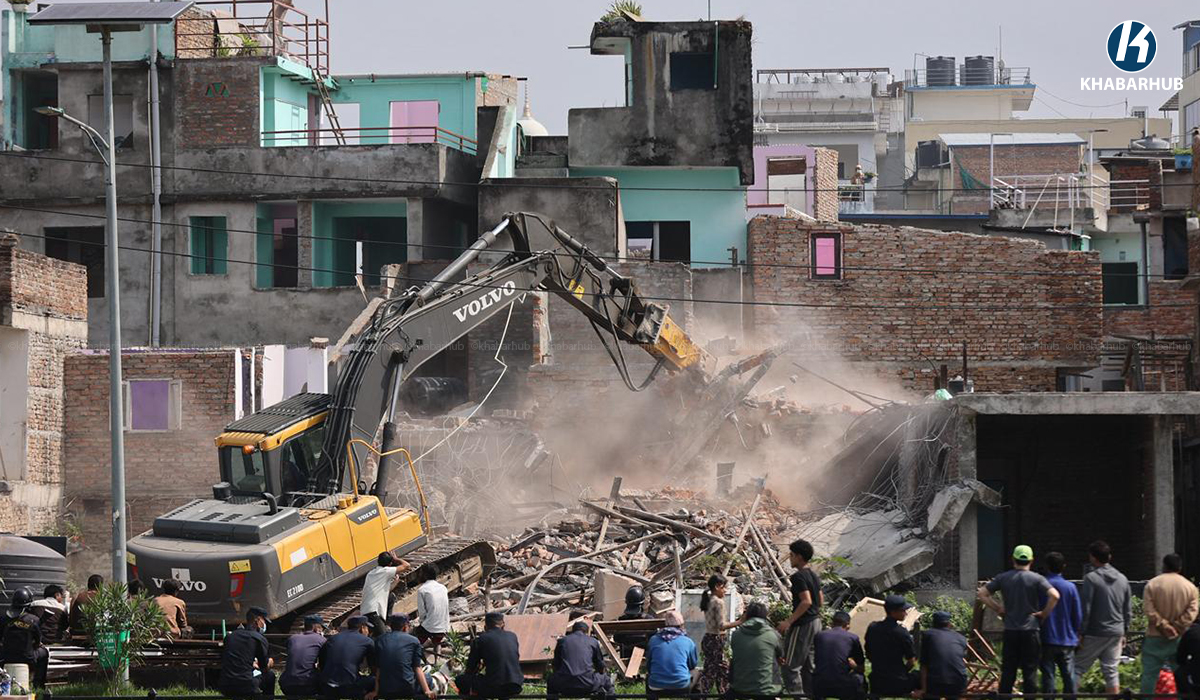
The government began removing settlements from the banks of the Manohara River in Thapathali, Kathmandu Metropolitan City-31, on April 24 as part of a campaign to clear high-risk riverside settlements. The operation continued for more than 10 days before being halted on May 8 following an interim order from the Supreme Court.
The court directed authorities not to forcibly evict landless and unmanaged settlers without following due legal procedures, warning that such actions could create a humanitarian crisis and cause irreparable harm. It also instructed the government to ensure the displaced families’ basic needs while expediting the resolution of the case.





Comment