




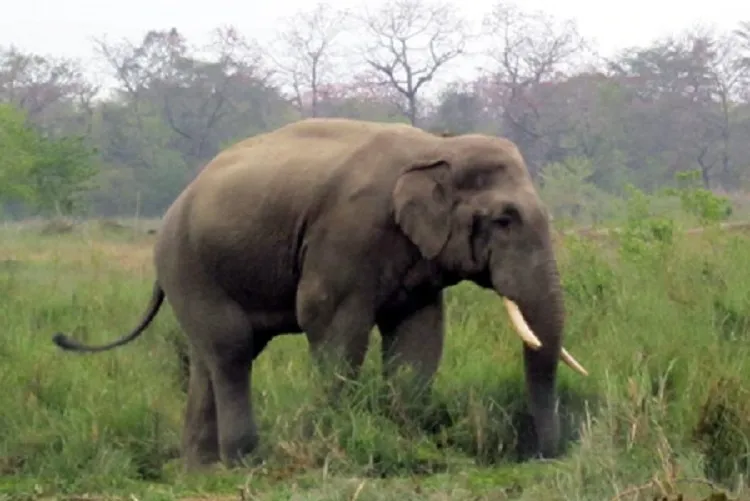
KATHMANDU: The deaths of four members of the same Bote family in separate attacks by the wild elephant known as “Dhurbe” have reignited debate over whether elephants hold grudges against people for extended periods.
Wildlife experts say elephants are highly intelligent animals capable of recognizing individuals who have harmed them. However, they caution that there is no scientific evidence to conclude that an elephant would target members of the same family across generations out of revenge.
On Saturday night, the wild elephant killed 21-year-old Ashika Bote and her four-year-old son Bharat at their home in Bharatpur Metropolitan City-23 after entering the settlement from the nearby forest.
Ashika’s husband, Punu Bote, attempted to drive the elephant away by lighting a fire, but their house was destroyed in the blaze.
The latest tragedy came 14 years after the same elephant allegedly killed Punu Bote’s grandparents in Draupatinagar, Madi, in a similar attack. The two incidents have prompted questions over whether the elephant deliberately targeted the same family.
Elephants can recognize people, experts say
Dr. Ashok Ram, Chief Conservation Officer at Bardiya National Park and an elephant researcher, said elephants are capable of identifying people who have behaved aggressively toward them.
“Elephants are highly intelligent animals and can recognize individuals who have injured or mistreated them,” he said.
According to Ram, elephants may display anger or retaliatory behavior toward specific individuals, but there is no evidence to suggest such hostility is passed across generations.
“If someone throws stones at or harasses an elephant, it may attack that same person later,” he said. “But there is no scientific basis to conclude that it would attack the next generation of that person’s family for the same reason.”
Ram cited an incident in which a game scout threw stones at an elephant. The following day, the animal reportedly returned to the scout’s quarters, broke windows and damaged property while leaving nearby rooms untouched.
He said the incident demonstrated elephants’ ability to remember individuals who had harmed them.
Strong memory, but no evidence of generational revenge
Elephant expert Dr. Narendra Man Babu Pradhan said some incidents indicate elephants may retain anger, but isolated cases cannot be used to draw definitive conclusions.
“Elephants may hold grudges, but it is difficult to claim that this particular elephant attacked the same family after 14 years because of revenge,” he said.
Chitwan National Park Chief Conservation Officer Dil Bahadur Pun also said elephants possess strong memories and are capable of recognizing routes, locations and people.
“They can show aggressive behavior toward those who have harmed them,” he said. “However, we cannot conclude that repeated attacks on the same family were motivated by revenge.”
Pun noted that both the family’s previous home in Madi and their current residence in Bharatpur lie along elephant movement corridors, suggesting the attacks could also be linked to habitat overlap rather than deliberate targeting.
Handlers say elephants can be aggressive
Mani Puran Chaudhary, head of the Elephant Breeding and Training Centre in Sauraha, said elephants can become extremely aggressive when angered.
Drawing on generations of his family’s experience working with elephants, Chaudhary said even trained elephants have attacked and killed their own handlers.
“An elephant may remember someone who mistreated it and attack when the opportunity arises,” he said.
He also noted that young elephants can display strong aggression during training and require patience and gradual conditioning before becoming accustomed to human interaction.
While experts agree that elephants possess remarkable intelligence and memory, they say current scientific evidence does not support the theory that wild elephants deliberately seek revenge against successive generations of the same family.






Comment