




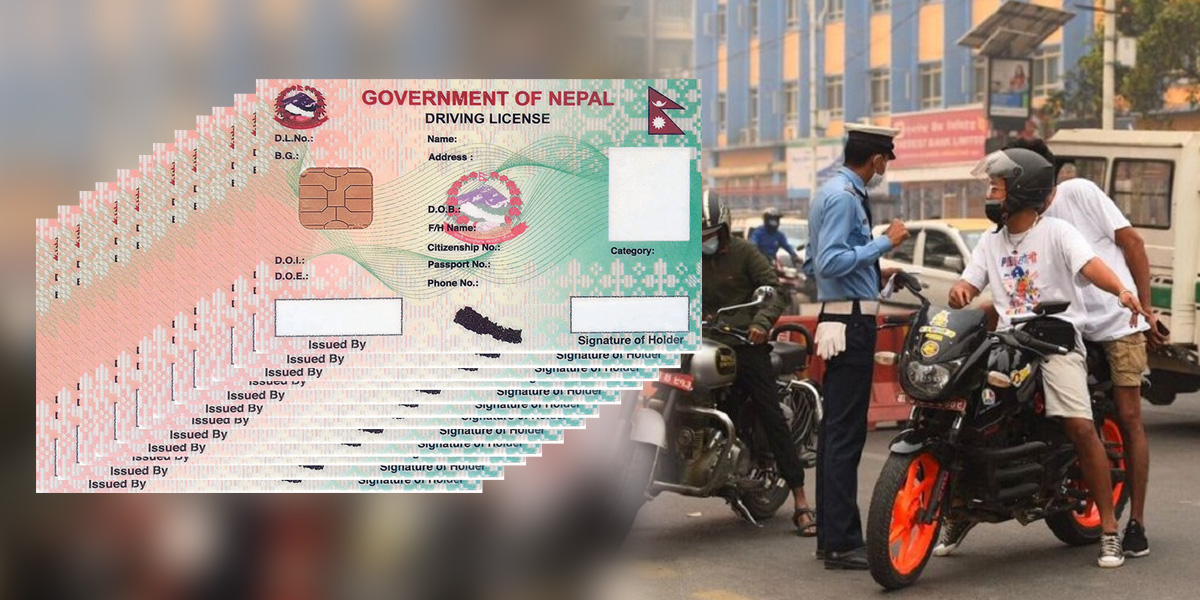
KATHMANDU: The Security Printing Centre has started printing driving licenses that have been pending for years at the Department of Transport Management.
According to the centre, it is currently printing 1.2 million driving licenses as per an agreement signed with the department on October 29, 2025.
“We are printing the 1.2 million licenses that had been stuck in the backlog, as agreed with the department following the Gen-Z protests,” said the centre’s executive director, Devaraj Dhungana.
So far, the department has sent data of about 238,000 service seekers in two phases for printing. The data includes applicants who passed the driving test as well as those who applied for licence renewal but had not yet received their cards.
“Most of the licenses from the 238,000 records sent by the department have already been printed. Around 170,000 have been dispatched for distribution, while another 68,000 have been printed and will be sent to the department on Sunday,” Dhungana said.
Meanwhile, about 31,500 licenses have already been printed and distributed under urgent service requests.
According to Keshav Khatiwada, chief of the information technology section at the department, urgent licenses, especially for people traveling abroad for foreign employment, are printed and issued within 24 hours.
“We have already distributed around 31,500 licenses under the urgent category,” he said.
The department is preparing to send the 170,000 printed licenses received from the centre to respective transport offices. Offices within the Kathmandu Valley will collect them directly, while those outside the valley will receive them via postal service.
Khatiwada also said the centre has requested data of an additional 200,000 applicants for printing.
“They have said they can print around 200,000 licenses every week. We are verifying the details before sending them,” he added.
The centre has claimed that all 1.2 million licenses will be printed within the contract period, which runs until April 25.
“In line with the agreement, we must print 1.2 million licenses by April 25. We are working to complete the printing even before the deadline and deliver them in bulk,” Dhungana said.
Officials said preparations are also underway to print the remaining licenses of around 1.7 million applicants, both new and renewal, by July 16.
The backlog worsened after a fire during the Gen‑Z Movement Nepal on September 8 and 9, 2025, destroyed infrastructure at the department’s office in Baneshwor, Kathmandu. The incident damaged five mass printers used for licence printing, the department’s data centre, and facilities used for embossed number plate production.
As a result, transport offices across the country, already dealing with high service demand, remained largely non-operational for nearly two months. Although services such as vehicle registration, renewal, and driving tests resumed through a temporary system, licence printing had remained stalled.
To address the issue, the department handed over the responsibility of printing licenses to the Security Printing Centre. The two agencies signed a contract worth Rs 276 million to print 1.2 million licenses within six months.
The printing process was formally launched on November 7, 2025, by then Minister for Communications and Information Technology, Jagdish Kharel.
Unlike previous cards that used chips, the newly printed licenses feature QR codes and advanced security measures. According to the centre, the cards include 34 visible and invisible security features with up to six layers of security technology.
Meanwhile, the department is still awaiting approval from the Ministry of Finance Nepal to establish a permanent data centre.
“All services are currently running through a temporary data centre. We had sent a file to the finance ministry to proceed with procurement, but the decision is still pending,” Khatiwada said.
He added that during a meeting with newly appointed Minister for Communications and Information Technology Sunil Lamsal on Tuesday, officials urged the government to expedite licence printing and distribution.






Comment