




KATHMANDU: The new academic session has officially begun from April 28, in line with a government decision. A Cabinet meeting held on April 9 had earlier scheduled the start of classes from May 4, although many local governments had already reopened schools earlier. As per the Constitution, authority over secondary-level education lies with local governments.
From Monday, regular classes are set to begin nationwide as per the government’s decision. However, many children displaced by the ongoing eviction of informal settlements have been unable to attend school.
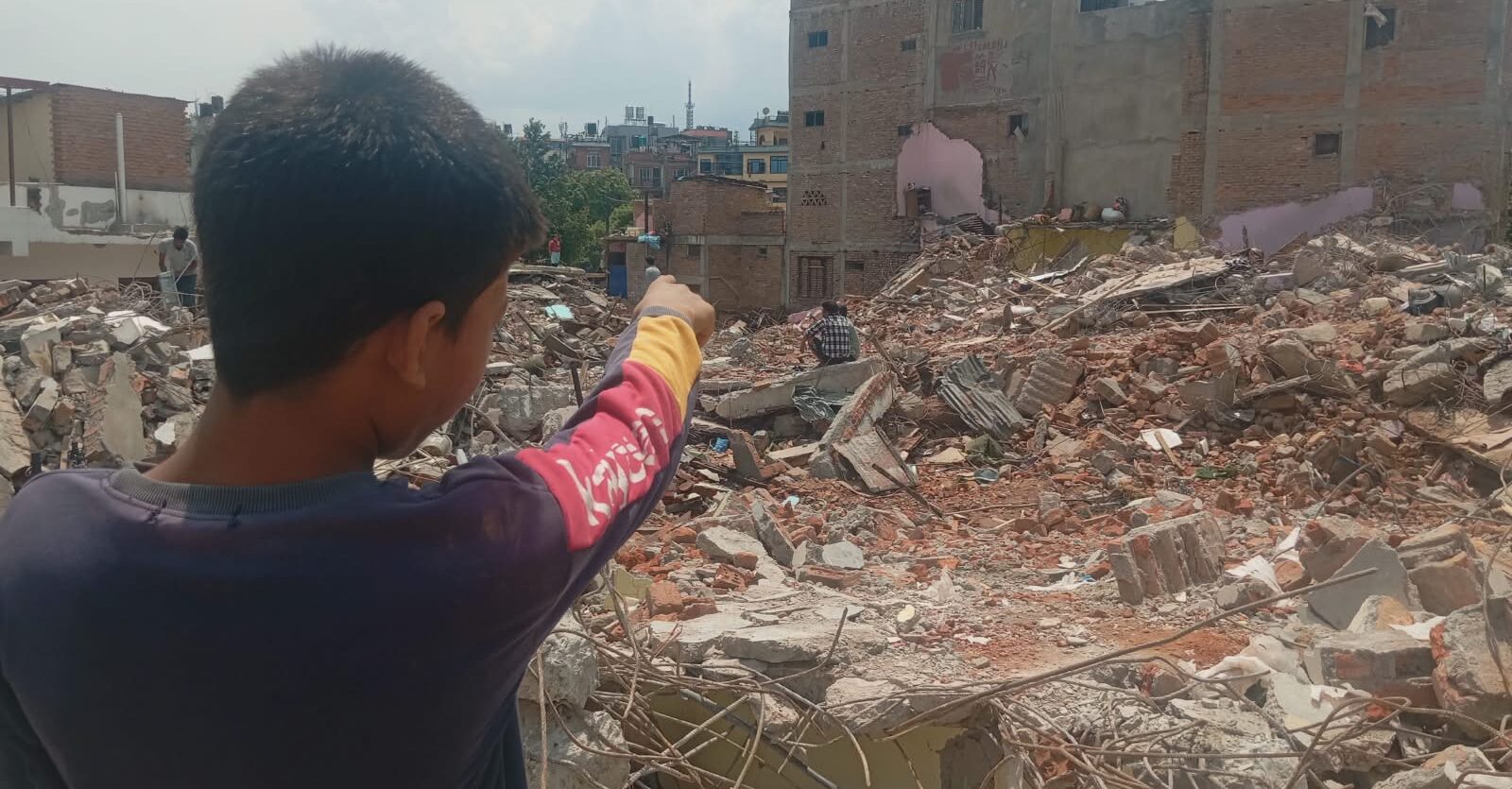
For the past eight days, the government has been carrying out a campaign to clear settlements in high-risk areas across the Kathmandu Valley. Following demolitions using bulldozers, affected families have been forced to take shelter in temporary holding centers. The impact has been particularly severe on children, the elderly, and the sick.
At a holding center run at Radhaswami Satsang in Kirtipur, children expressed uncertainty about their education, books, and future. A sixth-grade student said he does not even know his exam results yet. “I don’t know if I passed or not. Now I don’t know whether I will be able to study,” he said.
He added that his friends have been eager to get new textbooks, but he is unsure if they will be provided. “I want new books, but I don’t know if I’ll get them,” he said.
The children were relocated from the Thapathali settlement on April 25, where around 145 families had been living. While some families are staying in hotels, others have been brought to the holding center.
The student, along with his brother, studies in Grade 6 at Pragati Shiksha Sadan Secondary School in Lalitpur. His brother also remains uncertain about when and how they will return to school.
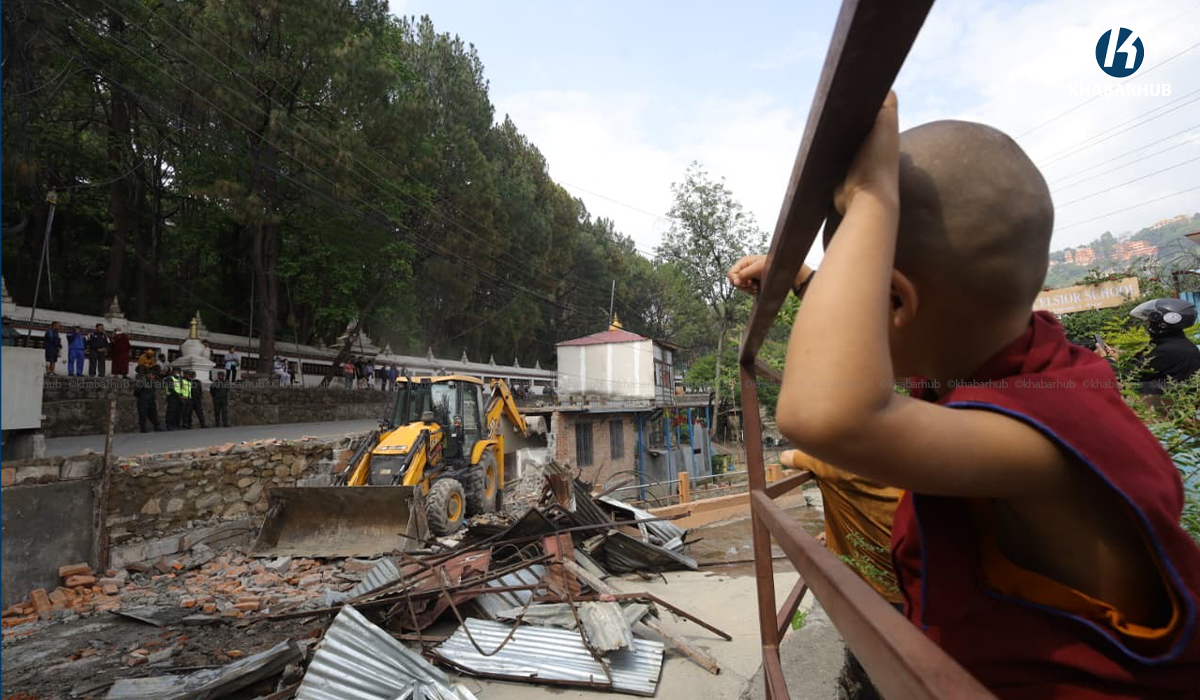
“I want to go to school, but no one here has told us anything,” he said. His family has six members. “My mother stays at home and doesn’t work. My father used to do labor work,” he added, noting that his father has also been unable to work since the eviction.
Despite the situation, the child shared simple wishes. “We got a football to play with. Please bring us a badminton set too,” he said.
Another child, Sonu Tamang, shared a more difficult story. Due to family conflict, his education has been repeatedly disrupted. “I should be in Grade 8, but I’m in Grade 5,” he said. He explained that frequent school changes and the COVID-19 lockdown caused delays.
Now, he fears falling behind again. “If I can’t study now, I’ll fall behind again,” he said with a sigh.
Sonu had been living in Thapathali with his parents, but his mother is no longer with him. “There were fights at home. My mother lives in Baneshwor now,” he said. “She had taken me with her at first, but later left me back in Thapathali.”
He now lives only with his father in the holding center. “My mother left me in March. Now it’s just me and my father,” he added.
Another child said he misses life in Thapathali despite better food at the shelter. “Before, we didn’t have enough to eat, but now we get proper meals. Still, I liked it there more. Our house has been demolished, so we probably can’t go back,” he said.
When asked about school, he responded, “Our house is gone—how can we go?”
In Anamnagar, a student named Aditya Shrestha directed a question at Prime Minister Balen Shah: “Is Balen happy now?”
His words reflected the anger and pain of displacement. What he misses most, he said, is his friends. “I had 20–25 friends there. Now they are far away,” he said.
Aditya’s family had been living for eight years in a makeshift shelter on public land along the Dhobikhola river. “My father and sister are in Dubai. My mother works at New Plaza. We all lived here together,” he said.
The family has now moved to a rented room nearby. Aditya studies in Grade 8 at Ratna Rajya Secondary School in Mid-Baneshwor.
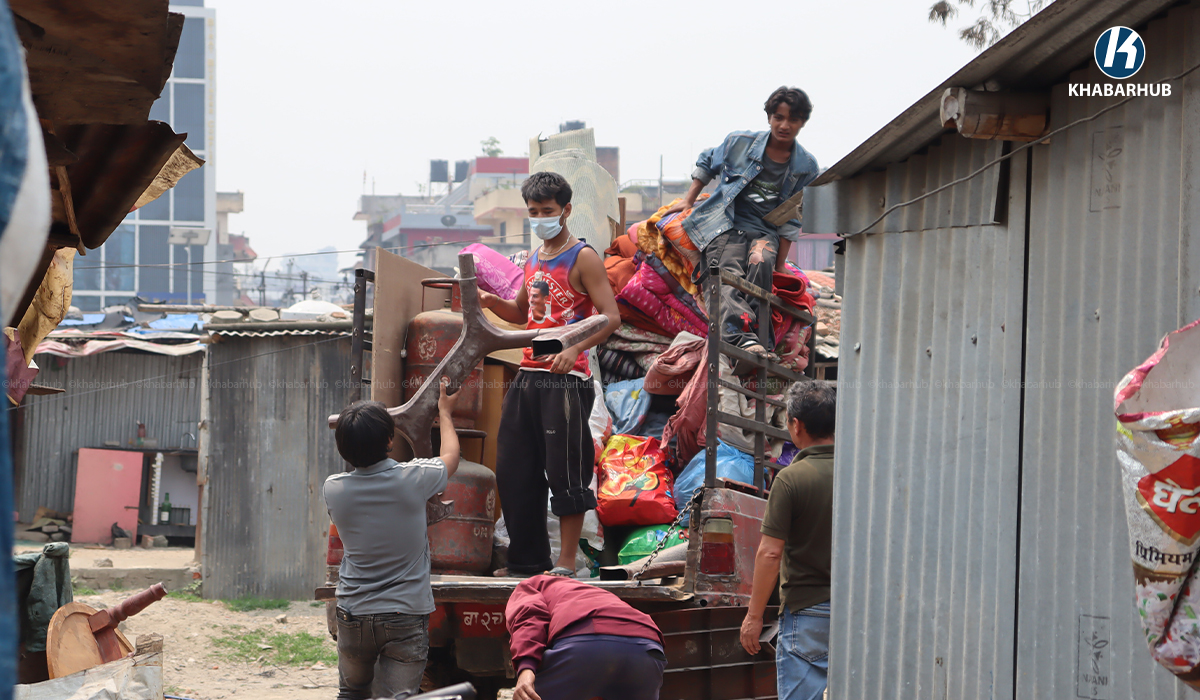
Schools operating in settlements along riverbanks in Thapathali, Manohara, and Balkhu have also been removed. This has affected not only children from those settlements but also other students from nearby areas who attended those schools.
Meanwhile, efforts have begun to ensure continuity in education for displaced children. On Sunday, Kathmandu Metropolitan City’s acting mayor Sunita Dangol held discussions with representatives of private schools on providing free residential education for children living in holding centers.
The meeting, held at Rastriya Sabha Griha, was attended by officials from Private and Boarding Schools’ Organization Nepal and National Private and Boarding Schools’ Association Nepal at central, district, and metropolitan levels.





Comment