




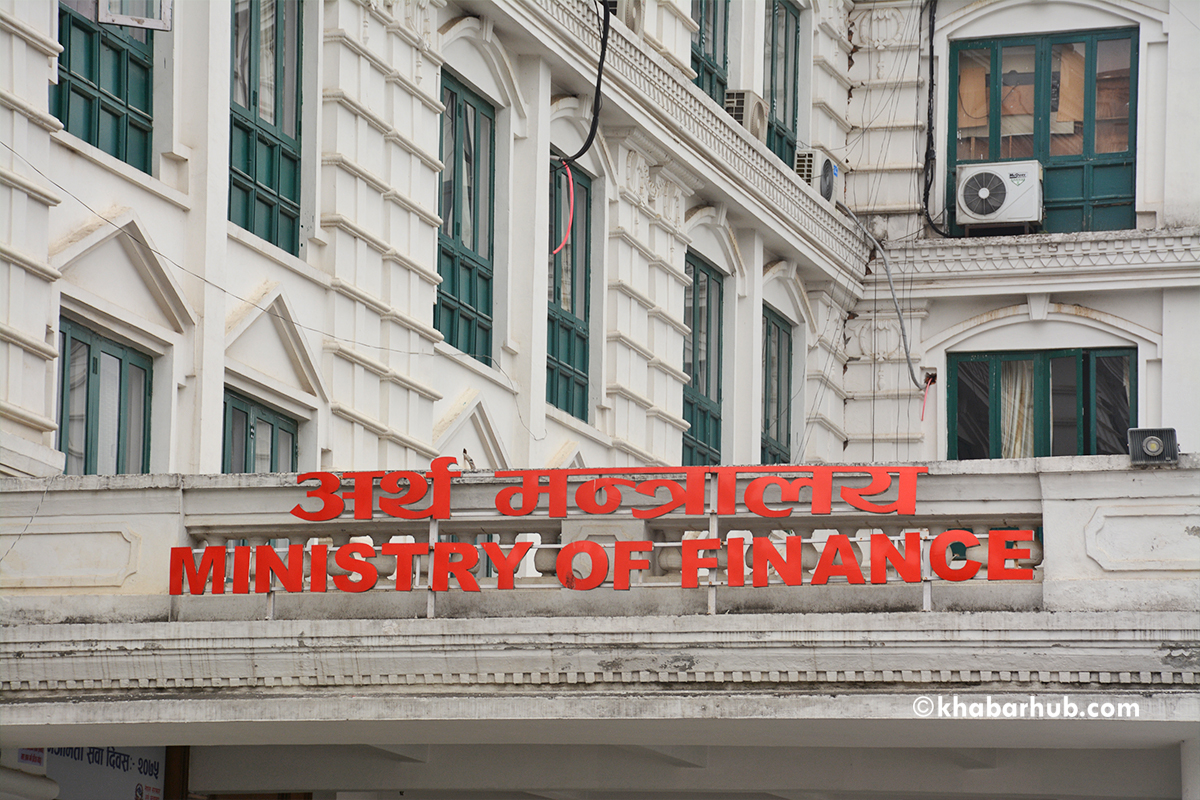
KATHMANDU: The government has invited suggestions on tax rates and revenue policies to be implemented through the upcoming fiscal year 2026/27 budget.
The call for input comes from the Revenue Advisory Committee, formed by a cabinet decision on February 11 with the aim of collecting concrete recommendations on revenue policy, tax structure, customs rates, revenue administration, and overall economic reforms ahead of budget drafting. The committee, chaired by the Revenue Secretary, is expected to submit suggestions by April 13.
Stakeholders, including the Ministry of Finance, Ministry of Industry, Commerce and Supplies, Inland Revenue Department, Customs Department, Revenue Investigation Department, Asset Recovery Investigation Department, and other departments under the Ministry of Finance, can provide their input to the committee.
The committee has been tasked with providing policy and legal recommendations on income tax, value-added tax (VAT), excise duty, education service fees, digital service tax, e-commerce taxation, and other internal taxes under the Economic Act. It will also recommend measures for reviewing tax rates, simplifying procedures, improving tax systems, and strengthening revenue administration and organizational structure.
Similarly, the committee will work on policy and legal reforms related to industrial promotion and protection, import-export, service trade, investment promotion, supply management, and tax and non-tax incentives. Customs rate revision, domestic production protection, valuation system improvement, trade facilitation, border management, and customs administration reform are also included in its mandate.
Other areas of focus include curbing tax leakage, controlling smuggling and illegal trade, regulating foreign exchange, preventing economic crimes, and making legal and organizational improvements in asset recovery investigations. Revenue and policy reforms in agriculture, energy, tourism, civil aviation, and natural resource management will also be studied.
The committee will examine issues in banks, financial institutions, insurance, remittance, capital markets, cooperatives, and real estate transactions, proposing measures to resolve problems related to revenue mobilization. It will also identify new sources of non-tax revenue, review rates, resolve duplication issues between federal, provincial, and local taxes, and improve intergovernmental revenue management and distribution.
A comparative analysis of international, regional, and national economies will inform recommendations related to economic development. The committee will study whether to expand the tax base, introduce new taxes, or repeal existing ones, consulting relevant experts, industrialists, and business representatives.
To ensure effective functioning, the Ministry of Finance has established nine subcommittees. The Internal Revenue Subcommittee will focus on income tax, VAT, excise, digital tax, and other internal tax reforms. The Customs Subcommittee will handle customs rates, valuation systems, trade facilitation, and border management. The Revenue Leak Control and Investigation Subcommittee will analyze leakage patterns, preventive measures, foreign exchange, and economic crime control.
The Industry, Commerce, Investment and Export Promotion Subcommittee will recommend industrial protection, trade policy reforms, and incentives. The Agriculture, Energy and Tourism Subcommittee will study reforms in agricultural commercialization, electricity production, tourism promotion, and natural resource management.
The Banking and Financial Sector Subcommittee will address issues in banking, insurance, cooperatives, capital markets, and revenue operations. The Non-Tax and Intergovernmental Revenue Subcommittee will work on non-tax revenue sources, rate review, and intergovernmental tax duplication. The Macroeconomic Subcommittee will analyze economic indicators, revenue potential, and projections.
Finally, the Asset Recovery and Investigation Subcommittee will provide recommendations on strategies for exiting the FATF grey list, risk assessment, and necessary reforms.
After collecting inputs, the subcommittees will submit their reports to the main committee by the end of Chaitra. The final consolidated recommendations will be submitted to the Finance Minister by the end of Vaisakh. The committee includes representatives from the central bank, academia, and private sector umbrella organizations.
The Revenue Secretary serves as chairperson, while members include department heads or senior professors from Tribhuvan University’s Department of Economics, joint secretaries from the Ministry of Industry, Commerce and Supplies, executive directors from Nepal Rastra Bank, two experts nominated by the Ministry of Finance, and representatives from private sector organizations such as the Federation of Nepalese Chambers of Commerce and Industry, Nepal Economic Association, Nepal Chamber of Commerce, and others. The Secretary of the Revenue Management Division of the Ministry of Finance serves as member-secretary of the committee.




Comment