




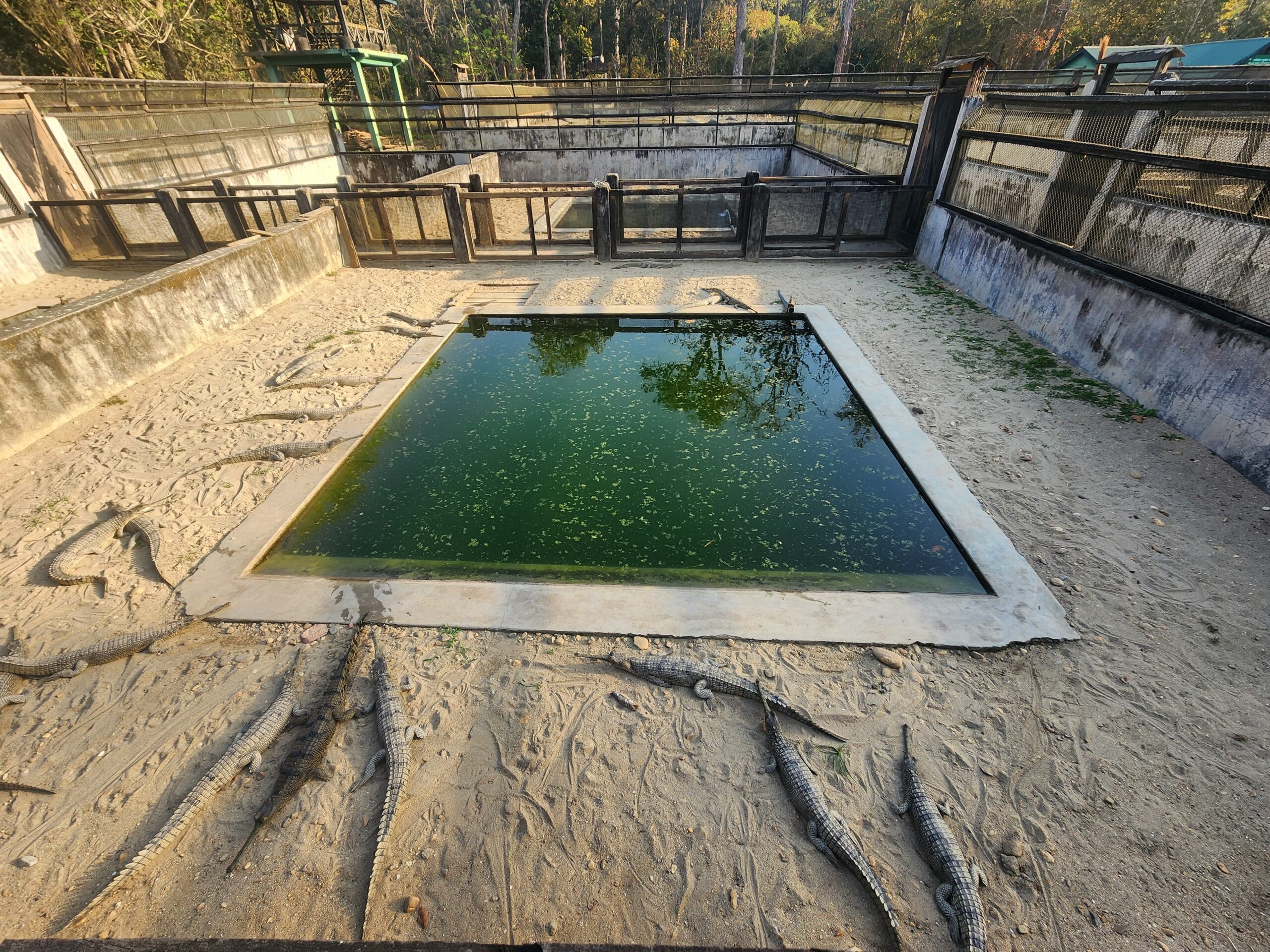
CHITWAN: Chitwan National Park has released 133 gharials from its breeding center into the Rapti River as part of its ongoing conservation efforts.
According to the park’s information officer, Avinash Thapa Magar, the crocodiles were reared at the Gharial Breeding Center in Kasara and gradually released into the river throughout the last fiscal year. Among them, two were male, while the rest were female.
With this latest release, the total number of gharials reared and released from the center has reached 2,090. Of those, the Rapti River has received the largest share with 1,335 gharials released to date. Other destinations include the Narayani River with 419, the Saptakoshi with 115, Babai River with 110, Karnali with 41, Kali Gandaki with 35, Chaudhary River in Shuklaphanta with 25, and the Rapti River in Banke district with 10.
In the previous fiscal year alone, 105 gharials were released. Most of them were also released into the Rapti River, with smaller numbers sent to Shuklaphanta and Banke. The gharials released last year were born in 2020.
Despite consistent releases, the number of gharials observed in the wild has not seen a significant increase. A census conducted in December last year counted only 352 gharials in the Rapti and Narayani rivers combined.
Currently, the breeding center houses 782 gharials. Of these, 185 are hatchlings from this year, 153 were born the previous year, and the remainder are from earlier batches. The center contains one identified adult male, while the sex of the others has not been determined.
The gharial is a critically endangered species of crocodile, historically found in countries such as Pakistan, Bangladesh, Bhutan, and Myanmar. Today, they are limited to only Nepal and India. In the 1940s, the global population of gharials was estimated to be around 10,000. By the 1970s, this number had dropped to just 2% of that total, prompting heightened conservation concern.
In response to this alarming decline, Nepal established the Gharial Breeding Center in Kasara in 1975 following the creation of Chitwan National Park. At that time, it was estimated that fewer than 100 gharials remained in the country.
However, threats to the species persist. Human activity along riverbanks, including sand and gravel extraction, water pollution, and the overfishing of their food sources, has made natural habitats increasingly unsafe. Thapa Magar also noted that monsoon floods often sweep gharials downstream and across national borders, further complicating conservation efforts.
Despite annual releases, gharial numbers in the wild remain stagnant, raising concerns about the long-term success of current strategies and the future of the species in Nepal’s river systems.






Comment