




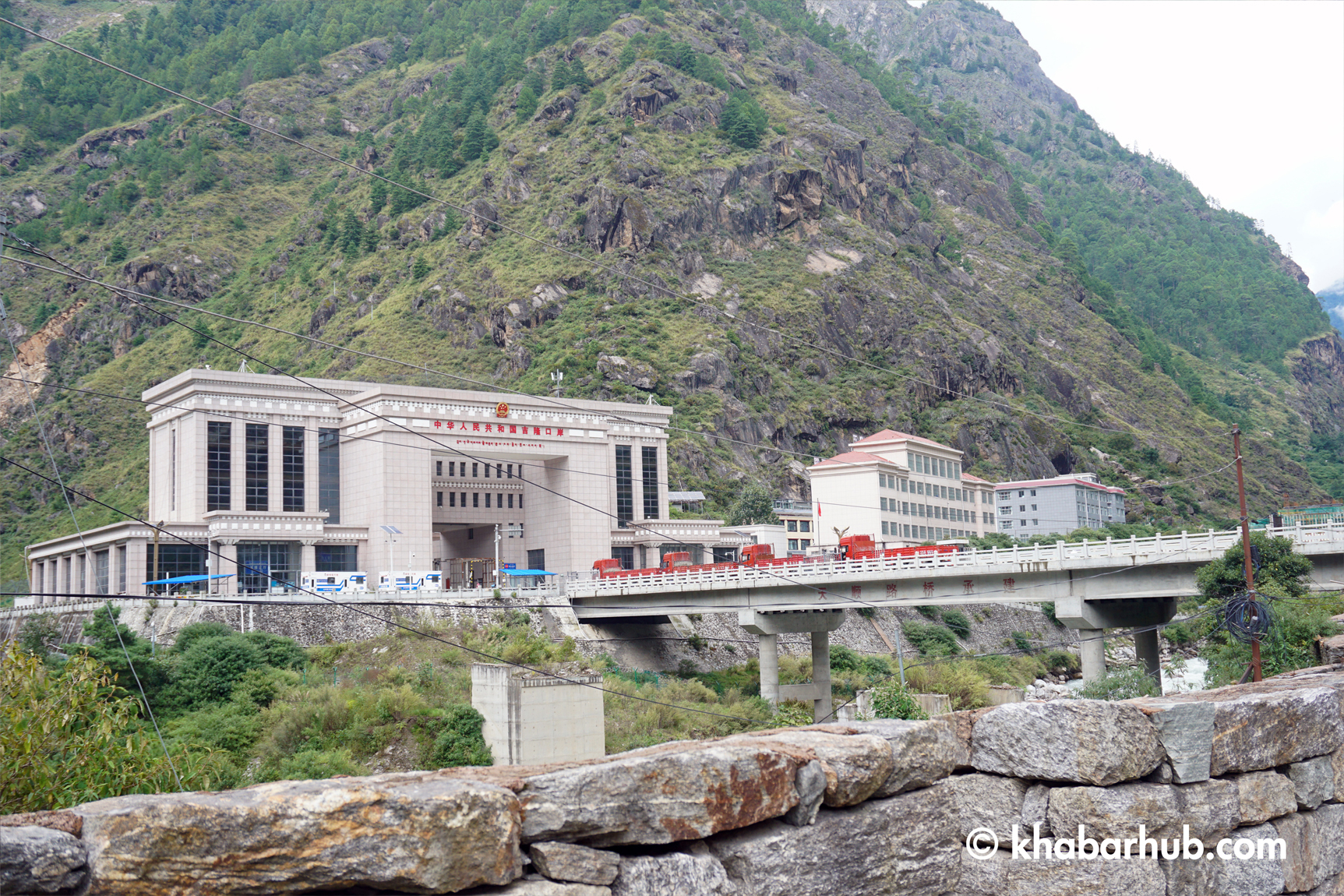
KATHMANDU: Ten years ago, the government declared Rasuwagadhi–Kerung as Nepal’s main northern trade gateway. According to official data, as much as 60 percent of imports from the north pass through this point each year.
However, the border has remained closed since a massive flood in Lhendkhola along the Nepal–China border on July 8.
Movement through the border came to a halt after the flood swept away the Miteri Bridge. The glacial outburst on the Tibetan side not only destroyed the bridge but also severely damaged the dry port and the access road being built inside the customs area.
Following the disaster, then–Prime Minister KP Sharma Oli and Chinese Ambassador Chen Song inspected the site. Oli had said Nepal would request China to rebuild the Miteri Bridge and other affected infrastructure. While reconstruction of the bridge is currently underway, no progress has been made on the rest of the structures. The Gen-Z government, despite advocating for change, has also not taken any initiative.
“The 92-meter bridge, built without a span, sagged in the middle after completion. Now the Chinese side is cutting out the sagged section and inserting support pillars. Informally, we hear it may be ready by the end of November or the first week of January,” said Rasuwa Customs Chief Tulsi Bhattarai.
“There is no official update. Despite the border being closed for five months, no senior government official has come to inspect the reconstruction.”
Bhattarai said that even a temporary reopening of the bridge would allow the customs office to resume basic administrative functions. “The bridge is the main obstruction. Once it’s functional, vehicle inspection and clearance can resume,” he added. The Chinese government has already committed to building structures including a dry port at the customs point. However, this requires approval from Nepal’s Council of Ministers—an approval that has yet to be given.
He further added that a Cabinet decision is required to grant tax exemptions on the materials brought by China, which has delayed the long-term road reconstruction plan. “We have already submitted the tax exemption file to the Ministry of Finance. A decision from the Council of Ministers is necessary. Work will start as soon as that approval comes,” Yadav stated.
“All customs infrastructure has been destroyed. China is funding the construction of the customs yard, but no agreement has been finalized on the port itself,” Bhattarai said. He warned that prolonged closure would significantly reduce revenue collection.
“With the border closed for five months, imports and exports for major festivals could not pass through here. Winter goods had to be rerouted. Even if the border reopens soon, January will be slow due to Tibetan Lhosar. Only regular items like fruits will arrive. We don’t expect strong revenue this year,” he noted. According to him, the extended closure has hurt traders, consumers, and the broader economy.
Last fiscal year, the customs office collected 99.81 percent of its Rs 30.2 billion target—about Rs 30.15 billion. For the current year, it has been given a target of Rs 40.16 billion, despite uncertainties over when the border will reopen.
Rasuwa Chief District Officer Rajesh Panthi said the Chinese side has indicated the bridge will be ready within days and will open after technical tests. “During a meeting 25 days ago, they said it would be completed by November. Judging by progress, it looks like it could be finished in a week or ten days. Only limited customs work can resume initially,” he said.
Despite repeated requests to the Transport Committee and the Customs Department, he added, little progress has been made.
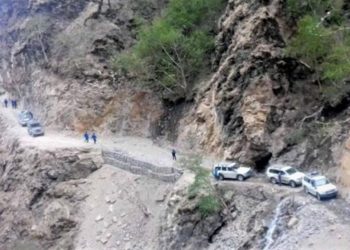
He also noted that while the department recently repaired the road to make it one-way, multiple dry landslides and river-induced erosion continue to weaken the route. “China has taken responsibility for building the road from Syaphrubensi to Rasuwagadhi, but they say they cannot proceed without a policy decision from Nepal’s Cabinet. The government must act quickly,” Panthi stressed.
Ashish Gajurel, Executive Director of the Nepal Intermodal Transport Development Committee, said the port area is now being cleared to accommodate around 75 vehicles immediately. “A long-term solution will require significant investment and a detailed project report (DPR) to determine whether the port site is suitable. No government agency has started this work yet,” he said.
On the ground, frustrations appear to be directed at Minister Kulman Ghising, who has been tasked with overseeing three ministries and is known for pushing reforms aggressively. Ghising has been working intensively to break problematic contracts and complete high-priority national projects, such as the new Parliament building inside Singha Durbar.
It remains unclear why, despite personally inspecting the Tatopani checkpoint before Dashain, he has not yet turned his attention to Nepal’s primary northern trade route. Nonetheless, alongside necessary policy decisions, the Ministry of Transport and Infrastructure under his leadership is expected to take the lead in repairing the damaged customs infrastructure at Rasuwagadhi.
When asked about the concerns raised by Bhattarai and Panthi regarding the condition of the road, Amarendra Kumar Yadav, Information Officer at the Galchhi–Trishuli–Mailung–Syafrubensi–Rasuwagadhi Road Project, explained that Nepal and China had reached an agreement last year for China to construct the Syafrubensi–Rasuwagadhi section.
Under the agreement, China will bring all construction materials and manpower from its side, while the Government of Nepal will bear the customs duties on those materials.
According to Yadav, the Chinese team has been visiting Nepal since last year to prepare for the work. “They have requested 20,000 square meters of land for storing construction materials and building worker camps. For this, we have sought land from the Electricity Office and the Forest Department. The file is currently under process. Once that is finalized, construction can begin,” he said.
He further added that a Cabinet decision is required to grant tax exemptions on the materials brought by China, which has delayed the long-term road reconstruction plan. “We have already submitted the tax exemption file to the Ministry of Finance. A decision from the Council of Ministers is necessary. Work will start as soon as that approval comes,” Yadav stated.
The groundwork for this cooperation was laid earlier, when the government signed the Minute of Onsite Investigation of Feasibility Study for the China-Aided Syafrubensi–Rasuwagadhi Highway Repair and Improvement Project. Under this document, China had agreed to construct 15.8 kilometers of the road.



Comment