




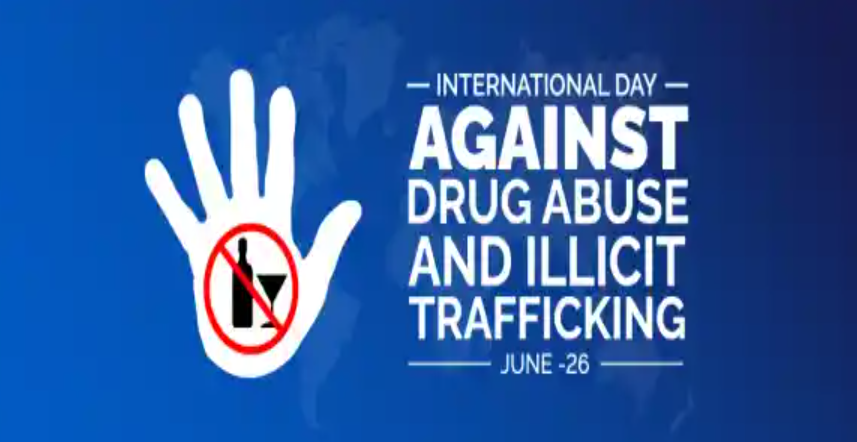
As Nepal commemorates the International Day Against Drug Abuse and Illicit Trafficking on June 26, 2025, official speeches will likely echo the same old themes—prevention, control, and rehabilitation. However, beneath these statements lies a glaring truth: Nepal’s drug policies continue to ignore one of the most vulnerable populations—female drug users.
Despite being guaranteed equality under the Constitution of Nepal (2015), women struggling with substance use remain invisible in both national drug policy and service delivery frameworks.
The Unseen Crisis: Gender and Addiction
According to the UNODC’s 2012 report, women represent at least 7.2% of Nepal’s drug-using population. However, experts believe this number is a gross underestimation due to a lack of gender-disaggregated data and the stigma surrounding female substance use.
Stigma and Social Isolation: Female drug users face layers of discrimination not experienced by their male counterparts. Beyond the label of being a “drug addict,” they are often branded as “bad mothers,” “immoral women,” or “sexually deviant.” Such societal labeling discourages women from seeking help, driving them deeper into isolation and addiction.
Health Risks: The health vulnerabilities of female drug users are alarmingly high. HIV prevalence among female injecting drug users stands at 8.8%, higher than the national average. Limited access to sexual and reproductive health services, poor nutrition, and exposure to violence worsen their health conditions.
Law Enforcement Bias: Government data reveals that more than 54% of female drug users face arrest at some point, compared to 45.2% of men. Reports of physical harassment and invasive body searches conducted by male police officers continue, despite international human rights standards prohibiting such practices.
Institutional Neglect and Gender-Blind Policies
Government policies on drug control, harm reduction, and rehabilitation are largely gender-blind. The National Master Plan on Drugs (2018–2025), for example, does not have a dedicated section on women. While there are government grants to support rehabilitation centers, these funds do not prioritize female-friendly infrastructure or programs.
Rehabilitation Gaps: Eastern Nepal, with a significant drug-using population, has only two women-focused rehab centers. The rest are male-dominated spaces with little regard for women’s privacy, safety, or trauma histories.
Childcare Absence: Most rehabilitation centers do not allow women to bring their children, forcing many mothers to either forgo treatment or abandon their children.
No Trauma-Informed Care: Women entering treatment often carry histories of gender-based violence (GBV), childhood abuse, or sexual exploitation. Yet, most counselors and medical staff lack training in trauma-informed approaches.
Beyond Tokenism: The Need for Effective Research and Policy Reform
Government discussions on drug use and rehabilitation often include superficial mentions of women’s needs. However, mere verbal commitments without evidence-based policy action are insufficient.
What Kind of Research is Urgently Needed?
National Gender-Disaggregated Drug Use Survey: Nepal has no up-to-date, gender-sensitive national survey on drug use patterns. A new study is urgently needed to map:
-
The number of female drug users (including non-injecting and poly-drug users)
-
Geographical distribution (urban, rural, and border areas)
-
Health and psychosocial conditions
-
Access to services and barriers
Qualitative Research on Barriers: Studies focusing on the lived experiences of female drug users—covering stigma, violence, family rejection, and access challenges—should be prioritized.
Impact Evaluation of Existing Programs: The government should commission third-party evaluations of current rehabilitation and harm reduction programs with a gender lens.
What Kind of Policies Should Nepal Develop and Implement?
Gender-Responsive National Drug Policy:
-
Integrate a standalone section on women and addiction within the National Master Plan on Drugs.
-
Mandate a minimum number of government-supported, women-focused rehabilitation and harm reduction centers per province.
-
Set targets for female user outreach, harm reduction services, and rehabilitation access.
Safe and Trauma-Informed Rehabilitation Services:
-
Develop national service standards requiring trauma-informed, gender-sensitive care.
-
Ensure availability of female counselors, mental health support, and GBV referral linkages in every rehab center.
-
Establish mother-and-child-friendly facilities to prevent family separation during treatment.
Decriminalization and Legal Reform:
-
Review and repeal punitive sections of the 1976 Narcotic Drugs Act that disproportionately criminalize women.
-
Ensure that all drug-related policing operations include female officers when dealing with women users.
-
Promote alternative-to-incarceration programs, including community-based rehabilitation and psychosocial support.
Dedicated Government Budget:
-
Create a gender-specific budget line within the Ministry of Health and Ministry of Home Affairs for women-focused drug treatment programs.
-
Fund community-based organizations led by women in recovery.
Training and Capacity Building:
-
Mandate gender-sensitivity training for law enforcement, healthcare providers, and rehabilitation staff.
-
Establish monitoring bodies with female representation to track human rights violations in drug-related arrests and treatment facilities.
Inter-Ministerial Coordination:
-
Strengthen collaboration between the Ministry of Health, Ministry of Women, Children and Senior Citizens, and Ministry of Home Affairs for integrated service delivery and policy monitoring.
Conclusion: From Silence to Action
Nepal’s silence on the struggles of female drug users is not just a policy gap; it is a human rights failure. As the country marks another International Day Against Drug Abuse, it is time for the government to move beyond slogans and symbolic statements.
Women who use drugs in Nepal are not invisible by choice—they are rendered invisible by systemic neglect. They deserve not just to survive, but to recover with dignity, safety, and social acceptance. The need for evidence-based, gender-sensitive, and rights-focused drug policies is no longer optional. It is an urgent moral, legal, and public health imperative.
(Bipin Thapa is a Clinical Psychologist)





Comment