




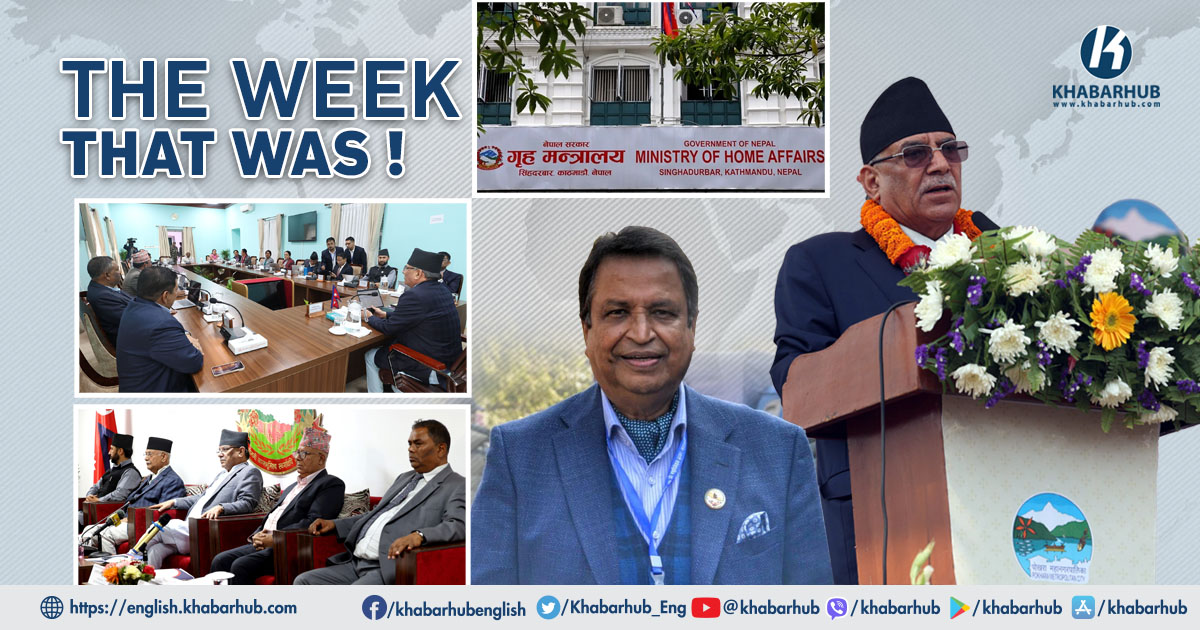
KATHMANDU: Last week in Nepal witnessed a dynamic interplay of events spanning the legal, political, economic, and international spheres, showcasing the intricate tapestry of challenges and opportunities facing the nation.
Beginning with the legal landscape, the release of Krishna Bahadur Mahara, a central figure in a high-profile gold smuggling case, stirred controversy and raised questions about the administration of justice.
Despite being initially detained and facing recommendations for legal action, Mahara’s subsequent release without bail, under specific conditions due to purported health concerns, ignited debates regarding the fairness and efficacy of the legal system.
The unfolding narrative of Mahara’s arrest, subsequent medical treatment, and release underscored the complexities inherent in prosecuting individuals accused of serious crimes, particularly those with political connections.
Simultaneously, the Basbari Land Case brought to light allegations of embezzlement during land acquisition, with prominent businessman and Nepali Congress lawmaker Binod Chaudhary’s statement recorded by law enforcement authorities.
The demand for transparency in governance reflected public expectations for integrity and accountability among public officials, reinforcing the imperative for ethical leadership and good governance practices.
The case shed light on the persistent challenges of corruption within Nepal’s business and political circles, emphasizing the imperative for transparency, accountability, and integrity in land transactions and business dealings.
On the political front, the unveiling of the Common Minimum Program (CMP) by the ruling coalition provided a glimpse into the government’s policy priorities and collective agenda.
Addressing key issues such as economic rejuvenation, social welfare, and governance reform, the CMP signaled a concerted effort by the ruling parties to address pressing challenges and deliver on electoral promises.
The collaborative approach reflected in the CMP underscored the government’s commitment to unity and cooperation in advancing the nation’s development agenda.
Concurrently, the appointment of members to the National Planning Commission (NPC) underscored the government’s emphasis on strategic economic planning and development.
With diverse expertise in areas ranging from climate resilience to urban development, the newly appointed members are poised to play a pivotal role in shaping Nepal’s economic policies and driving sustainable growth and development.
In the realm of law enforcement and governance, the issuance of directives to Chief District Officers (CDOs) by the Ministry of Home Affairs aimed to strengthen security, governance, and law enforcement measures across the country.
Tasked with curbing illegal activities and maintaining public order, the directives highlighted the government’s commitment to ensuring peace, stability, and the rule of law.
Turning to international affairs, Nepal’s diplomatic engagement with Russia over the repatriation of Nepali workers involved in unauthorized activities within the Russian military drew attention.
Despite diplomatic efforts, Russia’s response underscored the complexities of bilateral relations and the challenges of ensuring the welfare and protection of Nepali citizens working abroad.
Last week’s events in Nepal underscored the multifaceted challenges and opportunities facing the nation as it navigates through complex legal, political, economic, and international dynamics.
Furthermore, calls for the resignation of Home Minister Rabi Lamichhane amid fraud allegations underscored the importance of accountability and ethical conduct within the government.
The demand for transparency in governance reflected public expectations for integrity and accountability among public officials, reinforcing the imperative for ethical leadership and good governance practices.
Amidst these developments, Nepal celebrated a significant milestone with the formal declaration of Pokhara as the nation’s official ‘Tourism Capital’.
The decision not only recognized Pokhara’s rich cultural heritage and natural beauty but also underscored Nepal’s commitment to promoting tourism as a key driver of economic growth and development.
In conclusion, last week’s events in Nepal underscored the multifaceted challenges and opportunities facing the nation as it navigates through complex legal, political, economic, and international dynamics.
As Nepal continues on its path of progress and development, addressing issues of governance, accountability, and transparency will remain paramount in shaping the country’s future trajectory and ensuring the well-being of its citizens.





Comment