




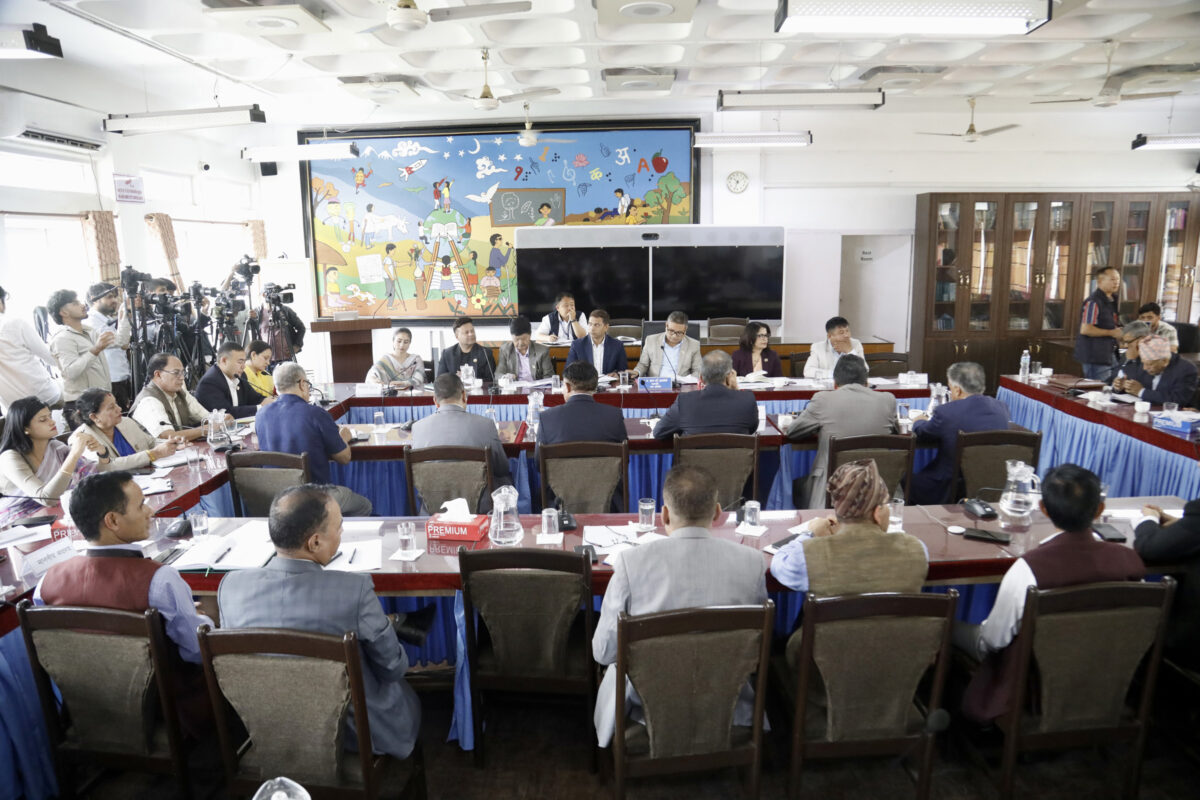
KATHMANDU: Representatives from the private sector, bankers, and former central bank governors have called for a flexible and production-oriented monetary policy to help revive Nepal’s slowing economy.
Speaking at a meeting of the House of Representatives Finance Committee on Sunday, lawmakers, industry representatives, and economic experts discussed expectations for the monetary policy for the fiscal year 2083/84 (2026/27).
President of the Federation of Nepalese Chambers of Commerce and Industry, Anjan Shrestha, said the business community expects the upcoming monetary policy to address issues left unresolved by the national budget. He said the private sector, which generates around 86 percent of employment, has long suffered from inconsistent policies and called for greater flexibility in the working capital guideline and a higher overdraft limit.
Shrestha also urged authorities to clearly distinguish between wilful and non-wilful loan defaulters, arguing that borrowers unable to repay due to genuine financial hardship should not be treated the same as intentional defaulters.
Manoj Gyawali, Chief Executive Officer of Nabil Bank, said banks currently hold excess liquidity of around Rs 1.1 to 1.2 trillion, but weak credit demand remains a major concern. He argued that regulatory restrictions imposed by the Nepal Rastra Bank discourage banks from lowering interest rates because they face difficulties increasing rates again later if needed.
Gyawali also said policies that blacklist borrowers and confiscate passports after a year of non-performing loans are discouraging entrepreneurs and contributing to business closures.
Former Nepal Rastra Bank Executive Director Nara Bahadur Thapa said the upcoming monetary policy should be forward-looking and designed with a medium-term outlook of three to five years. He noted that Nepal is currently facing a macroeconomic paradox and stressed the need for formal coordination between fiscal and monetary policies.
Former Governor Maha Prasad Adhikari said Nepal’s external sector and foreign exchange reserves remain strong, creating room for a more accommodative monetary policy.
Another former Governor, Chiranjibi Nepal, rejected the narrative that credit expansion should be restrained and called for the immediate establishment of an Asset Management Company to address the growing volume of non-performing loans.
However, former Governor Dipendra Bahadur Chhetri cautioned that achieving the government’s six percent inflation target would be challenging. He also warned against using Nepal’s foreign exchange reserves to establish a sovereign fund, describing the proposal as potentially risky.





Comment