




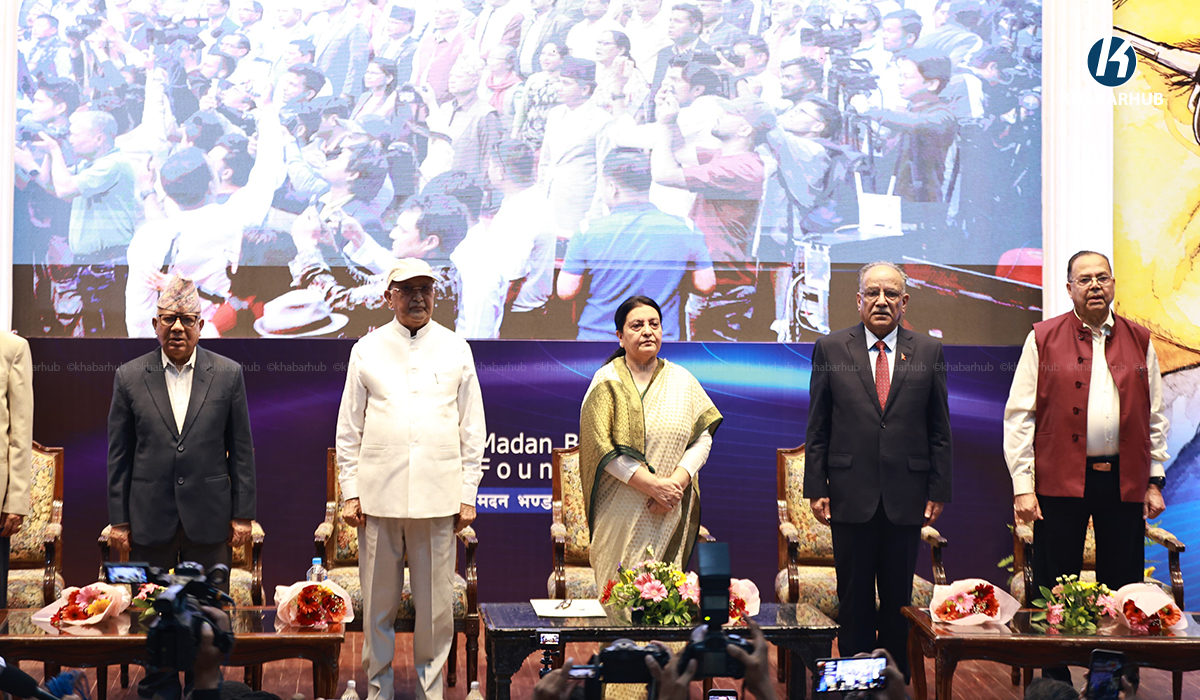
KATHMANDU: Former President Bidya Devi Bhandari’s renewed political engagement has reignited debate over the prospects of left unity in Nepal, with her recent initiative to bring together four former communist prime ministers widely interpreted as an attempt to position herself at the center of a possible realignment.
Although the CPN-UML had long shown little enthusiasm for broader left unity, the party’s weakening political position has prompted even UML Chair KP Sharma Oli to publicly endorse greater cooperation among communist and democratic forces. Political observers, however, argue that while Bhandari’s activism has revived discussion, there is still no consensus that she is the natural leader of a unified communist movement.
The speculation intensified after Bhandari invited leaders from rival communist factions to a program marking the 75th birth anniversary of the late Madan Bhandari. The event brought together Oli, Nepali Communist Party coordinator Pushpa Kamal Dahal ‘Prachanda ‘, co-coordinator Madhav Kumar Nepal and leader Jhala Nath Khanal—figures who have spent years divided by political rivalries.
While the gathering was seen as a symbolic breakthrough, none of the leaders explicitly endorsed Bhandari as a future leader of a united left. Analysts say that simply assembling them on one stage was itself a political success that strengthened Bhandari’s standing as she seeks an active return to politics.
People close to the former president say she is interested in playing a leadership role in the communist movement. Members of her secretariat, however, argue that the country’s political circumstances—not personal ambition—have created the need for her leadership.
Can Bhandari revive Nepal’s communist movement?
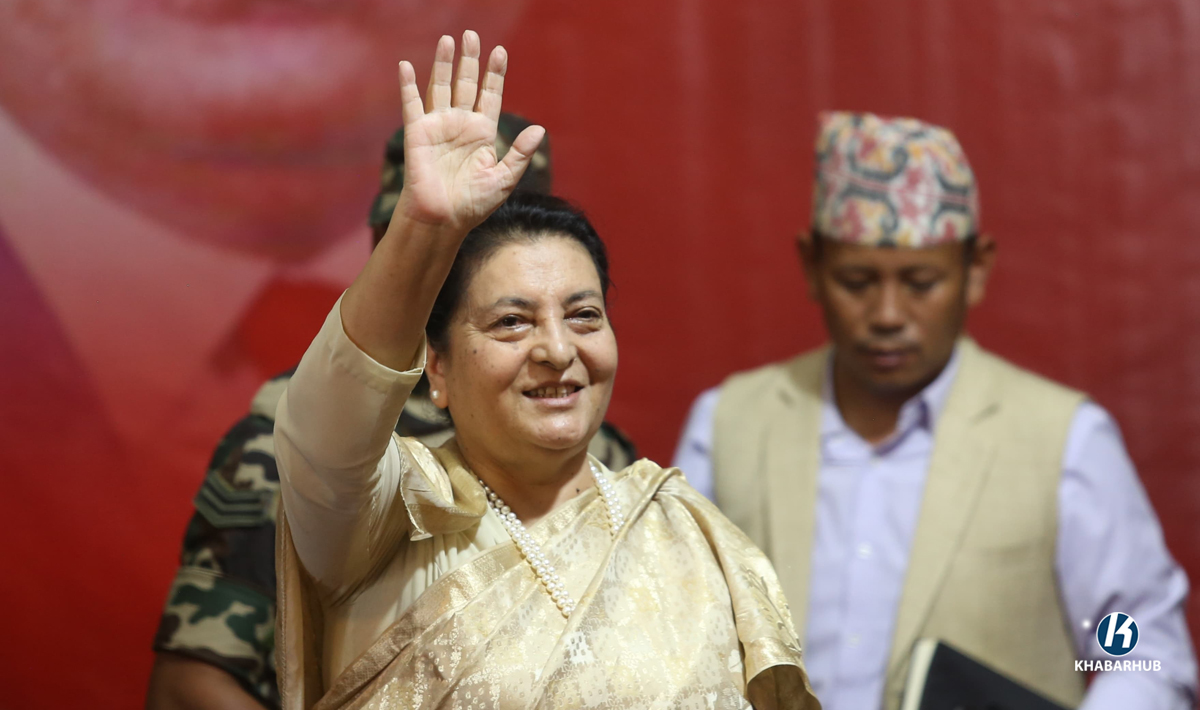
Political analysts caution that Bhandari’s return alone is unlikely to restore the declining influence of Nepal’s communist parties.
They argue that communist parties have steadily lost their connection with working-class and grassroots voters, making it difficult for any individual leader to rebuild public trust without broader institutional reforms.
UML Central Committee member Naresh Rokaya believes Bhandari could provide transitional leadership if left unity materializes but says such an arrangement should only be temporary.
“Nepal’s political landscape has changed significantly,” Rokaya said. “She may be able to lead during a transition, but leadership should ultimately pass to the second or third generation through a democratic convention.”
Former UML minister Gokul Baskota expressed a similar view, arguing that leaders who have already occupied the highest offices cannot realistically claim they alone can revive the communist movement.
Instead, he said communist parties must first acknowledge their mistakes and apologize to the public before pursuing another round of unity.
“The public is carefully watching every step,” Baskota said. “Without self-criticism, calls for unity will have little credibility.”
Nepali Communist Party central committee member Aarti Lama also supported a transitional arrangement, saying parties should eventually elect a new generation of leadership through democratic processes.
Are other communist leaders ready to accept Bhandari?
The participation of four former communist prime ministers at Sunday’s event fueled speculation about Bhandari’s growing influence.
Alongside Oli, Prachanda, Madhav Nepal and Jhala Nath Khanal all expressed support for greater communist cooperation, although none suggested Bhandari should lead such an alliance.
Even Oli, who had previously been reluctant to discuss left unity, called for communist parties and democratic forces to work together in pursuit of socialism.
Madhav Nepal, however, insisted that meaningful unity would only be possible after party leaders openly acknowledged their past mistakes—a remark widely interpreted as directed at Oli.
Political analyst Shyam Shrestha said Bhandari could emerge as a consensus figure only if major communist leaders explicitly supported her leadership.
“So far, there has been no indication that the four leaders are ready to hand over leadership to Bidya Bhandari,” he said.
He also noted that younger leaders across communist parties appear increasingly unwilling to return senior leaders to power, reflecting broader public sentiment in favor of generational change.
Leaders close to Prachanda similarly indicate that he is not prepared to step aside in favor of Bhandari. Analysts also believe Oli has shown little willingness to elevate her to lead the broader communist movement.
Former prime minister Jhala Nath Khanal dismissed speculation over leadership, saying discussions have focused only on the principle of left unity.
“We support left unity, but there has been no discussion about who should lead it,” Khanal said.
Former Maoist leader Devendra Paudel also argued that communist parties must first examine their own failures before discussing organizational unity.
Meanwhile, communist thinker Ghanshyam Bhusal warned that another rushed merger, similar to the 2018 Nepal Communist Party experiment, could repeat past mistakes. He argued that senior leaders should make way for younger generations if the movement is to regain credibility.
Unity beyond the major parties
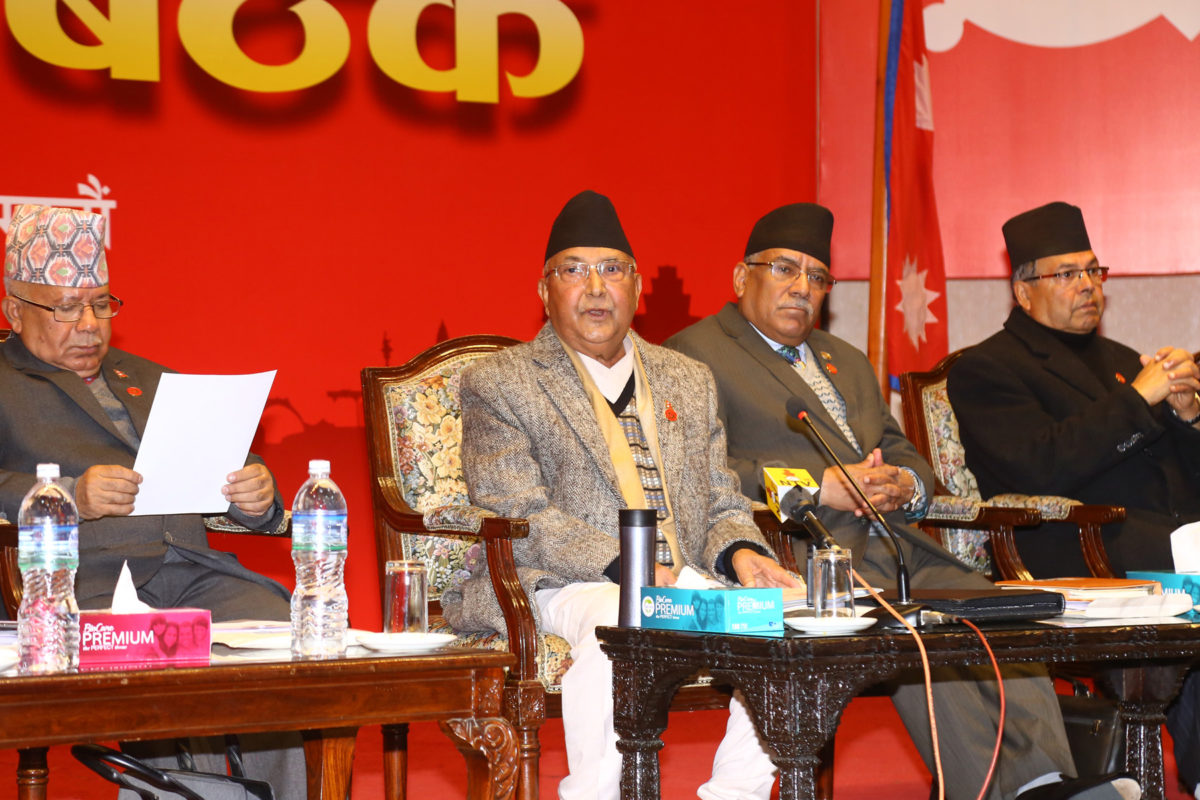
Observers say Bhandari’s efforts have so far focused largely on bringing together the UML and Prachanda-led Nepal Communist Party, while many of Nepal’s two dozen smaller communist factions remain outside the conversation.
Leaders including Bhim Rawal have recently called for broader left consolidation involving all communist groups.
Political analyst Mumaram Khanal argued that genuine unity remains unlikely because senior leaders continue to prioritize personal positions over collective sacrifice.
“There is little willingness among top leaders to give up power,” he said. “Broader communist unity requires dialogue among all factions, not just two major parties.”
Analysts agree that sustainable unity would require leaders to reconnect with ordinary citizens, listen to public grievances, acknowledge past failures and demonstrate greater willingness to compromise.
Although discussions on left unity have resumed, they say meaningful progress remains uncertain without significant political reform and generational renewal.
What does Bhandari want?
Rajkumar Rai, a member of Bhandari’s secretariat, confirmed that the former president intends to return to active politics after renewing her UML membership.
He declined to say whether she specifically seeks to lead the communist movement but said she would be prepared to accept such responsibility if party leaders reached a consensus.
“If leaders conclude that broader communist unity is necessary and believe she should lead it, she is willing to shoulder that responsibility,” Rai said.
Sources close to Bhandari say she is also being discussed internally as a possible alternative to Oli within the UML, at least on an interim basis.
According to one leader close to her, a future Central Committee decision to dissolve existing party committees and appoint an interim organizing committee could potentially pave the way for Bhandari to assume temporary leadership before a general convention.
However, the same source acknowledged that many second- and third-generation UML leaders remain unconvinced that replacing one veteran leader with another addresses the party’s deeper challenges.
“The current political mood favors younger leadership,” the source said. “Even if she were accepted as a transitional leader, that arrangement is unlikely to continue through the next general election.”
For now, Bhandari’s recent activism suggests she is positioning herself either to lead a broader communist realignment or to emerge as a viable alternative within the UML should circumstances permit. Whether Nepal’s fragmented communist leadership is prepared to embrace that role, however, remains an open question.





Comment