




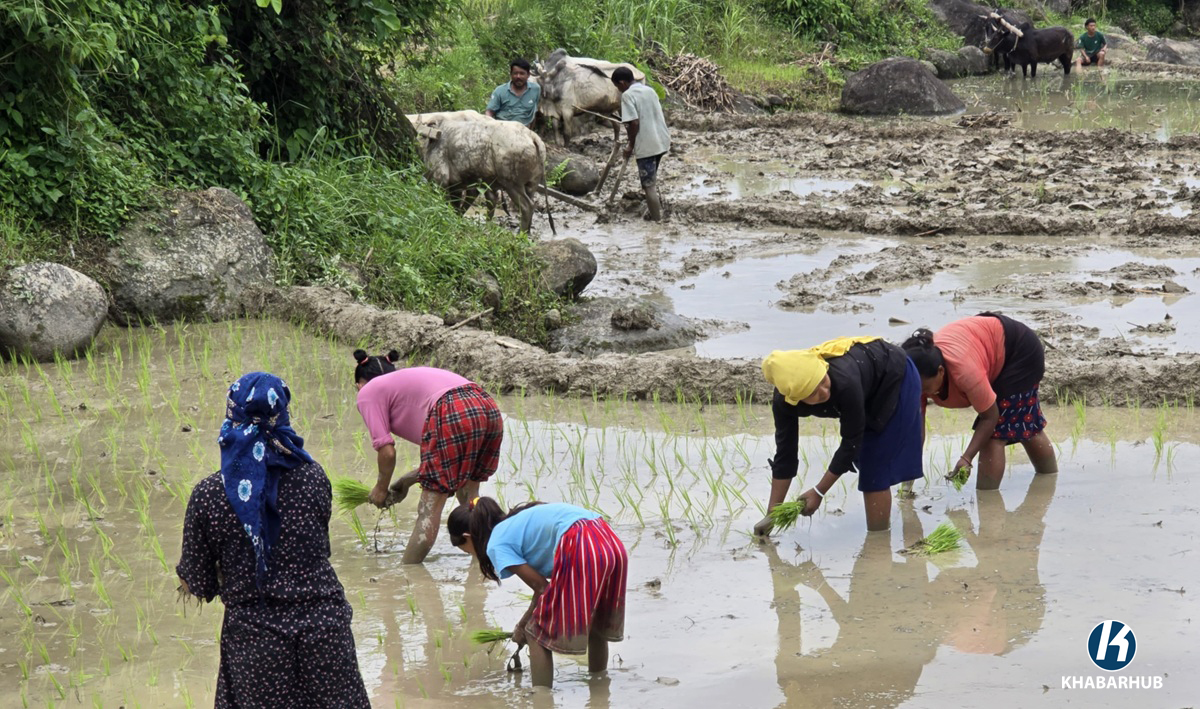
KATHMANDU: Asar 15, observed annually as National Paddy Day, is being celebrated across Nepal today with traditional rice planting activities and the consumption of dahi chiura (beaten rice with yogurt).
The occasion marks the beginning of the paddy transplantation season and is one of the country’s most important agricultural festivals. Farmers across the country, from the hills to the Tarai, are planting rice seedlings in waterlogged fields amid traditional songs, dances and communal feasts.
For generations, farmers have eaten dahi chiura after working in the fields, believing it helps restore energy and cool the body during the physically demanding planting season. Over time, the practice has extended beyond farming communities, with people from various walks of life also marking the day by sharing the traditional meal.
Yogurt holds a special place in Nepali culture and is widely regarded as a symbol of good fortune and prosperity. It is traditionally offered before important tasks, religious ceremonies or foreign travel, as it is believed to bring success. This practice of consuming yogurt before embarking on significant journeys remains deeply rooted in cultural tradition.
Beyond its cultural significance, yogurt is valued for its nutritional and health benefits. According to Ayurveda, yogurt and buttermilk support digestion and overall well-being. Traditional texts recommend consuming buttermilk after meals to aid digestion, while yogurt is also considered beneficial in managing conditions such as diarrhea by helping restore healthy gut bacteria.
Historical folklore also links yogurt to Nepal’s unifier, Prithvi Narayan Shah. A popular legend recounts that Guru Gorakhnath blessed him with yogurt, symbolizing strength and future prosperity.
The month of Asar (mid-June to mid-July) coincides with the monsoon season, offering ideal conditions for rice cultivation. In recognition of the importance of paddy farming and the role of farmers, the government designated Asar 15 as National Paddy Day (Dhaan Diwas).
Agriculture remains a major source of livelihood in Nepal, with paddy as the staple crop playing a crucial role in food security and sustaining millions of rural households.
Over the years, Asar 15 has evolved beyond an agricultural observance into a nationwide celebration of rural traditions, community spirit and the close relationship between farming, nature and everyday life.






Comment