




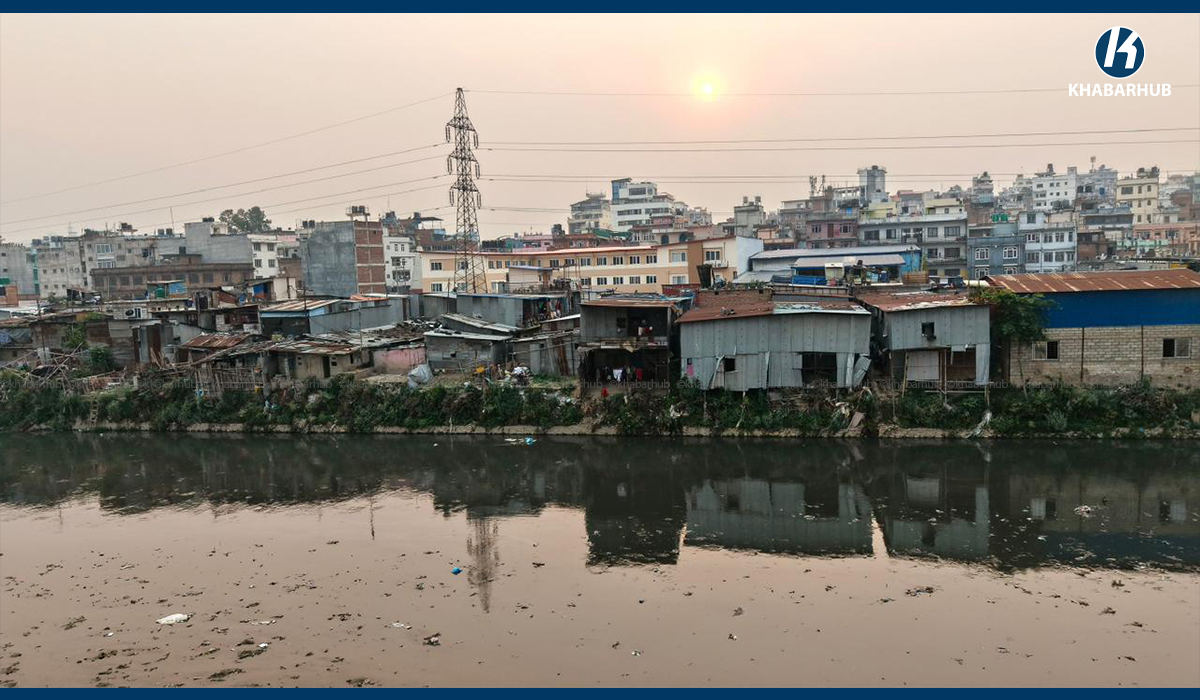
KATHMANDU: Prime Minister Balen Shah’s campaign to remove informal settlements in Kathmandu has triggered widespread debate, drawing both praise and criticism, while exposing possible cracks within the ruling Rastriya Swatantra Party (RSP).
Second-tier leaders within the party say they were not informed through any formal party forum about the government’s move to clear squatter settlements in the capital and beyond. The lack of internal consultation has raised questions about coordination between the government and the party leadership.
The government, however, has defended its actions, citing its 100-point policy agenda introduced after the formation of the Cabinet. The plan includes completing data collection on landless and informal settlers within 60 days and resolving their issues within 1,000 days.
Government spokesperson Sasmit Pokharel argued that the eviction drive aligns with these commitments. Yet, when asked whether the move was coordinated with the party, an RSP leader admitted uncertainty, saying discussions had not taken place within party forums.
“We are not aware if there has been coordination with the party president, but this issue has not been discussed in any party forum,” the leader said.
Several other second-tier leaders echoed similar concerns, stating they had no prior knowledge of the decision. A senior party leader noted that while identifying genuine landless people and ensuring proper housing is necessary, there are growing concerns that the current approach may overlook vulnerable groups.
“There is a fear that genuine squatters might suffer,” the leader said.
Leaders within the RSP claim that Prime Minister Shah and party president Rabi Lamichhane have adopted a strategy of non-interference—allowing the government and party to function independently. This, they argue, explains why the government has proceeded on its own.
However, the absence of discussion on such a sensitive issue has fueled speculation that divisions could emerge within the party.
At the same time, questions are being raised about how party leaders can claim ignorance when the issue was explicitly included in the government’s policy roadmap. Sources close to the Prime Minister’s Secretariat insist that Shah and Lamichhane are in coordination, despite the apparent silence from the party chief.
Lamichhane’s lack of public comment has further deepened uncertainty. Notably, he had previously vowed to stand in defense of squatter communities if eviction attempts were made. His current silence has drawn criticism, including from youth activists such as Raksha Bam, who has publicly questioned his stance.
“Ask the government,” says party
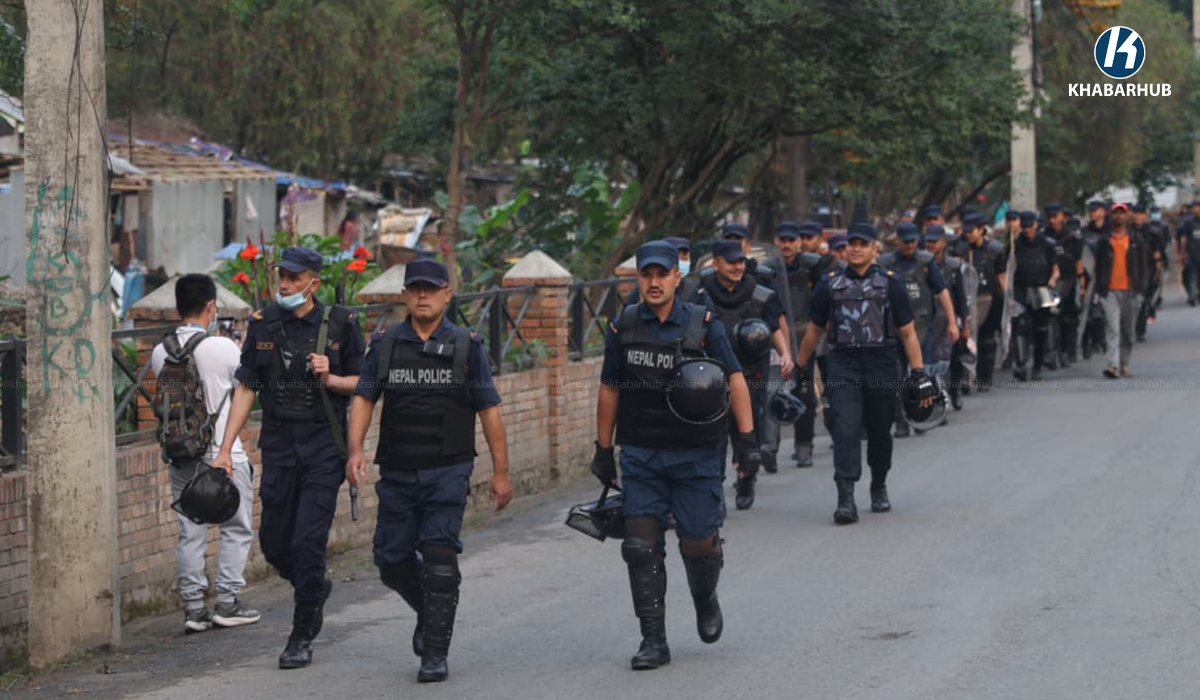
Top leaders, including those at the general secretary level, maintain that they were not consulted on the eviction drive. Party spokespersons have also stressed that removing settlements without ensuring proper relocation is impractical and inconsistent with commitments made in the party’s manifesto.
Senior leaders have deflected questions, urging journalists to seek answers from the government instead. Even party figures like Manish Jha have said the matter falls under government jurisdiction.
A party member, Lima Adhikari, similarly said she had no information about the decision.
Sources suggest the government moved ahead independently after the party chose not to intervene, in line with its non-interference approach. However, internal disagreements appear to be growing, with several leaders insisting that eviction should only follow proper rehabilitation of affected communities.
Cabinet ministers also unaware
The controversy deepened after some Cabinet ministers claimed they were unaware of any formal decision to remove squatter settlements.
“One may question how practical it is to begin eviction without deciding relocation and management,” a minister said, adding that they were not informed of any such decision by the Cabinet.
Despite this, spokesperson Pokharel stated that squatters would be relocated to safer areas and that force would not be used.
While the government insists relocation will be ensured, affected residents say no concrete arrangements have been made.
A resident from Thapathali, Manisha Lakandri, said they had been asked to find housing on their own. “We are searching for rooms, but we haven’t found any,” she said, claiming her family has lived in the area for over 50 years.
Currently, there are three major informal settlements in the Kathmandu Valley, many of which face annual flooding risks. With the monsoon approaching, the government argues that relocation is necessary for disaster preparedness. However, it has yet to specify where displaced residents will be resettled.
PM vows land distribution
Amid mounting criticism, Prime Minister Shah issued a public statement defending the campaign. He highlighted the recurring risks of floods and disasters, arguing that removing settlements along riverbanks is necessary.
He also pledged to distinguish between encroachers and genuine squatters and to distribute land to eligible landless families across the country.
“We will identify real squatters and ensure land distribution through due process as soon as possible,” he stated.
Calls for balanced approach
Economist and political analyst Hari Roka emphasized the need to clearly distinguish between genuine squatters and opportunistic encroachers. He suggested that eviction should only follow proper rehabilitation measures.
Similar views have been echoed by civil society voices and activists, including figures such as Uprajung Rai and Monika Niraula, who have called for guaranteed relocation before any eviction takes place.
While some see Shah’s move as a continuation of his earlier efforts as Kathmandu mayor, others warn that without careful implementation, the policy risks deepening social tensions.
For now, the government’s commitment to balancing enforcement with humane resettlement remains under close public scrutiny.






Comment