




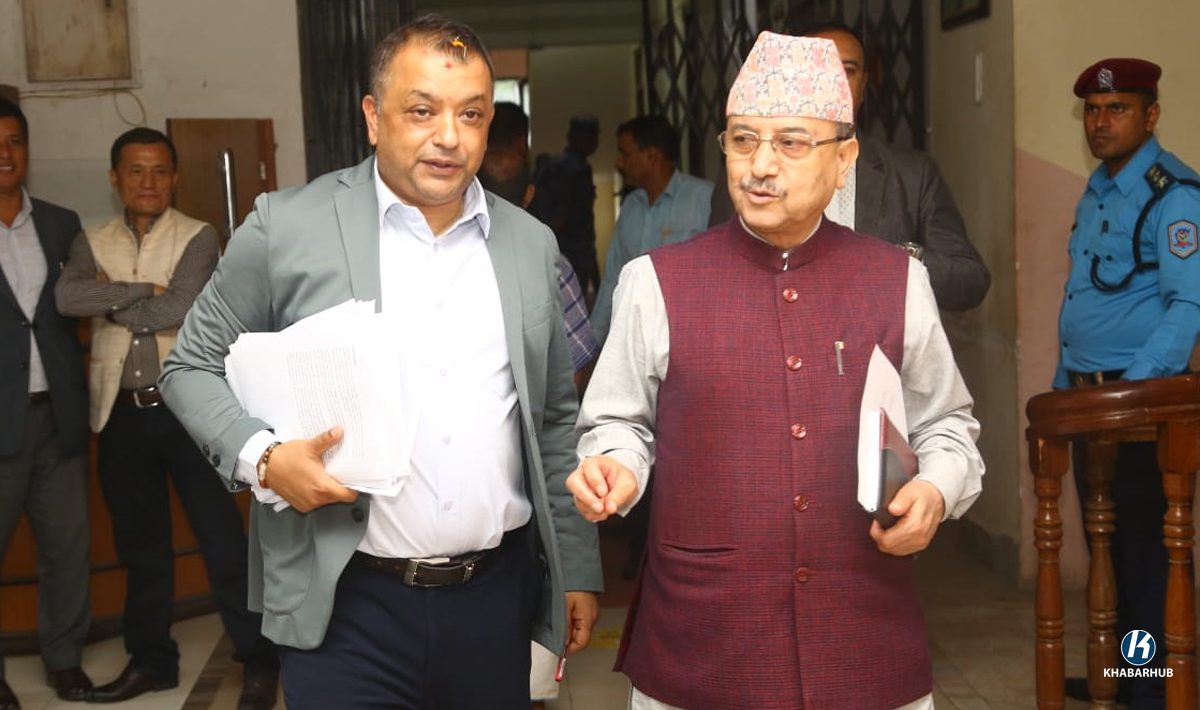
KATHMANDU: The Nepali Congress has launched a month-long ‘Jara Abhiyan’ (root campaign) as part of its post-election organisational restructuring following its poor performance in the March 5 elections.
The campaign, which requires party members to physically visit ward offices and update their membership digitally, was formally initiated on Tuesday by party leader Gagan Kumar Thapa, who also updated his membership at Ward No. 30 of Kathmandu Metropolitan City.
Thapa urged party members not to create unnecessary confusion over the process, stating that responsible leaders are in place to address concerns at the central office.
However, the initiative has triggered strong internal disagreement within the party, deepening existing divisions.
Leaders from various factions, including former Chief Minister of Koshi Province Kedar Karki, have publicly criticized the campaign, calling it controversial and questioning its legality.
Karki has accused the leadership of imitating similar organisational exercises previously carried out by the Communist Party of Nepal (Unified Marxist–Leninist) after the 2022 elections.
Similarly, Purna Bahadur Khadka issued a statement opposing unilateral decisions, arguing that membership matters cannot be altered through emotional or arbitrary decisions.
He maintained that such actions contradict party statutes and warned that disputes related to party legitimacy are currently sub judice in the Supreme Court.
Khadka further emphasized that the party had already decided on membership renewal and new registrations in line with preparations for the 15th general convention scheduled for May 11–14, 2026.
Responding to the criticism, Thapa clarified that the process is not about cancelling memberships but updating them, and warned that failure to update would automatically render memberships inactive.
Meanwhile, leader Pradeep Paudel, elected as general secretary through a special general convention, said the campaign is intended to update, not revoke, active memberships and strengthen grassroots connections.
The dispute has also reached the courts, with rival factions of the party challenging the legitimacy of the current leadership structure. The matter is pending before the Supreme Court of Nepal.
Despite ongoing tensions, both factions have claimed that the party will not split. However, no formal reconciliation talks have taken place yet.
Efforts toward dialogue are ongoing, with a team led by vice-president Pushpa Bhusal reportedly initiating internal discussions between rival groups.
Separate negotiation teams have also been formed by different factions, while youth leaders continue to push for unity ahead of the upcoming general convention.
Political analysts say the growing internal rift has weakened prospects for party unity, and warn that without political consensus, legal resolution alone may not provide a lasting solution.





Comment