




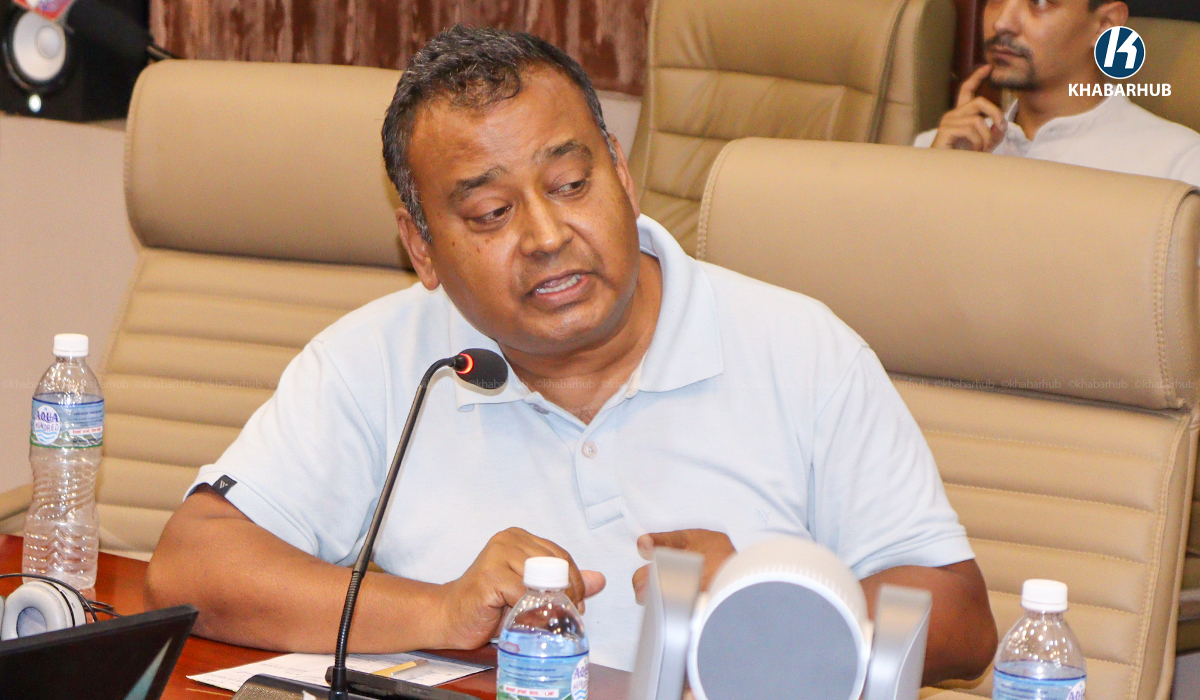
KATHMANDU: Sajha Yatayat technical advisor Bhushan Tuladhar has criticized the government’s decision to impose a five percent tax on electricity consumption above 50 units, saying the measure will place an additional financial burden on public electric transport operators.
Speaking at a budget interaction programme organized in Kathmandu on Wednesday by the Institute of Strategic and Socio-Economic Research, Tuladhar said the new provision included in the budget for fiscal year 2026/27 would increase operating costs for public electric buses already facing higher vehicle acquisition expenses due to customs duties.
“The government’s decision to impose an additional five percent VAT on electricity consumption above 50 units has created another problem,” Tuladhar said. “Manufacturers may receive VAT refunds, but public transport operators running buses for 12 hours a day receive no such relief. The government should withdraw this five percent tax.”
He also pointed to rising labor costs following the government’s decision to increase the minimum wage, saying the public transport sector requires targeted support if authorities are serious about promoting sustainable transportation.
While welcoming the reduction of customs duties on large electric buses, Tuladhar expressed dissatisfaction with the increase in customs taxes on electric minibuses carrying 15 to 25 passengers.
“The government says it wants to prioritize electric public transportation, but its tax policies contradict that objective,” he said.
According to Tuladhar, 82 percent of electric vehicle imports in Nepal consist of motorcycles, six percent are electric jeeps and vans, and only 12 percent comprise buses and other public transport vehicles. He argued that the budget offers limited support for the segment that serves the largest number of passengers and delivers the greatest environmental benefits.
He noted that while changes in customs rates for electric cars have received significant public attention, the real challenge lies in expanding electric mobility in public transportation, motorcycles and freight vehicles.

Tuladhar further highlighted the lack of charging infrastructure as a major obstacle to the expansion of electric public transport.
He said Sajha Yatayat purchased 40 electric buses and 20 charging stations three years ago, but nine charging stations remain unused due to the absence of suitable depot facilities.
“Eleven charging stations have been installed, but nine are still sitting idle because there is no depot. Unlike cars or motorcycles, buses cannot simply be charged at home,” he said.
He also drew attention to the absence of charging facilities at Kathmandu’s main bus terminal, arguing that infrastructure development has failed to keep pace with the growth of electric public transportation.
Referring to recent electric bus imports by private operators, Tuladhar said many companies remain uncertain about future charging arrangements despite investing in electric fleets.
He recalled that Sajha Yatayat had previously parked 37 of its 40 electric buses in protest over the lack of charging and parking facilities. Although the Investment Board Nepal had sought proposals in 2022 for the construction of 424 charging stations through private-sector investment, the initiative has yet to be implemented.
Tuladhar also questioned the government’s commitment to expanding electric public transport outside Kathmandu. While the budget announced plans to gradually replace conventional buses in Pokhara with electric vehicles, he said there remains no clear implementation framework.
“The Pokhara electric bus project is still in the pipeline. The Asian Development Bank is expected to finalize the model and the government will then make a decision, but there is still no clear roadmap,” he said.
Finance Minister Swarnim Wagle had announced in the budget speech that public buses operating in the Pokhara Valley would be gradually replaced by electric buses as part of efforts to expand a green transportation system.




Comment