




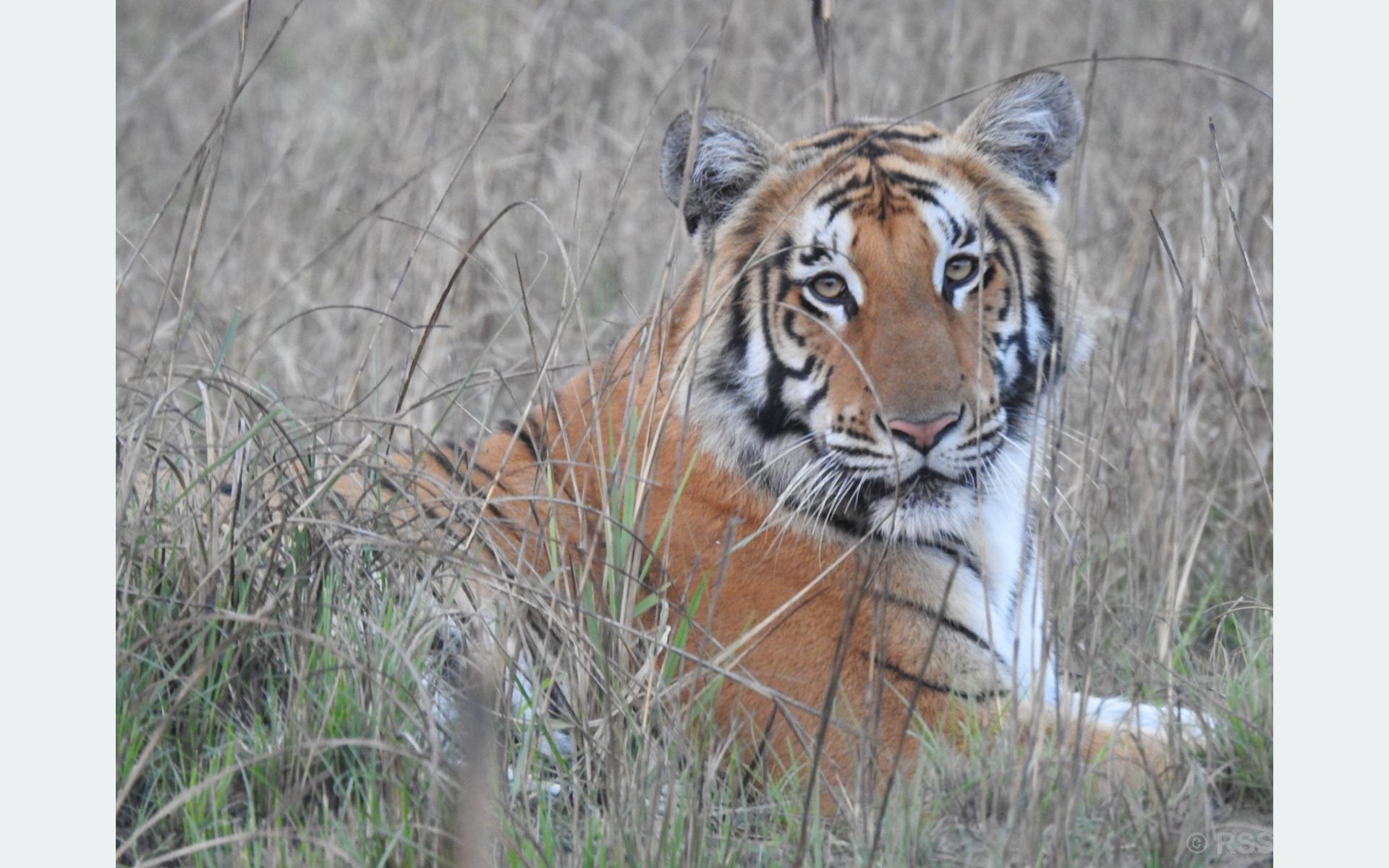
KATHMANDU: As the world observes World Tiger Day, Nepal has announced encouraging results from its latest national tiger survey, signaling continued progress in conserving one of the country’s most iconic and ecologically important species.
The day was established following the Tiger Summit held in St. Petersburg, Russia, in 2010, where tiger-range countries adopted the goal of doubling the global wild tiger population by 2022.
On the occasion of World Tiger Day, the Ministry of Forests and Environment is releasing the latest national tiger census today in the presence of Minister Ain Bahadur Shahi Thakuri.
Nepal conducts a national tiger survey every four years. According to the most recent completed survey in 2022, the country had 355 wild tigers, achieving the international TX2 target of doubling its tiger population from the 2010 baseline.
The 2022 census recorded the highest number of tigers in Chitwan National Park with 128, followed by Bardiya National Park with 125, Parsa National Park with 41, Shuklaphanta National Park with 36, and Banke National Park with 25.
Officials say the newly released census indicates a further increase in the tiger population, reflecting improved habitat conditions, better protection in buffer zones and forests, and a rise in prey species. Tigers are considered an indicator of a healthy ecosystem and play a crucial role as apex predators.
Global tiger population exceeds 5,500
Wild tigers are currently found in 13 tiger-range countries in Asia: Nepal, India, Bangladesh, Bhutan, China, Russia, Thailand, Malaysia, Indonesia, Myanmar, Cambodia, Laos, and Vietnam.
According to the latest global assessment released by the Global Tiger Forum and partner organizations, the estimated number of wild tigers worldwide is about 5,574, up from around 3,200 in 2010.
India has the world’s largest tiger population with 3,682 tigers. Nepal, with 355 tigers in the 2022 census, is among the countries that have shown the most significant recovery in tiger numbers.
According to the Department of National Parks and Wildlife Conservation, Nepal’s tiger population increased from 121 in 2009, to 198 in 2013, 235 in 2018, and 355 in 2022.
A global conservation success
Nepal is widely regarded as a global success story in tiger conservation. Through habitat protection, anti-poaching operations, community participation, and scientific monitoring, the country became one of the few nations to meet the TX2 target set at the 2010 St. Petersburg summit.
Tigers in Nepal are found mainly in the Terai Arc Landscape, including Chitwan, Parsa, Banke, Bardiya, and Shuklaphanta national parks, as well as adjoining buffer zones, national forests, and wildlife corridors.
How the tiger survey is conducted
National tiger surveys are conducted every four years using a standardized National Tiger and Prey Base Monitoring Protocol.
The latest survey began in December 2021 and was completed in about three months across three major tiger complexes:
Chitwan-Parsa Complex (Banke-Bardiya Complex and Shuklaphanta-Laljhadi Complex)
Each complex was divided into blocks, and 2 km × 2 km grid cells were established. A pair of motion-sensitive camera traps was installed in each selected grid, and cameras were operated continuously for at least 15 nights. Individual tigers were identified by their unique stripe patterns, and the population was estimated through scientific photo analysis.
The survey was led by the Department of National Parks and Wildlife Conservation with support from the Department of Forests and Soil Conservation, provincial governments, the Nepal Army, National Trust for Nature Conservation, WWF Nepal, and ZSL Nepal.
More than 1,800 camera traps and hundreds of trained personnel, including park staff, forest technicians, community forest users, and volunteers, were mobilized for the nationwide survey.





Comment