




The anthropology of disaster examines how people experience, interpret, and respond to events within social, cultural, political, and economic contexts. It considers how poverty, inequality, development policies, and environmental shifts shape vulnerability and management.
Anthropologists study local knowledge, beliefs, community ties, displacement, and loss. They also ask why certain groups endure greater harm. By attending to affected communities, this approach encourages culturally suitable readiness, equitable relief, meaningful involvement, and recovery that honors dignity, livelihoods, identities, and collective rights.
A river conveys more than water. It carries memories, livelihoods, sacred meanings, and bonds across generations. For many communities, its banks mark where ancestors lived, children learned to swim, farmers observed the seasons, and families carried out rituals. When a Himalayan river turns into a destructive torrent, the loss reaches beyond broken bridges and buildings. A whole relationship with a place may become uncertain.
An anthropological reading of Himalayan disaster starts with this broader view. It asks how people live with rivers, how development alters those ties, and why some communities suffer more. It also asks whose knowledge counts when decisions involve mountains, forests, and water. The phrase “when rivers cease to be relatives” signals a shift in human responsibility. A river seen as a relative exists within a web of obligations. A river viewed mainly as a resource becomes open to extraction, diversion, and commercial calculation. This contrast provides a way to assess how environmental ties weaken and how disaster reveals the results.
Rivers Within a Living World
Across diverse cultural traditions, rivers may be seen as mothers, ancestors, deities, or living presences. These meanings differ widely. Himalayan communities do not hold a single worldview; still, such ties offer a key anthropological insight. Human life relies on links with a world beyond human ownership. Kinship here can stretch past biological descent, expressing belonging, dependence, and duties of care. Calling a river a mother may recognize that people gain nourishment from something they did not create and cannot fully control.
These ties may take practical form in customary limits. Their ecological effects need careful review in each setting. Sacred status alone does not ensure protection, just as modern scientific knowledge does not automatically yield responsible choices.
How a Hazard Becomes a Disaster
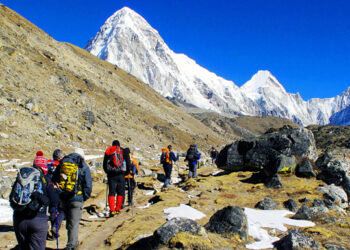
The Himalaya is a shifting mountain environment. Floods, landslides, and movements of ice and rock are physical processes, while climate change alters the conditions in which several mountain hazards develop. On 26 August 2026, a severe flash flood moved through the Tibet-Nepal border region, turning the Gyirong-Rasuwagadhi corridor and the Bhote Koshi-Trishuli river system into paths of destruction.
Communities, infrastructure, and transport links sustained broad damage. For anthropology, this event raises questions beyond the physical motion of water, rock, and ice. Why and how did this catastrophe happen? How were the gains and risks of development shared? What did the damage mean for those whose livelihoods, memories, and sense of belonging were rooted there?
The title “When Rivers Cease to Be Relatives” provides an ethical perspective on these questions. It does not imply that the flash flood was nature’s punishment or that the affected communities had abandoned their traditions. Instead, it asks what occurs when rivers are viewed mainly through commercial usefulness, while the relationships and duties sustaining life around them receive less attention.
Mountain residents should not be seen as uniformly opposed to development. People want reliable transport, education, hospitals, communications, and employment. The issue emerges when these goals are used to justify any project, regardless of its location or cumulative impact.
The disaster of 26 August calls for these duties to be restored to view. The scientific account is significant. ICIMOD’s synthesis notes a catastrophic rock-and-ice collapse in the Langtang region that produced a powerful surge carrying debris through the border corridor. It describes a cascading cryospheric geohazard rather than a standard glacial lake outburst flood.
The report highlights gaps in monitoring, early warning, and cross-border information sharing. This distinction is important because effective protection relies on an accurate understanding of the hazard. It also reminds us that the disaster unfolded as a chain of linked processes. A collapse high in the mountains became a crisis for people living and working far downstream.
An Anthropological Reading
To grasp the idea of disaster, hazard, risk, vulnerability, exposure, and disaster itself must be considered together. A hazard is a process, event, or condition that may cause harm, such as an earthquake, landslide, or flood. In the Himalayas, a glacial lake that might burst poses a hazard to downstream areas. Exposure involves the people, homes, farms, roads, and other assets situated where a hazard could cause damage; for instance, communities beside a river face potential flooding.
Political ecology, an anthropological lens linking environmental change to power and economic structures, offers insight here.
Vulnerability describes conditions that make exposed people or assets more prone to harm. Poverty, weak housing, limited transport, inadequate warning systems, and difficulty accessing assistance can raise vulnerability. Risk is the chance of losses from the interaction of hazard, exposure, and vulnerability. A settlement below an unstable glacial lake faces flood risk, which grows when houses are fragile and evacuation options are scarce. Effective warnings, safer buildings, and evacuation plans can lower this risk.
Disaster is a serious disruption that arises when a hazardous event meets exposed and vulnerable populations, producing major human, material, economic, or environmental losses. A glacial lake outburst becomes a disaster when flooding devastates settlements, interrupts essential services, and exceeds the affected community’s capacity to cope with its own resources.
From an anthropological viewpoint, these ideas show why disasters cannot be explained by physical events alone. Social inequality, livelihood needs, cultural ties to the environment, and access to protection influence who suffers, how severely they are affected, and how they recover.
For people living in a river valley, water is woven into a broader social landscape. A river may sustain cultivation, employment, travel, and exchange. Its banks may hold family histories, sacred sites, and familiar routes. The loss of that landscape therefore includes damage that cannot be captured by the replacement cost of buildings. For the Lepcha tribal communities across the borders of India and Nepal, rivers are honored as deities. They have been more than a resource for these communities.
The idea of rivers as relatives acknowledges this dependence. In various cultural settings, kinship can express obligations that extend beyond biological ties. A river seen as a living presence fits within a world of care, restraint, and reciprocity. People receive from it, but receiving also brings duties. This reciprocity with rivers is why the tribal communities believe in close kinship with them. Human well-being depends on relationships with water that go beyond ownership and economic calculation.
The uncertainty surrounding the disaster makes this exchange especially vital. Authorities must share what is known, what remains unresolved, and what protective action is warranted in the meantime. Trust increases when uncertainty is explained openly and advice is linked directly to practical support for citizens.
The catastrophe revealed how fragile those relationships can become. The border corridor gathered settlement, transport, commerce, and infrastructure. Its destruction invites a review of how safety was built into the organization of these activities. Development promises mobility, employment, and public revenue. The same concentration of people and investment along a narrow river corridor can also concentrate exposure.
Political ecology, an anthropological lens linking environmental change to power and economic structures, offers insight here. It asks who gains from a given development path, who faces its risks, and who shapes decisions. Applied to the August flood, it highlights how investment choices relate to the safety of residents and travelers in the affected area. This evaluation is indirect, since proving a direct link to global warming needs more evidence. Yet calling it a purely natural disaster ignores how human activity worldwide raises temperatures and intensifies climate hazards. The event must therefore be understood through its human causes.
How Does a Disaster Generate Further Disasters?
The Nepal flash flood of 2026 may have left the news and social media, but the pain of those affected continues after attention shifts. Families may still seek shelter, secure income, and manage grief. Counting damaged buildings alone cannot capture how deeply the flood has altered their lives.
People in the same community may face distinct challenges. Women caring for children or older relatives, people with disabilities, temporary workers, and families without transport may find safety hard to reach. To grasp their experiences on 26 August, researchers should listen to survivors, study their households, and ask residents to map affected sites. This will aid a disaster management plan and support community ‘preparedness’. It can show who received warnings, whether they understood them, and what blocked escape.
Official records may miss significant losses. A family lacking property documents can still lose its home and income. A worker might lose both employment and housing. Understanding the disaster therefore calls for attention to lost livelihoods, relationships, and support systems, along with physical damage.
Recovery must acknowledge these overlapping forms of damage.
Knowledge is another key concern. Scientific study after the flash flood has involved interpreting evidence from satellites, seismic records, and observations. Alongside this work, an anthropological inquiry should examine what residents and workers knew about their surroundings, what changes they noticed, and whether institutions offered reliable ways to report concerns.
Mountain residents may hold detailed knowledge of seasonal flows, unstable slopes, past floods, and places historically avoided for settlement. This knowledge arises from repeated observation and shared experience. Such knowledge is neither uniform nor infallible. Memories can vary, and shifting environmental conditions may surpass previous experience. Its value lies in the questions it raises and the observations it adds.
How the damaged area is rebuilt will reveal whether lessons have been learned. Rebuilding in the same way could expose people to danger again. It is also an opportunity to place homes in safer areas, protect workers better, and hold planners accountable.
It would be incorrect to assume that local knowledge could have foreseen this specific collapse. Knowing a river does not ensure certainty about processes happening high above it. Still, local observations can aid understanding of exposure, past flood routes, evacuation challenges, and valley changes. Their practical value relies on whether they receive a response. Communities require institutions that listen, investigate, and explain. Scientific information must reach people in languages and forms they can use. Scientific tools and community experience should therefore join in a continuing dialogue. A resident’s report of unusual water behavior can guide inquiry. Satellite data can help clarify changes beyond local sight. Historical accounts can mark places needing closer review.
The uncertainty surrounding the disaster makes this exchange especially vital. Authorities must share what is known, what remains unresolved, and what protective action is warranted in the meantime. Trust increases when uncertainty is explained openly and advice is linked directly to practical support for citizens.
The cross-border nature of the flash flood adds another layer of responsibility. Water and debris moved through a linked mountain system, while public authority stayed divided between jurisdictions. Safety thus depended partly on cooperation beyond any single area. After the disaster, the Kathmandu 10 Action Points called for faster information sharing, improved warning systems, stronger regional cooperation, and recovery attentive to livelihoods, gender, and cultural concerns.
Anthropologically, the challenge lies in turning cooperation into dependable relationships. A warning must become a clear instruction. An evacuation route needs to be accessible. A worker should be able to leave danger without waiting for uncertain permission. A household must know where shelter and assistance will be available. The effectiveness of a system is felt through these everyday encounters.
Climate change fits within the interpretation but calls for careful wording. ICIMOD notes that regional warming offers important context for shifting mountain hazards, while attributing this specific collapse requires further analysis. The disaster should not be framed as having a single, scientifically settled climatic cause.
What Could Be Done?
Even with that uncertainty, the ethical issue is clear. Even when we do not know exactly what might occur, development projects must account for environmental shifts and potential dangers. Not knowing enough about a risk is no justification for letting local people endure it. Their safety must be a priority in decisions.
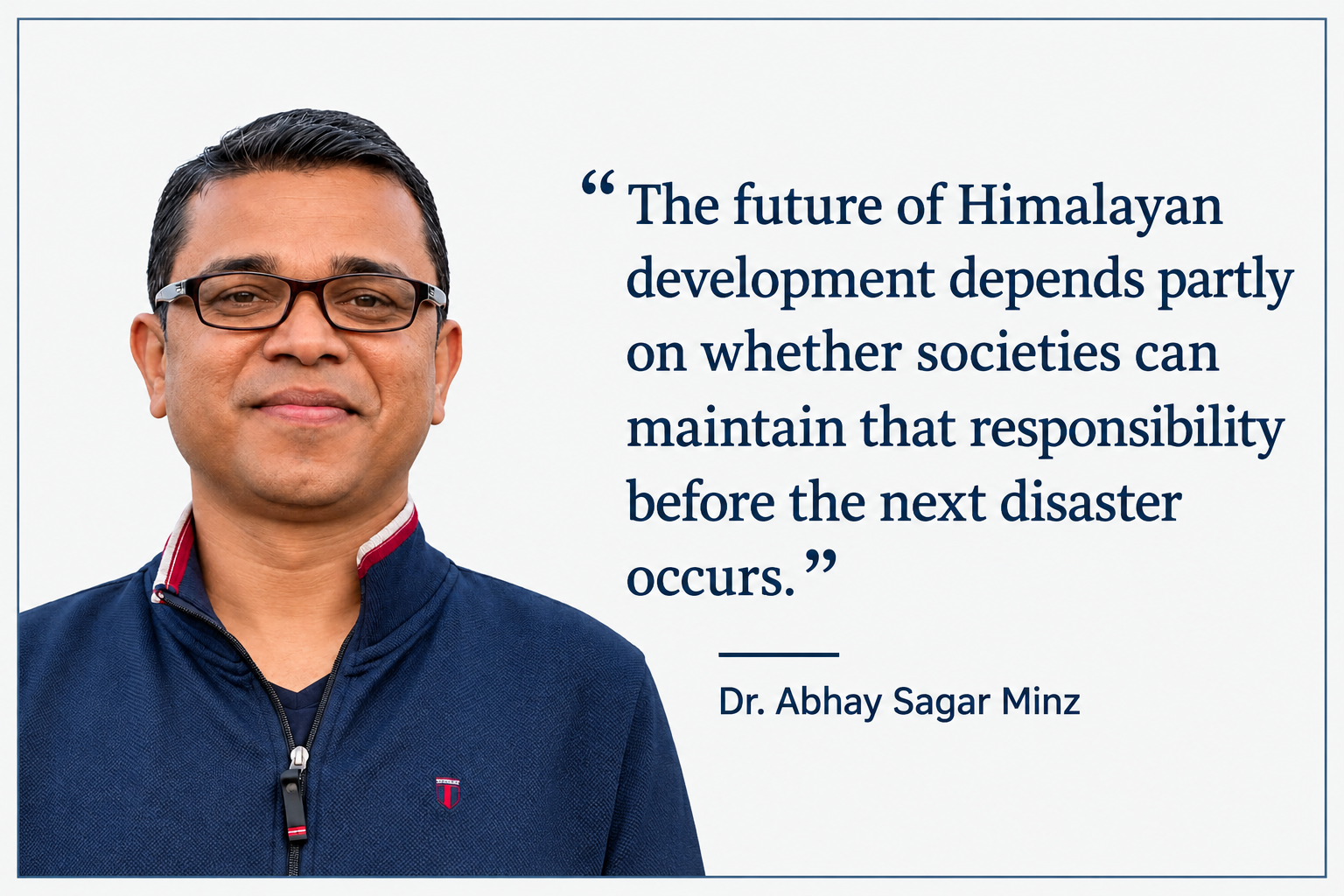
The future of Himalayan development depends partly on whether societies can maintain that responsibility before the next disaster occurs.
How the damaged area is rebuilt will reveal whether lessons have been learned. Rebuilding in the same way could expose people to danger again. It is also an opportunity to place homes in safer areas, protect workers better, and hold planners accountable.
People who must move should have a voice in where they live and how their homes are rebuilt. A new house alone cannot replace jobs, neighbors, schools, places of worship, or those they rely on for help. Recovery must also help families restore these connections and support one another. Local people should be involved before decisions are made. They need clear information about choices and risks, sufficient time to discuss them, and a real chance to alter the plans. Their concerns may reveal problems that experts have overlooked.
The Tibet-Nepal flash flood on 26 August 2026 was a physical event with profound social effects. Understanding it demands attention to the mountain collapse and the ways people met its power. It calls for scientific study alongside a review of work, authority, inequality, memory, and belonging.
To describe rivers as relatives is to claim that dependence brings responsibility. That duty rests mainly on institutions able to approve projects, assign land, regulate employment, and organize protection. The river did not turn into a moral foe on 26 August; its force revealed the limits of human arrangements around it. Honoring those affected requires rebuilding those structures with greater care so that the waters linking Tibet and Nepal are managed with full concern for the lives tied to them.
When rivers stop being relatives, duties toward them and each other can be more easily ignored. Renewing those duties involves creating institutions that acknowledge dependence, listen closely, and accept limits. The future of Himalayan development depends partly on whether societies can maintain that responsibility before the next disaster occurs.
(Dr. Abhay Sagar Minz is an assistant professor in the University Department of Anthropology at DSPM University, Ranchi.)




Comment