




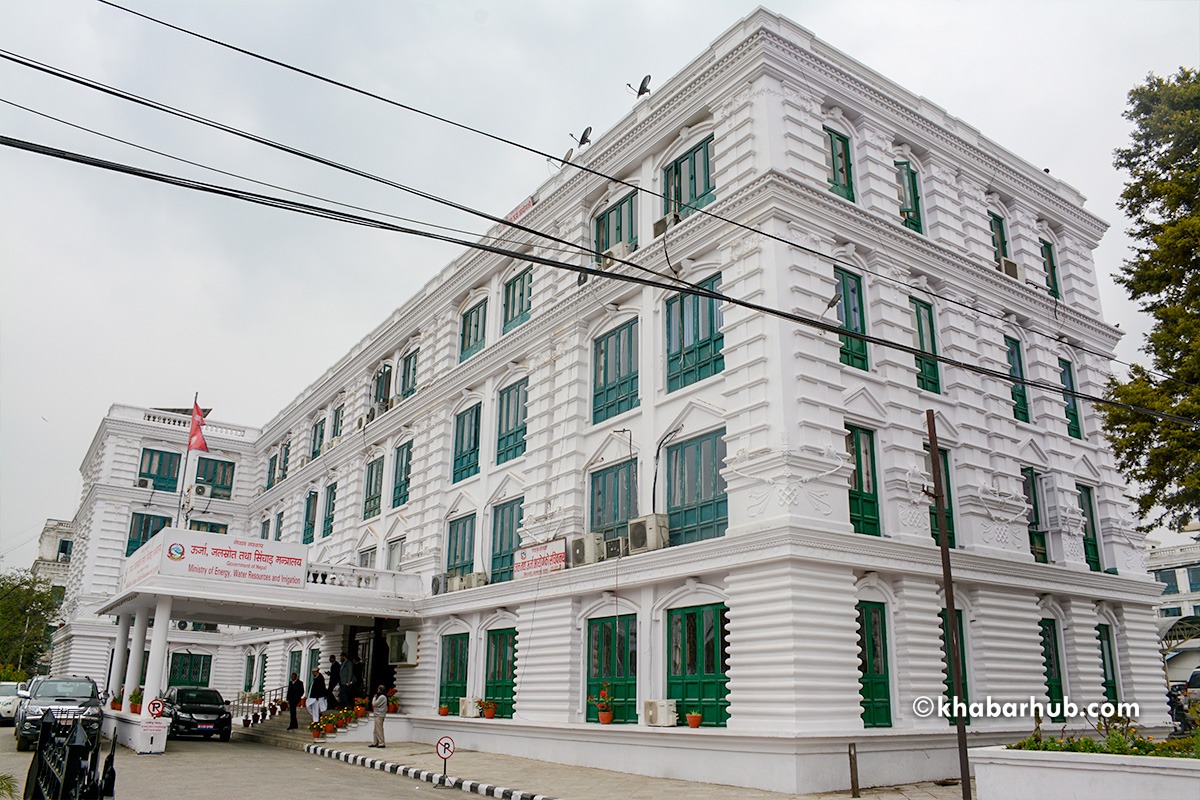
KATHMANDU: The government has unveiled the ‘Energy Consumption Growth and Export Strategy, 2083’, setting a target to generate 24,500 megawatts of electricity by fiscal year 2092/93 BS (2036/37) through investment from the public, private, and government sectors.
The strategy incorporates projects at various stages—proposed, studied, under construction, and ready for implementation. It includes reservoir and semi-reservoir hydropower projects, as well as solar energy initiatives, promoting a diversified energy mix.
The government aims to complete the long-delayed Budhi Gandaki Reservoir Project (1,200 MW) by 2091 BS. Although its investment framework has been decided, implementation is yet to begin.
According to the action plan, the 40 MW Raghuganga Hydropower Project is nearing completion, while the 140 MW Tanahun Hydropower Project is expected to be completed by fiscal year 2085/86. Other projects targeted for completion include the 42 MW Upper Modi A, 18.2 MW Upper Modi, and 37 MW Upper Trishuli 3B.
The 670 MW Dudhkoshi Reservoir Project, currently under construction, is scheduled for completion by 2091 BS. Similarly, the 1,061 MW Upper Arun and 417 MW Nalgad hydropower projects are also planned for completion within the same timeframe. The 490 MW Arun IV and 439 MW Betan Karnali projects are targeted for completion by 2090 BS.
The government also plans to complete the 210 MW Chainpur Seti project by 2087 BS. Priority projects include the 99 MW Tamakoshi V, 281 MW Naumure, and 828 MW Uttarganga, with the latter targeted for completion by 2092 BS.
In addition, a 1,000 MW solar project promoted by the Nepal Electricity Authority is expected to be completed by 2085 BS. Private sector-led solar projects have also been selected through competitive processes to support the energy mix strategy.
Government-backed entities, including the NEA and its subsidiaries, aim to complete projects totaling 3,500 MW by 2092 BS. Meanwhile, solar and export-oriented projects promoted by the Independent Power Producers’ Association, Nepal (IPPAN) are expected to add around 14,000 MW within the same period.
The strategy also focuses on strengthening infrastructure, with plans to build 14 domestic and 10 cross-border transmission lines. An underground electricity distribution system is targeted for completion by 2085 BS.
To boost domestic consumption, the government plans to promote electric cooking through subsidies, expand nationwide EV charging infrastructure, and replace coal-based boilers with electric alternatives.
In agriculture, it aims to modernize irrigation by shifting entirely to electric pumps and offering concessional tariffs. Special electricity tariffs are also planned to support energy-intensive industries such as fertilizer production and data centers.






Comment