




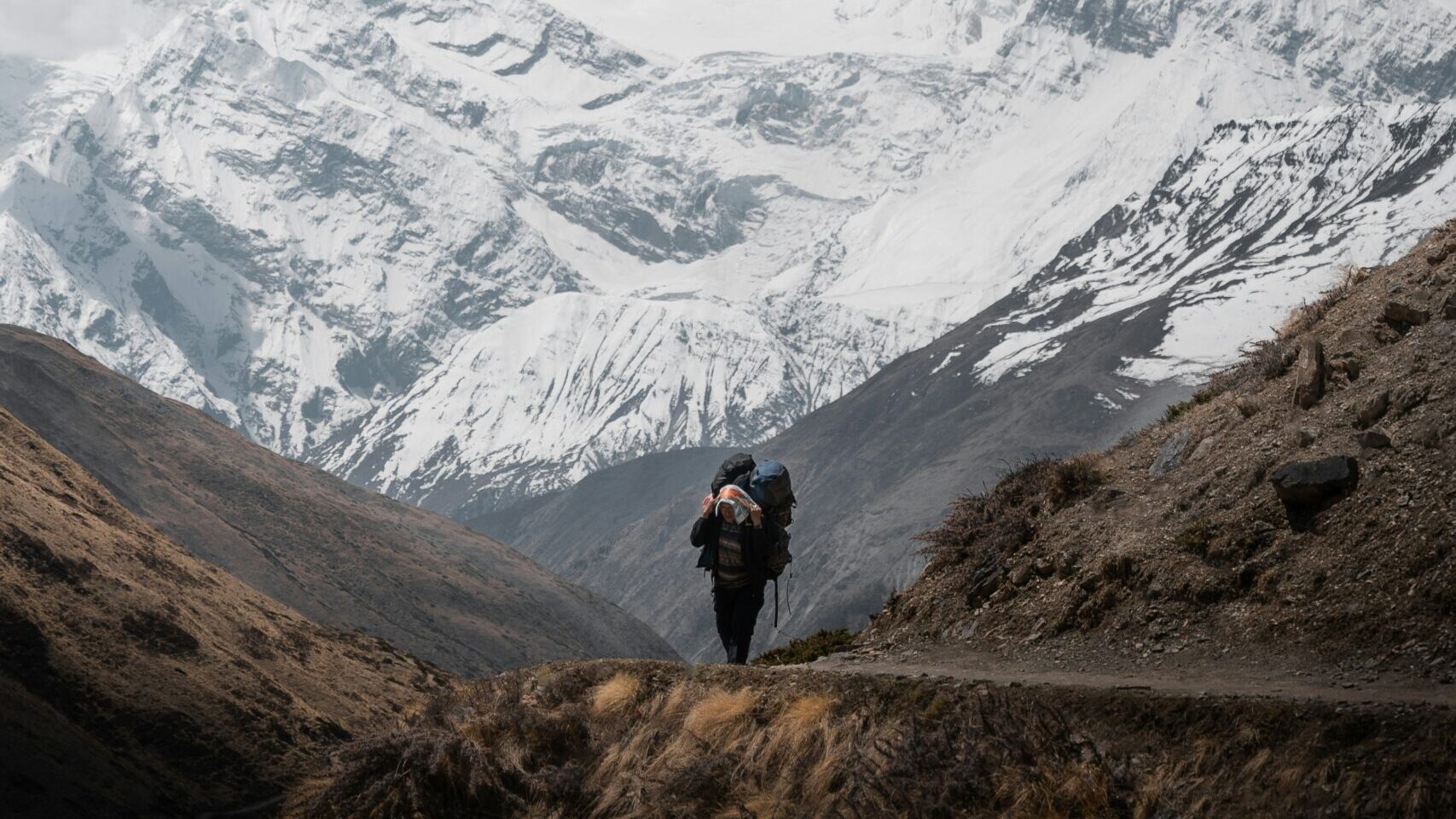
KATHMANDU: As Nepal gears up for parliamentary elections on March 5, 2026, the remote high-altitude villages of Khumbu, home to the Indigenous Sherpa people, Sagarmatha (Everest) and some of the world’s most iconic trekking trails remain largely untouched by the political frenzy sweeping towns and cities across the country.
While posters, rallies and door-to-door campaigns dominate the lowlands, harsh winter conditions coupled with mass seasonal migration have left villages such as Namche Bazaar, Lukla and Pangboche in the Sagarmatha region eerily quiet.
“With most residents having moved to Kathmandu [Nepal’s capital], the candidates will arrive here only at the last minute as campaigning [for the Khumbu constituency] goes on in Kathmandu itself,” Sonam Sherpa, a resident of Lukla, told Mongabay by phone.
In high-altitude communities beneath Sagarmatha, worsening climate impacts such as retreating Himalayan glaciers and frequent avalanches are growing risks, yet election debates still focus mainly on immediate infrastructure needs such as roads, electricity and drinking water rather than long-term environmental resilience, residents say.
“We only talk about climate change among ourselves,” Sonam Sherpa said. The candidates, meanwhile, talk about issues related to infrastructure such as roads and electricity, he adds.
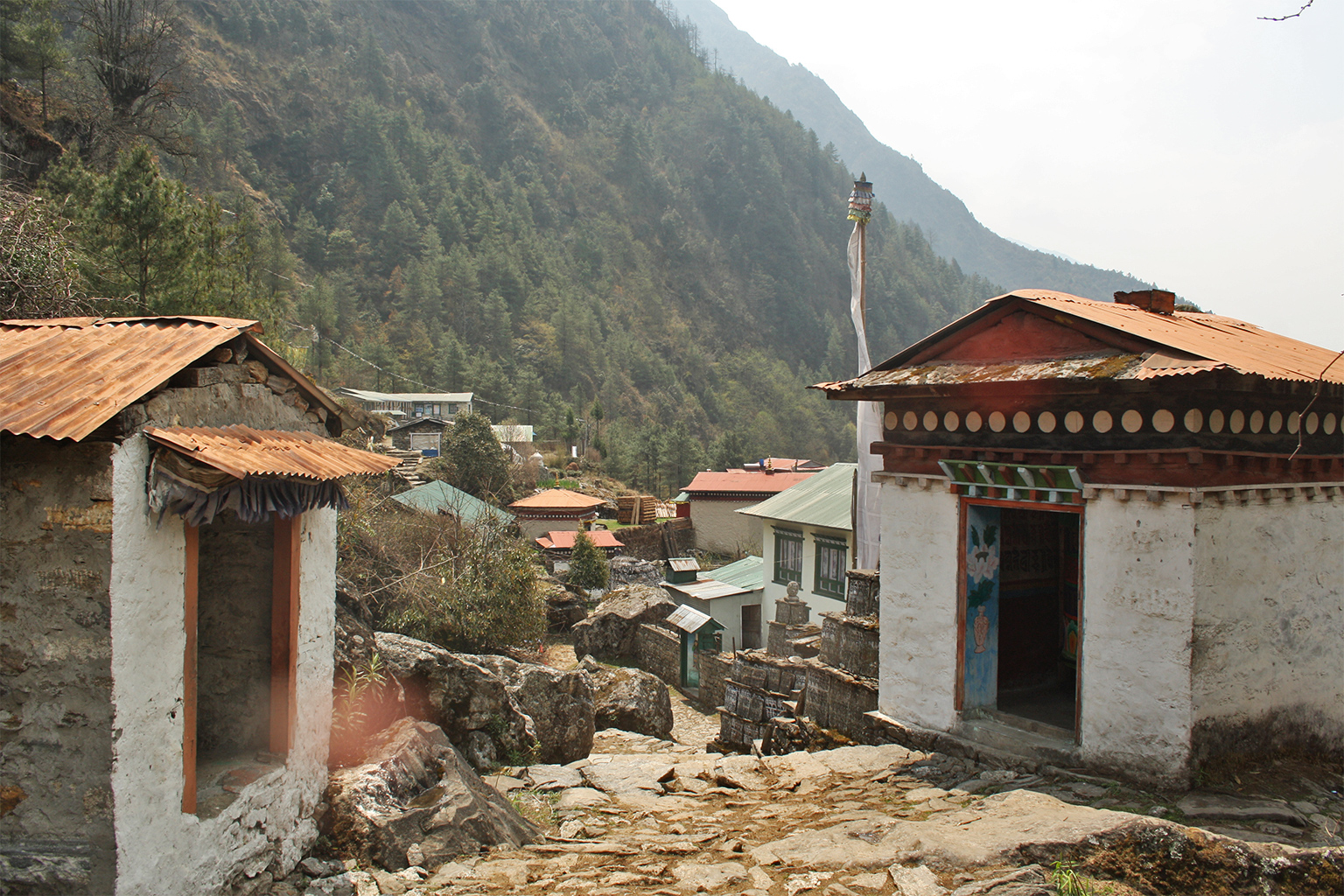
Since the first ascent of Everest by Edmund Hillary and Tenzing Norgay in 1953, the Sherpa people, known for their ability to thrive at high altitudes, gained global visibility and mobility. Second-generation Sherpas often pursue higher education and professional careers abroad. Third-generation youth increasingly settle outside Khumbu. While remittances and investments strengthen family incomes, they reduce the resident voter base.
This demographic reality shapes election campaigning. Political rallies are rare in upper Khumbu. Campaigning tends to concentrate in lower parts of the region, namely Solu, where most registered voters reside year-round. Solu and Khumbu, together called “Solukhumbu,” have only one dedicated seat in Nepal’s 275-member lower house of Parliament.
Nepal’s constituency delineation favors population over area, leaving large, remote mountain districts with limited parliamentary representation despite the logistical and governance challenges posed by their terrain.
According to Nepal’s 2021 national census, the total population of Solukhumbu is 104,851. Of that, Khumbu (Pasanglhamu Rural Municipality) has a population of just 8,720 — 5,140 (58.9%) of whom are Sherpa.
The rural municipality has 6,133 registered voters in this election, meaning only a small fraction of the total vote comes from the area. Given the difficult terrain and high-altitude conditions, most candidates merely pay a courtesy visit rather than engage meaningfully with the community, said Mingma Sherpa, a hotelier and president of Namche Youth Club.

Despite its vast geography, Solukhumbu, which occupies 2.3% of the country’s land, has only one parliamentary constituency. In contrast, Kathmandu, the capital, has 10 federal parliamentary seats, despite covering 0.6% of the area. It makes up with a population of 10% of the national total.
The comparison highlights how Nepal’s electoral system prioritizes population size over geographic area. This has led to a disconnect between the lived reality of voters in Khumbu and candidates who don’t live in the region, said Anoushka Pandey, a water policy and climate action specialist.
Politicians often prioritize infrastructure development over climate adaptation and resilience, she said, adding that this leaves local municipalities, the first point of contact for communities, without the capacity or resources to address the impacts of climate change.

“The government tends to adopt Western approaches, funding and expertise, which often do not align with Nepal’s local context,” Pandey told Mongabay. “Climate action needs to be responsive to local realities and the needs of communities, but most climate change impacts affect people who are unlikely to vote, and in remote areas like Khumbu, challenging terrain and widespread migration make voter engagement even harder,” she added.
Meanwhile, signs of an erratic climate are already visible for those staying on — often well-educated lodge operators. Ang Norbu Sherpa, a lodge operator in Pangboche, pointed to inconsistent snowfall and erratic rainfall patterns. “There has been no proper snow this season,” he said. “The weather is changing. But political leaders aren’t paying heed.”
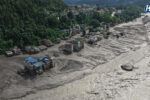
Similar is the experience of Pasang Gyalzen Sherpa, chair of Khumbu Pasang Lhamu Rural MunicipalityWard 5. “We’ve experienced glacier-related incidents recently, including the Thame floods,” he added.

The Sherpas’ experience is also backed by science. The Intergovernmental Panel on Climate Change (IPCC) sixth assessment report refers to elevation-dependent warming, a phenomenon under which regions located in higher altitudes such as the Himalayas could see pronounced increases in temperatures relative to lowlands. It also talks about widespread glacier retreat, changing snow and monsoon patterns and increasing risks to water resources and natural hazards across downstream regions.
“We are working on disaster preparedness. But support from the center and province is limited,” Pasang Gyalzen said.
Helicopter overuse remains particularly contentious. Locals have long raised concerns about unnecessary charter flights and alleged fake rescue operations that disturb communities and damage fragile terrain. Efforts by rural municipalities to regulate helicopter movements have met resistance from aviation authorities and operators.
On the campaign trail, meanwhile, roads, electricity and drinking water dominate the agenda. But the issues are also not beyond contention. Fair weather roads now connect Lukla, home to one of the world’s most dangerous airports, to the national road network. But many oppose tarmacking or further expansion, fearing it could fundamentally alter the trekking economy.
“If roads come too far up, Everest will lose what makes it special,” Mingma Sherpa said. Electricity largely comes from local micro-hydro projects. Communities are exploring connections to the national grid, but the region’s location inside Sagarmatha National Park complicates infrastructure expansion. Drinking water filtration systems exist in Namche and Pangboche, yet demand outstrips supply during peak seasons, as only around 30% of residents remain in villages such as Namche Bazaar and Pangboche during winter, and families migrate seasonally to Kathmandu or abroad, returning during April-May when the tourism season kicks in.
Khumbu generates significant revenue through mountaineering permits and tourism taxes. In 2024 alone, climbing fees from Everest accounted for a $4.5 million. Yet local leaders argue that only a small portion is reinvested in climate adaptation, infrastructure or environmental management. “Climate-related projects often come through NGOs and INGOs,” Pasang Gyalzen said. “A larger national program is needed.”
Rishi Dhan Thulung Rai, a candidate of the Rastriya Swatantra Party, recently visited Khumbu and acknowledged environmental concerns. However, his focus was also on infrastructure development with funding from royalties collected from mountaineers.
Rai said he told voters he will propose a redistribution of mountaineering-generated royalties, 40% to the center, 30% to the province and 30% to local government, to ensure funds remain in the region for infrastructure and environmental management.
Under current law, royalties from mountaineering and other natural resources, including electricity, forests, mining and water, are divided, with 50% going to the federal government and 25% each to provincial and local governments. A mountaineer climbing Everest in 2026 will have to pay $15,000 in royalties to the government. The climbing fee for Lhotse, the world’s fourth-highest peak located in the Khumbu region, has been set at $3,000 per climber, while Ama Dablam, another popular mountain in the area, is set at $1,000 per climber.

For Prakash Singh Karki, a candidate from the Nepali Congress and a tourism entrepreneur, the campaign is focused on development priorities. “People in mountainous districts want better motorable roads, clean drinking water, affordable health care and education,” he said. “These are not easily available here, so it is natural that these demands dominate.”
Karki told Mongabay he has to promise these things to the people even as the role of a member of Parliament is to make laws and policies. “But people are used to candidates promising roads, schools and hospitals. If we don’t promise similar things, they won’t take us seriously,” said Karki, who is yet to visit Khumbu for his campaign.
Amid the noise of elections and campaigning, the discourse on sustainable tourism and climate change adaptation has been reduced to rhetoric, critics say. “Talks about sustainable tourism are limited to speeches,” said Yankila Sherpa, a former state minister for tourism and sitting Bagmati province lawmaker. “Climate change is affecting us, but as a country we have not taken it seriously.”

But residents warn that ignoring climate change risks undermining the very foundation of the region’s prosperity. “If we only focus on money and infrastructure,” Mingma Sherpa said, “We may lose our culture, our environment and eventually tourism itself.”
As helicopters continue ferrying climbers toward Everest and winter snow thins across Himalayan slopes, Khumbu stands at a crossroads, visible to the world as a mountaineering icon, yet politically peripheral when it comes to shaping its own environmental future.
This article is republished from Mongabay under a Creative Commons license. Read the original article.


Comment