




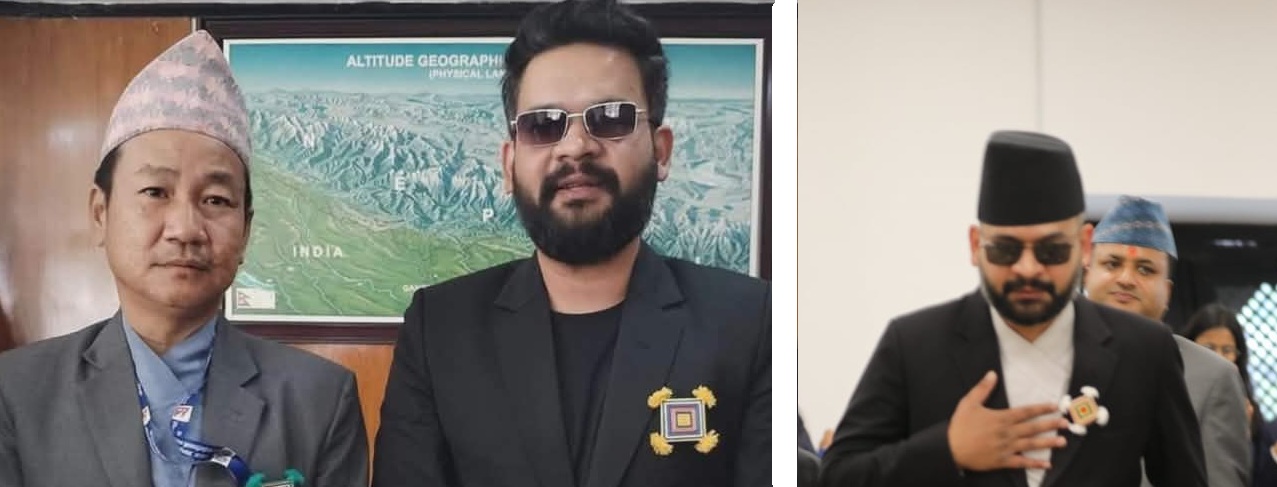
KATHMANDU: Senior leader of the Rastriya Swatantra Party, Balendra Shah, took the oath as a member of the House of Representatives wearing ‘Silam Sakma’, a cultural symbol associated with the Kirati community.
The symbol first came into the spotlight when Harka Sampang, then mayor of Dharan Sub‑Metropolitan City, presented it to Shah during their first meeting in Kathmandu on April 4, 2023. At the time, both leaders had recently won mayoral elections as independent candidates, Shah in Kathmandu Metropolitan City and Sampang in Dharan.
Despite occasional online exchanges and teasing on social media, the two had maintained cordial interactions during that period. Their meeting marked the first in-person encounter after both had gained prominence through independent political victories.
Although their relationship later appeared to cool, Shah’s use of the Silam Sakma during Thursday’s oath ceremony suggests the continued cultural significance of the symbol for him.
According to political scientist Mahendra Lawoti, Silam Sakma is considered a symbol of faith among the Limbu people of eastern Nepal. The term carries symbolic meaning: “Si” refers to death, “Lam” to a path, and “Sakma” signifies blocking or preventing. Together, it represents protection from death or misfortune.
Shah had also previously received a Silam Sakma from Kirat religious leader Atmananda Lingden during a meeting in Ilam District.
After receiving the symbol in 2023, Shah shared a photo of it on social media, writing that just as Silam Sakma blocks the path of death, no one should be able to block Nepal’s path to development.
Meanwhile, political dynamics between Shah and Sampang have evolved. Sampang has entered the House of Representatives with several seats under his influence, while Shah’s party secured a dominant electoral victory, positioning him to become prime minister.
Observers say Shah’s decision to wear Silam Sakma during the oath may also reflect his political connection to eastern Nepal. Shah was elected from Jhapa District, where Limbu and Rai communities form a significant portion of the population.
According to Shah’s secretariat, wearing the symbol was intended to represent the cultural identity of Koshi Province and acknowledge the support he received from Kirati communities during the election campaign. They also said Shah considers the symbol meaningful and even “lucky,” believing it has protected him from various challenges.





Comment