




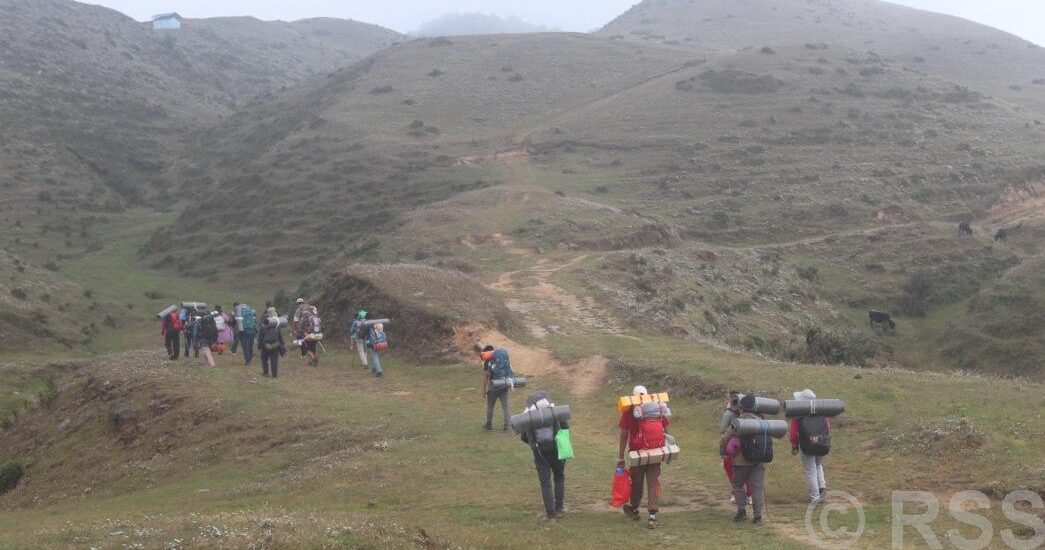
BHOJPUR: Tourist arrivals have been increasing recently along the Mundum Trekking Route, one of the major tourist attractions in the eastern hills of Nepal.
Favorable weather and the opportunity to enjoy the region’s natural beauty during the trekking season have attracted growing numbers of domestic and international visitors.
The rise in tourist arrivals has boosted business activities at hotels and other tourism-related establishments along the route, bringing renewed enthusiasm among local entrepreneurs.
Local hotel entrepreneur Nawaraj Kangmang said hotels in Chakhewa, located along the Mundum Trekking Route, have been experiencing an increase in tourist numbers.
According to him, an average of 150 to 200 tourists set out on the trekking route from the Chakhewa area every day. The growing number of trekkers has also increased the number of guests staying and dining at local hotels. He said all 16 hotels in the Chakhewa area are currently receiving tourists.
Kangmang said the growing tourist traffic has benefited not only the hotel industry but also the sale of locally produced goods. Tourists stay at local hotels, enjoy traditional meals and purchase essential supplies during their journeys. This has increased the income of hotel operators while creating a wider market for locally produced agricultural and household goods.
He said the Mundum Trekking Route is particularly popular from Bhadra to Mangsir and from Chait to Shrawan. Tourist arrivals increase during these periods because of favorable weather conditions, which make trekking easier and offer opportunities to enjoy the region’s scenic landscapes. He added that systematic management of tourist arrivals could create further employment and business opportunities for local communities.
Temkemaiyung Rural Municipality Chairperson Saroj Basnet said the local government aims to develop the Mundum Trekking Route into one of the municipality’s major tourism assets. He said the municipality is working to strengthen the local economy through tourism by promoting the area’s natural beauty, indigenous culture and historical significance.
Basnet said the municipality has prioritized tourism infrastructure development and promotional activities to establish the trekking route as a recognized destination nationally and internationally. Preservation of the route, sanitation, accessibility and expansion of tourist-friendly services have also been given priority to ensure a sustainable increase in visitor arrivals.
“The number of tourists traveling along the Mundum Trekking Route is increasing every year,” Basnet said, adding that the rural municipality has been paying attention to ensuring safe and convenient travel for visitors.
The Mundum Trekking Route holds considerable natural, cultural and religious significance. Trekkers can enjoy spectacular views of the eastern hills, lush forests, rhododendron-covered landscapes and various Himalayan ranges.
Its close association with Kirat civilization, indigenous culture and Mundum traditions gives the route a distinct identity among Nepal’s trekking destinations. The area’s natural beauty and cultural diversity have made it increasingly attractive to visitors interested in trekking, nature and cultural exploration.
Rural Municipality Vice-Chairperson Ramadevi Rai said tourism development would play an important role in increasing the income of local residents. She said the growing number of tourists would create opportunities for hotels, restaurants and other small businesses while helping expand markets for locally produced goods.
Linking tourism with local products and employment, she added, would enable residents to benefit economically without having to leave their communities.
Major attractions along the trekking route include Tawabhanjyang, Chakhewa, Temkedanda, Maiyungdanda, Salpa Pokhari and Silichung Chuchuro. During clear weather, visitors can enjoy panoramic views of the mountains, high-altitude landscapes and surrounding natural scenery.
The opportunity to experience local lifestyles, cultures and traditions at close quarters is another major attraction of the route. In recent years, interest has also grown among tourists seeking nature-based experiences, trekking adventures and cultural encounters.
Promoting the taste and identity of local products among visitors could further increase sales of agricultural produce, traditional foods and locally made household items. Meanwhile, efforts are underway to expand and maintain tourism infrastructure to ensure convenient travel along the route. Facilities such as drinking water, toilets, resting places and information boards, along with the trekking trails, are being maintained regularly.
The rural municipality said it is coordinating with tourism entrepreneurs and local communities to ensure safe and comfortable travel for visitors. However, sustained growth in tourism will require more effective promotion of the trekking route, preservation and promotion of local culture and products, infrastructure development and expansion of tourist-friendly services.





Comment