




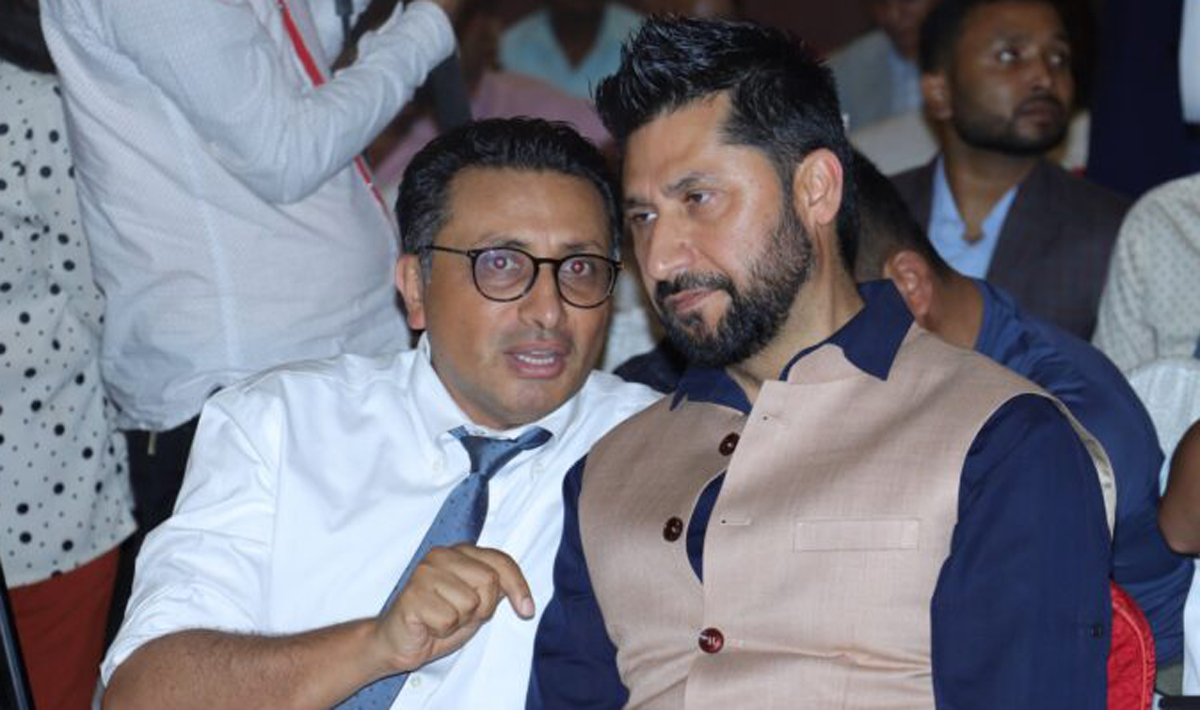
CHITWAN: Contrasting views on Nepal’s provincial structure have emerged within the Rastriya Swatantra Party (RSP), with party chair Rabi Lamichhane advocating restructuring of provincial institutions while Vice-Chair and Finance Minister Swarnim Wagle calling for the abolition of provincial assemblies.
The differing positions were revealed in documents presented during the party’s first general convention, which has been underway in Chitwan for the past three days.
On Tuesday evening, Lamichhane presented the party’s political report alongside five other documents. All six documents were endorsed by the convention’s closed session without detailed discussion, according to party sources.
However, a comparison of Lamichhane’s political report and Wagle’s economic-political report shows notable differences regarding the future of Nepal’s federal structure.
In his political report, Lamichhane stated that the party supports reforms to the current constitutional framework and favors restructuring provincial governments and provincial assemblies rather than abolishing them.
“We support a fully proportional electoral system in place of the current expensive electoral model to ensure representation of all communities. We also support transforming the National Assembly into a non-partisan chamber of experts, making the Vice-President its chairperson, and restructuring provincial governments and provincial assemblies,” the report states.
The document also reiterates the party’s support for a directly elected executive system.
In contrast, Wagle’s report argues that once the party gains sufficient political strength, it should advance an agenda of federal restructuring that includes the abolition of provincial assemblies.
The report states that RSP has already introduced governance reform agendas for public debate, including a directly elected prime minister, a system in which lawmakers cannot become ministers, non-partisan local governments, a reduction in the number of local units, the abolition of provincial assemblies, restructuring of federalism, reforms to constitutional bodies including the Judicial Council, and transparent financing mechanisms for political parties.
The differing proposals have sparked debate within political circles, particularly as the party’s election manifesto had previously advocated a “reformed provincial model” rather than the complete abolition of provincial institutions.
Dr. Wagle, who joined RSP after a long political career in the Nepali Congress, has in the past publicly supported parliamentary democracy and argued for exploring alternative models of provincial governance.
His latest proposal, however, appears to go further by explicitly endorsing the abolition of provincial assemblies, a position that differs from Lamichhane’s call for restructuring the existing provincial framework.
The issue has gained further attention amid ongoing discussions within RSP over constitutional reform, governance restructuring, and the future of Nepal’s federal system.






Comment