




In 1956, the Suez Crisis exposed a truth Britain could no longer deny: power had shifted. When London and Paris attempted to seize the Suez Canal after its nationalization by Gamal Abdel Nasser, their military operation was tactically sound but strategically disastrous. Under financial pressure from the United States and threats from the Soviet Union, they were forced into withdrawal.
The lesson was not about battlefield defeat—it was about the loss of autonomy. Britain still had military strength, but it no longer controlled the system. Suez marked the moment when power became an illusion.
Today, the world may be approaching a different but equally consequential test—centered not on Suez, but on the Strait of Hormuz. If Suez was about control of empire-era trade routes, Hormuz is about control of global energy lifelines. Nearly a fifth of the world’s oil passes through this narrow corridor.
Any conflict involving Iran immediately transforms it from a commercial artery into a strategic pressure point. As tensions escalate around a potential or ongoing confrontation involving Iran, a similar question arises: could this be a “Suez moment” for the United States?
The comparison is not geographic—it is structural. History does not repeat itself in identical form, but it often reveals patterns—and those patterns suggest that the current moment may not be about war alone, but about the changing nature of power itself. Suez revealed the limits of imperial power in a bipolar world. Hormuz may reveal the limits of hegemonic power in an emerging multipolar one.
How Great Powers Decline: Not Collapse, but Constraint
The decline of great powers rarely occurs through sudden collapse or decisive defeat. It emerges when freedom of action becomes constrained. From the world wars to the fall of the Soviet Union, decline has followed a recognizable pattern: overreach, economic strain, inconclusive wars, loss of legitimacy, and the rise of competitors.
Its strategy is asymmetric: first, disrupting maritime flows in the Gulf; second, leveraging proxy networks across Iraq, Syria, Lebanon, and Yemen; and third, absorbing pressure through endurance rather than escalation.
Britain experienced all of these by the mid-20th century, though in 1956 it still had ships, troops, and global reach. Suez did not cause decline—it revealed it. What it lacked was the ability to act independently within a system it no longer controlled. That is why Suez became a psychological turning point—it exposed the gap between capability and authority.
The United States today remains the world’s most powerful nation, far more powerful than Britain was then. Its military reach is unmatched, its financial system underpins the global economy, and its alliances span continents.
Yet the structure of the international system has shifted, and it faces a similar structural reality: power is increasingly distributed. The rise of China, the persistence of Russia, and the growing autonomy of middle powers and regional actors have created a system where power is negotiated, not dictated.
This is not collapse—it is constraint.
Hormuz as the Modern Stress Test
A confrontation involving Iran would not resemble a traditional great-power war. Iran’s strength lies not in matching the United States through conventional means, but in raising the cost of dominance. Its leverage is fundamentally asymmetric—rooted in its ability to disrupt maritime traffic through the Strait of Hormuz, sustain proxy networks across the Middle East, and rely on strategic endurance rather than rapid escalation.
This creates a deeper challenge for the United States. Military superiority may secure battlefield advantages, but the central question is whether it can translate those gains into durable political outcomes without triggering wider regional or global disruption. In such a scenario, control becomes less about decisive victory and more about managing escalation.
If instability spreads beyond Hormuz to other chokepoints such as the Red Sea, the consequences would extend far beyond the immediate theater. Energy prices would likely surge, global supply chains could be disrupted, inflationary pressures would intensify across import-dependent economies, and allies would face growing strategic uncertainty. In this sense, Hormuz is not merely a geographic passage—it is a systemic lever capable of transmitting localized conflict into global economic and political shockwaves.
In this sense, Hormuz is not just a location—it is a systemic lever.
Echoes of Suez in a Multipolar World
The parallels with Suez are not exact, but they are instructive.
First, overextension. The United States is managing simultaneous pressures in Europe, the Indo-Pacific, and the Middle East. Historically, such dispersion weakens strategic clarity.
Second, alliance uncertainty. In 1956, Britain discovered it could not act without American support. Today, Washington faces a different challenge—partners who may not fully align in a conflict with Iran. Divergence, not dependence, becomes the risk.
Third, legitimacy. In a fragmented information environment, prolonged conflict risks eroding moral authority and accelerating geopolitical hedging by smaller states.
Fourth, inconclusive outcomes. The greatest danger is not defeat, but the inability to convert military superiority into lasting political results—an echo of more recent conflicts in Vietnam and Afghanistan.
When Does Hormuz Become the New Suez?
A conflict around Hormuz becomes a “Suez moment” not by its occurrence, but by its outcome.
It would require: military action without clear strategic resolution; visible divisions among allies; diplomatic or economic intervention by rival powers; and pressure—financial, political, or systemic—forcing de-escalation and creating a global perception that dominance no longer guarantees outcomes.
If these conditions converge, Hormuz could mark not a collapse of American power, but a recognition of its limits.
The Real Shift: From Control to Management
The deeper transformation is conceptual. Suez marked the end of imperial control. Hormuz may mark the limits of hegemonic control.
The challenge for the United States is no longer to dominate every theater, but to manage complexity in a contested system: balancing competition with China; avoiding overreach in regional conflicts; preserving alliance cohesion; and maintaining credibility without escalation.
This is not decline in the traditional sense. It is a transition—from dominance to constrained leadership.
Iran: Not the Cause, but the Catalyst
A conflict involving Iran is not a great power war. Iran cannot replace American global leadership. But it occupies a critical position in the geopolitical system—as a regional actor capable of denying outcomes rather than winning wars.
The US is still the central node of the global financial system. Its alliances remain deep, particularly through NATO and Indo-Pacific partnerships. Its technological and economic influence continues to shape global systems.
Its strategy is asymmetric: first, disrupting maritime flows in the Gulf; second, leveraging proxy networks across Iraq, Syria, Lebanon, and Yemen; and third, absorbing pressure through endurance rather than escalation.
This creates a different kind of challenge for the US—not how to win militarily, but how to translate power into political results.
This is precisely where Suez becomes relevant. Britain and France did not lose because they lacked military capability—they lost because they could not convert it into sustainable political outcomes.
Iran, therefore, becomes an operational test case for American power in a multipolar world.
From Structure to Shock: How Systems Reveal Themselves
When viewed together, three layers of analysis emerge:
First, structure: the Thucydides Trap creates long-term instability between rising and ruling powers.
Second, stress: regional conflicts—such as one involving Iran—test the system’s resilience.
Third, outcome: a crisis—like Suez—reveals whether power has already shifted.
In this framework, Iran is not the driver of systemic change. It is the trigger that exposes it.
Warning Signals: Echoes of Suez
While the US is far stronger than Britain was in 1956, several warning signals are visible.
Overextension across theaters is one. The US is simultaneously engaged in supporting Ukraine, managing competition with China, and maintaining commitments in the Middle East. History shows that such diffusion of focus weakens strategic coherence.
Alliance friction is another. Unlike the Cold War era, today’s allies are more autonomous. Europe debates strategic independence, Middle Eastern states hedge their alignments, and much of the Global South resists binary positioning. If a conflict with Iran exposes these divisions, American leadership may appear conditional rather than decisive.
Legitimacy and narrative control have also become more complex. In a fragmented information environment, prolonged conflict risks eroding moral authority and strengthening counter-narratives of interventionism.
Most importantly, there is the risk of strategic inconclusiveness. Modern wars rarely produce clear victories. The experiences of Vietnam and Afghanistan demonstrate that even overwhelming military superiority cannot guarantee political success.
For smaller states, the shift from Suez to Hormuz carries profound implications, as these dynamics are not abstract. A transition from a unipolar to a multipolar world creates both opportunity and risk.
If a confrontation with Iran produces a similar outcome, it would reinforce perceptions of declining effectiveness—not defeat, but diminished credibility.
When Does a “Suez Moment” Occur?
A single war does not define decline. A “Suez moment” emerges when multiple dynamics converge: failure to achieve strategic objectives; fragmentation among allies; intervention or leverage by rival powers; economic or financial pressure forcing policy reversal; and a global perception that the dominant power can no longer enforce outcomes.
It is this combination—not conflict alone—that transforms a crisis into a historical inflection point.
Why This Is Not Yet Suez
Despite these risks, important differences remain.
The US is still the central node of the global financial system. Its alliances remain deep, particularly through NATO and Indo-Pacific partnerships. Its technological and economic influence continues to shape global systems.
Unlike Britain in 1956, it is not dependent on a single external actor for survival.
This means that decline, if it occurs, will not be sudden. It will be gradual, uneven, and contested.
From Dominance to Management
The real challenge for the US is not whether it can maintain absolute dominance—it cannot. The question is whether it can manage relative decline without triggering systemic instability.
This requires a strategic shift: accepting multipolarity without overreaction; avoiding overextension across multiple theaters; prioritizing political outcomes over military victories; and strengthening alliances through consultation rather than coercion.
In this context, Iran becomes less a battlefield and more a barometer—a test of whether strategy has adapted to new realities.
The Thucydides Trap: The Structural Pressure Beneath the Surface
At the deepest level, global politics is shaped by what is often called the Thucydides Trap—the idea that when a rising power challenges a dominant one, the resulting fear, mistrust, and insecurity make conflict more likely. This is not a deterministic law, but a structural condition that increases the probability of confrontation, especially when miscalculation, alliance dynamics, and strategic anxiety converge.
History offers powerful illustrations. The rise of Germany against the United Kingdom contributed to the outbreak of World War I. The rapid expansion of Japan and its challenge to American influence in the Pacific culminated in World War II.
Earlier still, the rivalry between France and the UK during the Napoleonic era reflected similar dynamics of a rising challenger confronting an established power. In more recent times, tensions between the US and the Soviet Union during the Cold War did not lead to direct war but produced sustained global rivalry and proxy conflicts.
A widely cited study by Graham Allison examined 16 historical cases of rising powers challenging ruling ones; in 12 of those cases, the outcome was war. These examples—from Habsburg–Ottoman rivalry to imperial Japan’s expansion—underscore a recurring pattern: when power transitions are unmanaged, competition tends to escalate into conflict.
Today, the relationship between the US and China reflects many of these structural pressures. China’s rapid economic and military rise, coupled with American concerns about losing strategic primacy, has intensified rivalry across trade, technology, supply chains, and regional security—particularly in the Indo-Pacific. This is the underlying tension shaping the current international system.
The shift from Suez to Hormuz captures a deeper transformation. Suez symbolized control over trade routes in an imperial era. Hormuz represents a world where disruption, not dominance, can shape outcomes—where even a weaker actor can impose systemic costs on a stronger one.
Yet structural pressure alone does not determine outcomes. Not all rivalries end in war—the Cold War itself is a reminder that strategic restraint, deterrence, and institutional mechanisms can prevent escalation. What ultimately matters is how these pressures are tested, managed, and revealed during crises.
Implications Beyond the Great Powers
For smaller states, the shift from Suez to Hormuz carries profound implications, as these dynamics are not abstract. A transition from a unipolar to a multipolar world creates both opportunity and risk.
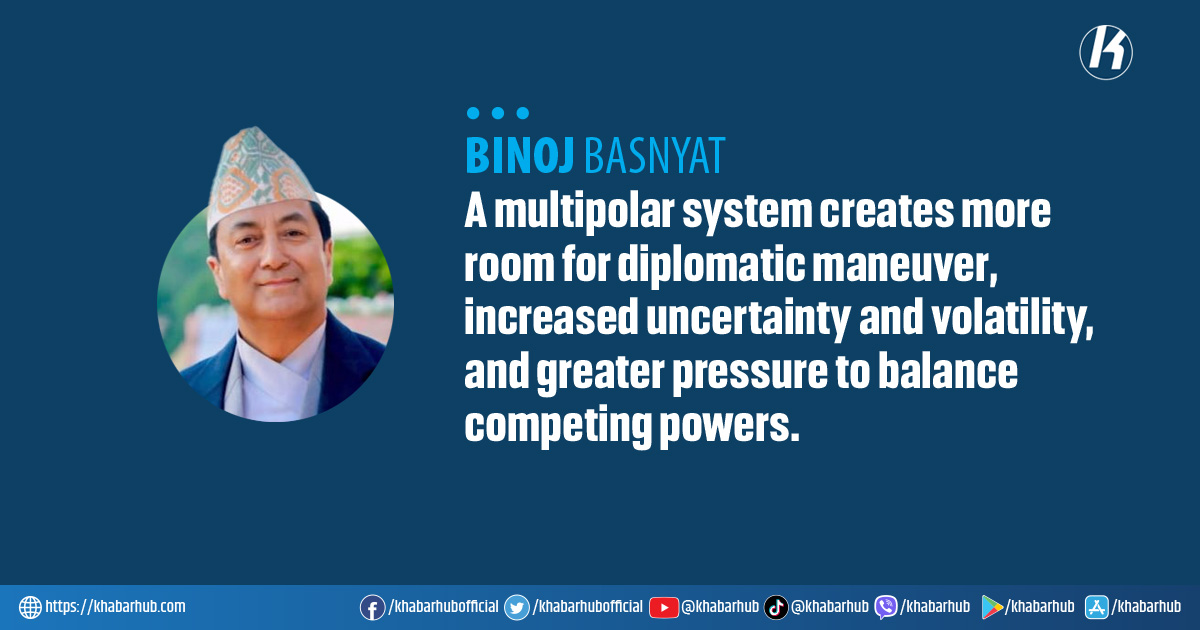
A multipolar system creates more room for diplomatic maneuver, increased uncertainty and volatility, and greater pressure to balance competing powers.
In such an environment, stability depends less on alignment and more on resilience and strategic agility.
The lesson from Suez is not simply about decline—it is about timely adaptation. States that recognize shifts early can protect their interests; those that misread them become vulnerable.
Conclusion: From Suez to Hormuz—A Test of Adaptation
The Suez Crisis did not end the British Empire; it exposed a reality Britain could no longer ignore—that power had already shifted, and its freedom to act had narrowed. The error was not weakness, but misreading the system.
At the same time, what appears as resilience in Iran is, in reality, the endurance phase of a system designed to survive its own fragmentation. The regime’s continued ability to project force, maintain repression, and signal normalcy should not be mistaken for strength, but understood as the functioning of a contingency architecture built for crisis.
Its strategy is not victory, but time—imposing costs while betting that the US, Israel, and its Gulf partners will not sustain pressure long enough to force a decisive outcome. The strategic lesson is clear: in modern conflict, the line between resilience and breakdown is often blurred, and the true measure of power lies not in the ability to endure shock, but in the capacity to retain coherence, legitimacy, and control as that shock unfolds.
Today, the US confronts a different but equally defining moment. Its capabilities remain unmatched, yet its environment has fundamentally changed. A confrontation involving Iran—especially around the Strait of Hormuz—would not simply test military strength. It would test whether power can still deliver outcomes in a system shaped by multiple actors, contested narratives, and interdependent vulnerabilities.
The shift from Suez to Hormuz captures a deeper transformation. Suez symbolized control over trade routes in an imperial era. Hormuz represents a world where disruption, not dominance, can shape outcomes—where even a weaker actor can impose systemic costs on a stronger one.
In such a landscape, power is no longer defined by the ability to act alone, but by the capacity to sustain results, manage alliances, and navigate constraints.
The real question, therefore, is not whether this becomes another Suez. It is whether the United States recognizes that the nature of power has changed—and adapts before that reality is imposed upon it. History is consistent on this point: great powers rarely fall because they are challenged; they falter when they fail to adjust.
From Suez to Hormuz, the geography is different, but the test is the same—not of power, but of statecraft and judgment.
(Basnyat is a retired Major General of the Nepali Army, a strategic affairs analyst, and a researcher affiliated with Rangsit University, Thailand. Views exprsessed in the article are personal)





Comment