




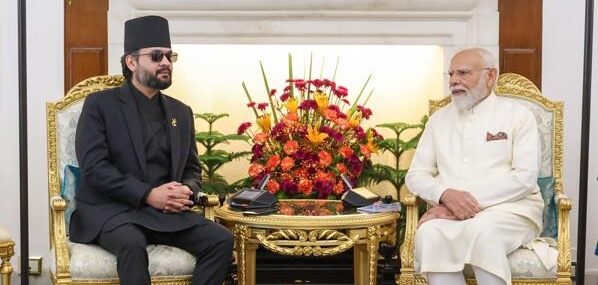
NEW DELHI: Prime Minister Balendra Shah (Balen) and his Indian counterpart, Narendra Modi, jointly laid the foundation stone for the 669 MW Lower Arun Hydropower Project on Monday.
The two prime ministers remotely inaugurated the project, which is being developed in Sankhuwasabha district of Nepal, from the Indian capital. Prime Minister Shah is currently on a two-day state visit to India.
Located in Chichila Rural Municipality and Khandbari Municipality of Sankhuwasabha, the project is being developed under the Nepal-India energy cooperation framework. It has an estimated investment of NPR 92.67 billion, with construction scheduled for completion within five years.
The project aims to strengthen energy cooperation between Nepal and India while expanding Nepal’s hydropower generation capacity. It will be developed under the Build-Own-Operate-Transfer (BOOT) model.
Under the Project Development Agreement (PDA), Nepal will receive 21 percent of the electricity generated by the project free of cost. The agreement also stipulates that the project will be handed over to the Government of Nepal without charge after the completion of its 25-year commercial operation period.
The Lower Arun Hydropower Project is being developed through a subsidiary of India’s state-owned Satluj Jal Vidyut Nigam (SJVN). The Project Development Agreement was signed between the Investment Board Nepal and the project development company on June 1, 2023.
The project will be integrated with the Arun-III Hydropower Project. Under the planned arrangement, water discharged after electricity generation at Arun-III will be channelled through an approximately 17.3-kilometre tunnel to the powerhouse of the Lower Arun project, where it will be used to generate additional electricity.
Nepal is expected to benefit from the project through free electricity, royalties, taxes and other financial returns. Its construction is also expected to create employment opportunities, improve local infrastructure and stimulate economic activities in the project-affected areas.


Comment