




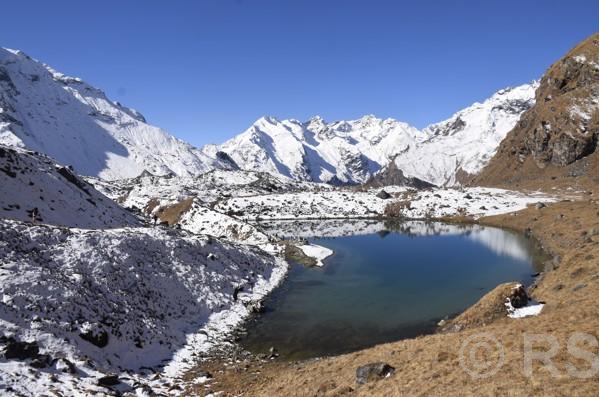
BAJHANG: Calling for climate justice and stronger efforts to protect the Himalayan ecosystem, Api Himal Rural Municipality in Darchula has concluded the Api Himal Tourism Celebration and Climate Change Dialogue by issuing the Api Peak Declaration-2083 BS.
The event aimed to strengthen collaboration among local governments in the Chameliya River basin and demonstrate a collective commitment to Himalayan environmental protection, climate justice and sustainable development.
The declaration outlines 17 priority areas, including biodiversity conservation, ecological restoration, sustainable management of natural resources, promotion of indigenous knowledge and culture, climate-resilient livelihoods, sustainable tourism, research and innovation.
It underscores that the challenges confronting the Himalayan region extend beyond local boundaries and require coordinated efforts. The declaration also calls for the scientific and equitable use of forests, land, water resources, medicinal herbs and grazing areas. It commits to implementing climate adaptation programmes by integrating traditional knowledge with modern scientific approaches.
The initiative also seeks to create more opportunities in green employment, organic farming, herbal enterprises and renewable energy, particularly for women, youth, farmers and marginalised communities, according to Api Himal Rural Municipality Chair Bhakta Singh Thekare Bohara.
He said the local government has prioritised making Himalayan trekking routes environmentally sustainable, managing plastic and solid waste, protecting glaciers and lakes, and restoring water sources.
Standing at an altitude of 7,132 metres above sea level, Api is the highest peak in Sudurpaschim Province. The local government has set a target of attracting 10,000 domestic and international tourists in the current fiscal year.
Amid growing threats to mountain ecosystems and local livelihoods from climate change, the rural municipality has launched initiatives to safeguard the environment while promoting tourism in the region.
According to Dr Ramesh Raj Pant, an environmental expert and teacher at Tribhuvan University, the impacts of climate change are becoming increasingly evident in high-altitude areas such as Api Peak. Changes in the timing and patterns of rainfall, irregular snowfall and declining water resources have adversely affected the livelihoods of local communities.
“The impacts are not limited to snow and glaciers. Their ripple effects have reached kitchens, cowsheds, farms, livestock, agriculture, the collection of medicinal herbs and the overall local economy,” he said.
Dr Pant noted that climate change disproportionately affects vulnerable populations, particularly low-income households, women, children, senior citizens and persons with disabilities, who are more exposed to its adverse consequences.
He further observed that mountain communities are likely to bear a disproportionately high cost of climate change, despite their limited contribution to global emissions.





Comment