




KATHMANDU: Four months after Gagan Thapa was elected president of the special general convention, internal tensions within the Nepali Congress (NC) have yet to ease. The establishment faction led by Thapa is currently engaged in province-wise outreach focused on policy discussions and training programmes.
Meanwhile, groups that did not participate in the special general convention are also organizing provincial gatherings, citing party unity and preparations for the 15th general convention. One such group, which has set up a liaison office in Anamnagar, is reportedly preparing to carry out parallel political activities.
As a result, the gap between the establishment and other factions—despite repeated calls for unity—appears to be widening rather than narrowing.
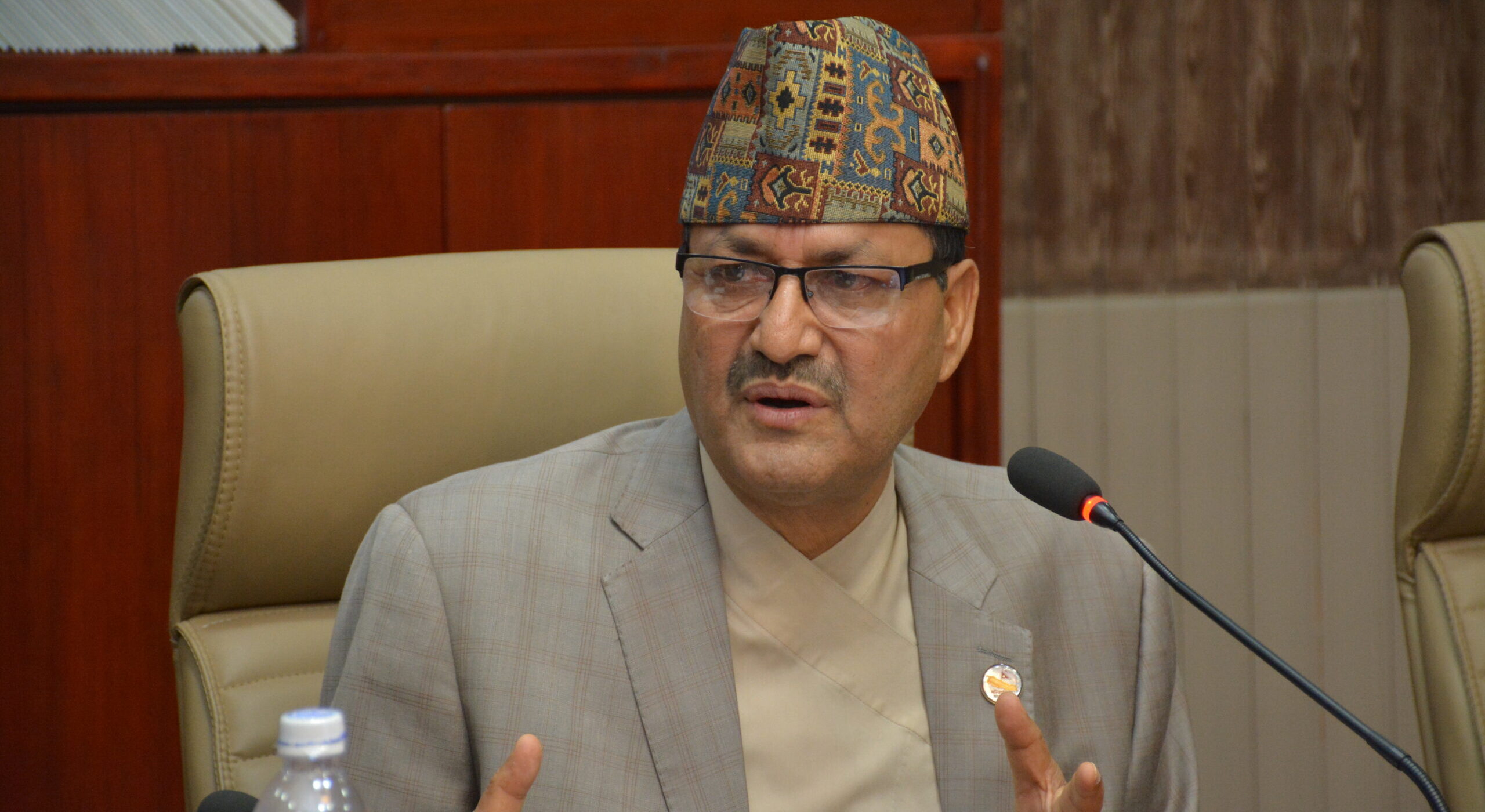
In this context, Khabarhub spoke with NP Saud, a member of the Nepali Congress Central Working Committee elected from the 14th general convention and former minister, on issues surrounding internal differences within the party. Edited excerpts from the conversation:
Some say opening a separate office in Anamnagar signals party division. What is your view?
Our leaders have established an office in Anamnagar for coordination and contact purposes. It is a long-standing practice to maintain offices around Singha Durbar and the Federal Parliament area for convenience, so that cadres and elected representatives can easily coordinate. This should be seen as a normal organizational arrangement.
There is also talk of forming a separate party with the conch symbol ahead of the next elections. Has the Congress reached a point of split?
That is not the case. At present, there are differing views within the Nepali Congress, not a formal split. Rather than dividing into factions, we are holding meetings, interactions, and discussions across the country to strengthen and revive the party in a coordinated manner.
Our focus is on minimizing losses after the special general convention and restoring unity. The responsibility of resolving confusion and creating an environment for the upcoming general convention lies with the party leadership. Party president Gagan Thapa himself should take the initiative.
The establishment has already decided to update active membership through the “Grassroots Campaign” and move toward the general convention. Do you have a different view?
In my understanding, updating active membership through the “Jara Abhiyan” (Grassroots Campaign) is an administrative responsibility. During the tenure of the current leadership, membership renewal and new registration for the 15th general convention were already carried out through the 14th working committee. If there are errors, they should be corrected.
Membership of individuals who have left the party or violated discipline can be revoked. However, re-updating already renewed and active memberships without justification is neither logical nor procedurally sound. We do not accept that approach.
After the court declared the special general convention valid, it is Gagan Thapa’s responsibility to accept that decision and guide the party toward the 15th general convention, especially since we have already contested elections under his leadership with full party participation.
Even though unity is being emphasized, parallel programs and mutual accusations continue. What has prevented formal dialogue from resolving the dispute?
So far, there have been no result-oriented talks aimed at unification. Informal conversations during weddings, birthdays, or chance meetings cannot be considered structured negotiations between the two sides.
The party president has met the outgoing acting president twice, and has also met senior leader Dr. Shekhar Koirala. However, these discussions have not produced any concrete outcome, and follow-up initiatives have not moved forward.
NC President Thapa has nominated some leaders to party positions who were not part of the special general convention. Was this done in the spirit of unity?
Some colleagues have been nominated to the Central Working Committee. However, these appointments were made at the president’s personal discretion. A genuine unity framework can only be developed through structured dialogue between those who participated in the special general convention and those who did not.
Both sides should jointly form investigation and election committees. Only by ensuring a level playing field for all can the general convention be conducted fairly.
At present, the party has become the weakest in its history, falling from 89 seats to 38, and its proportional vote share declining from 2.7 million to 1.7 million. With provincial and local elections approaching within a year and a half, the situation is politically challenging.
In such circumstances, continuing a mindset of division would be detrimental to both democracy and the country. Everyone must be willing to make compromises—those in positions of authority should be more flexible, and those outside office must also show restraint in the interest of unity.
Some in the establishment say that the 60–40 formula is no longer valid and that a “broken vehicle cannot run.” What is your response?
The practice of transactional bargaining within the party must end. Once an equal environment is ensured for all, no one objects to temporarily holding positions for two or four months before the general convention. However, when new conditions are imposed, it effectively turns the party into one dominated by a single faction.
Only about half the members participated in the special general convention, while the remaining half are still outside that process. The party also suffered its most severe electoral defeat in history under these circumstances. In such a context, imposing rigid conditions from leadership only weakens unity efforts and reduces the party’s overall capacity.
Sher Bahadur Deuba is currently abroad. There are also rumors of political mobilization from there. What is your view?
He is abroad for medical treatment and will return after recovery. He remains concerned about the party. Those currently holding responsibilities within the country must act with accountability and seriousness regarding the party’s future direction.
There is no need to involve the former prime minister or outgoing president in unnecessary speculation. The leaders currently active in the country are managing party affairs.




Comment