




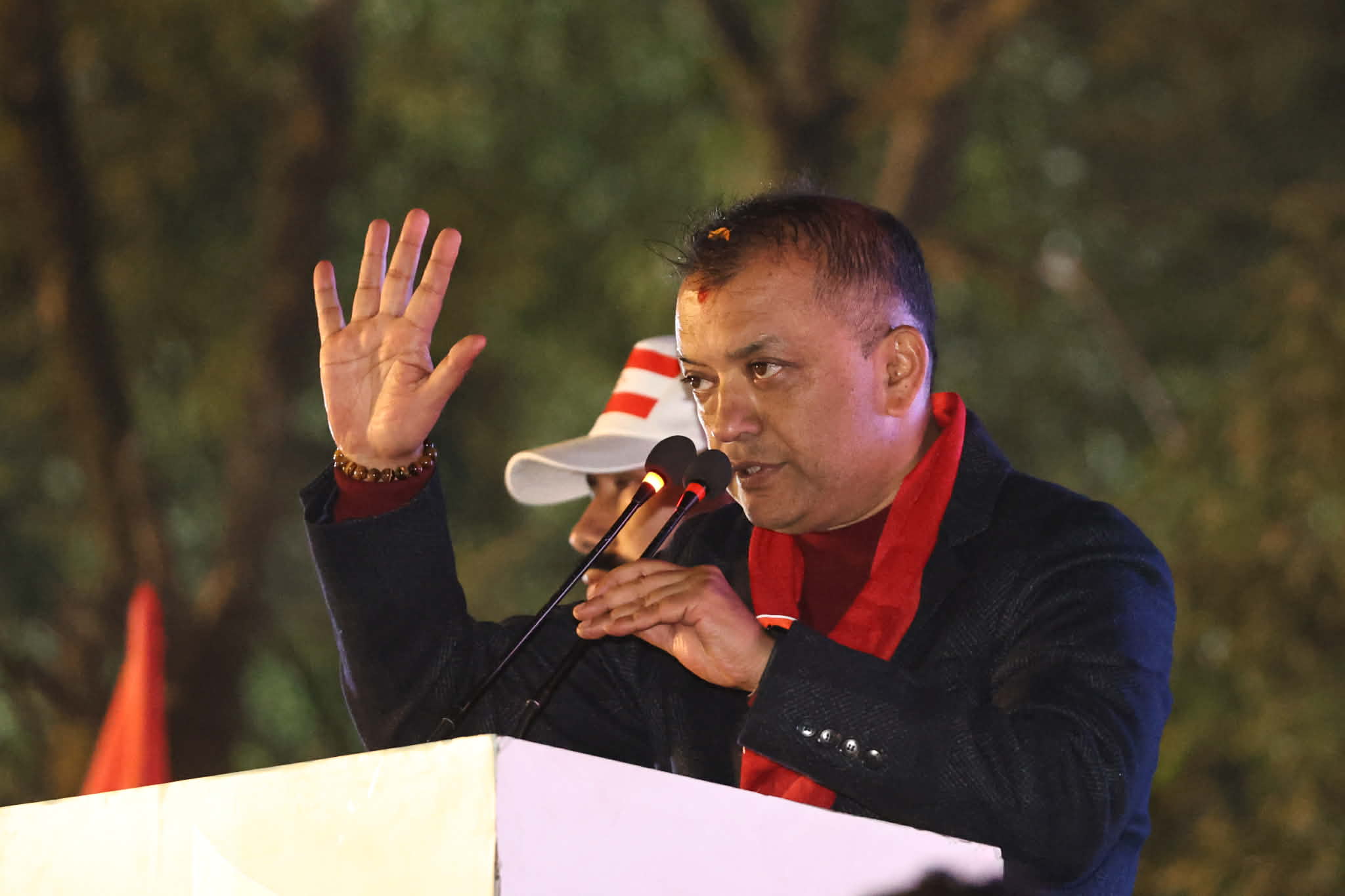
SARLAHI: Nepali Congress President Gagan Kumar Thapa has made public his election commitment as a candidate for the House of Representatives from Sarlahi Constituency-4.
Under the title “Mero Pratigya, Mero Abhiyan” (My Pledge, My Campaign), Thapa announced a detailed programme outlining his priorities if elected. Paying tribute to historic movements for democracy, identity and rights, he pledged to place Madhesh at the centre of national priorities.
Thapa claimed that he visited all 51 wards of Sarlahi-4 to directly assess local problems and prospects. His commitment document focuses on key sectors including education, health, agriculture, infrastructure, employment, border security, women and Dalit upliftment, and cultural preservation.
Infrastructure as top priority
Thapa said stalled bridge projects, flooding issues, embankment repairs, irrigation, drainage, drinking water, agricultural storage and rural road improvement would be prioritised. He also committed to coordinating with federal, provincial and local governments to complete unfinished projects.
He further announced nine special campaigns:
1. Quality Education – ‘Kapi Kalam Campaign’
Thapa pledged to manage teachers for mathematics, science and English, promote technology-friendly schools, and provide scholarships for students from poor, Dalit and Muslim communities. He also proposed mother-tongue education and the establishment of technical institutes. Through the ‘Sabal Chhori Abhiyan’, he aims to link girls’ education with income-generating opportunities.
2. Accessible Healthcare – ‘Swastha Nagarik Campaign’
He committed to establishing health promotion centres with doctors in every local unit, ensuring free treatment for snakebite and kala-azar, operating mobile clinics, setting up a kidney treatment centre, and enforcing a zero-tolerance policy against drug abuse.
3. Agricultural Advancement – ‘Kisan Gaurav Campaign’
Thapa said he would focus on clearing sugarcane farmers’ arrears, fixing minimum support prices, expanding cold storage and irrigation facilities, introducing digital fertiliser tracking, maintaining emergency fertiliser reserves, and initiating efforts to establish a fertiliser factory in Madhesh.
4. Natural Resources and Disaster Management
He proposed river control measures for Bagmati and Manusmara rivers, embankment construction, bamboo plantation, Chure conservation, and operation of an early warning system.
5. ‘Mission Employment Campaign’
The plan includes skill development fairs, employment information centres, collateral-free loans, foreign employment counselling support, reintegration programmes and promotion of youth entrepreneurship.
6. ‘Dashgaja Ujyalo Campaign’
Thapa pledged to install high-mast solar lights in border areas, modernise small customs offices and implement a ‘Border Village Development Package’.
7. Women and Children – ‘My voice, My right’
He announced plans for women’s entrepreneurship loans at a 2 percent interest rate, campaigns against dowry and child marriage, nutrition programmes and establishment of safe shelters.
8. Dalit Rights Campaign
Thapa committed to land and housing for landless Dalits, scholarships, skill development training, collateral-free loans and a zero-tolerance policy against caste-based discrimination.
9. ‘My culture, My identity’
He pledged to preserve Maithili and Bajjika languages, promote Mithila art, build cultural centres, conserve historical sites and promote local festivals.
‘Janata Dalan’ office
Thapa also announced that he would establish a parliamentary office named ‘Janata Dalan’ in Sarlahi and operate a ‘Satellite Janata Dalan’ office in Kathmandu to directly hear and address public grievances.
Presenting himself as a “servant of the people,” Thapa reiterated his commitment to steering Sarlahi-4 towards good governance and development, appealing to voters for trust, support and cooperation.






Comment