




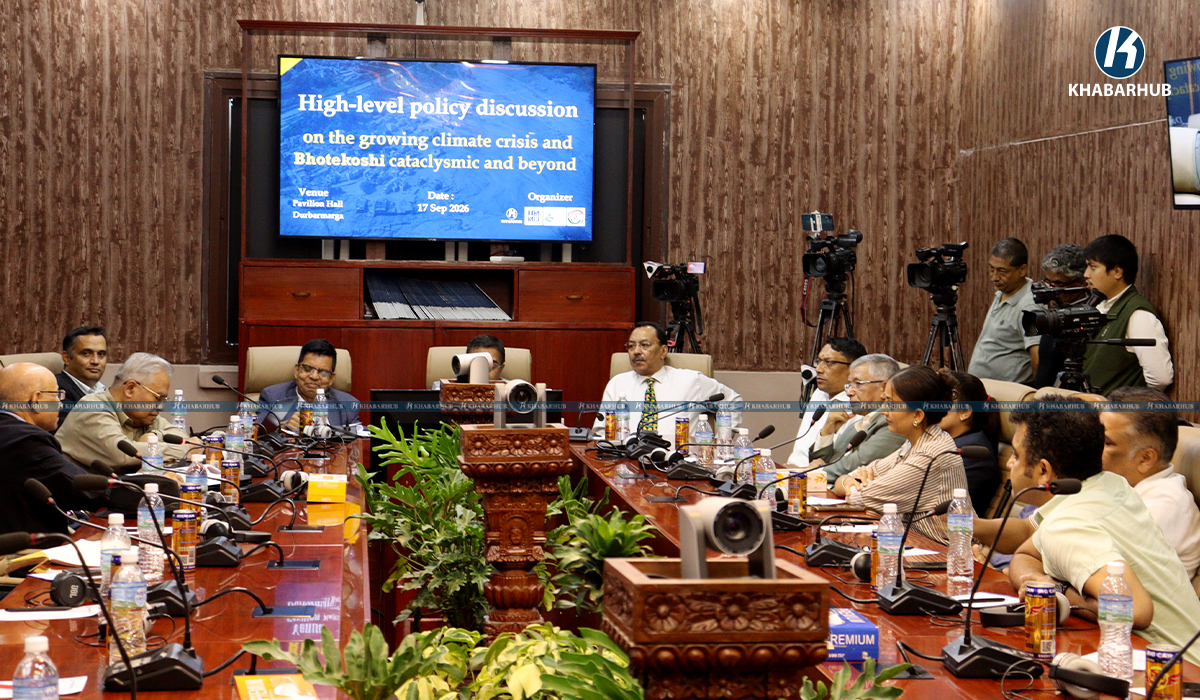
KATHMANDU: Stakeholders have emphasized the need for greater multilateral cooperation to reduce the risks posed by the climate crisis.
Speaking at a high-level policy dialogue on the growing climate crisis organized by the Institute for Strategic and Socioeconomic Research (ISSR) in Durbarmarg, Kathmandu, participants said the recent Bhotekoshi disaster on August 26 underscored the need to strengthen research, investigation and disaster preparedness.
Former Vice President of the Asian Development Bank and Vice Chancellor of Nepal University Dr. Bindunath Lohani said disasters occurring in the Himalayan region do not affect the region alone. He said Nepal should take the initiative to strengthen regional and international cooperation to reduce the risks posed by such disasters.

Noting that countries in the South Pacific region have united on the issue of climate change, Lohani suggested that Nepal should also enhance cooperation with countries in the region.
He stressed the need for regular studies and research into changes in the Himalayan environment, noting that more than two billion people depend on the Himalayas.
Similarly, Professor Ram Manohar Shrestha of the Asian Institute of Technology said Nepal’s disaster response mechanisms should be reconsidered based on lessons from the Bhotekoshi disaster. He noted that the disaster resulted in not only human and economic losses but also cultural losses.
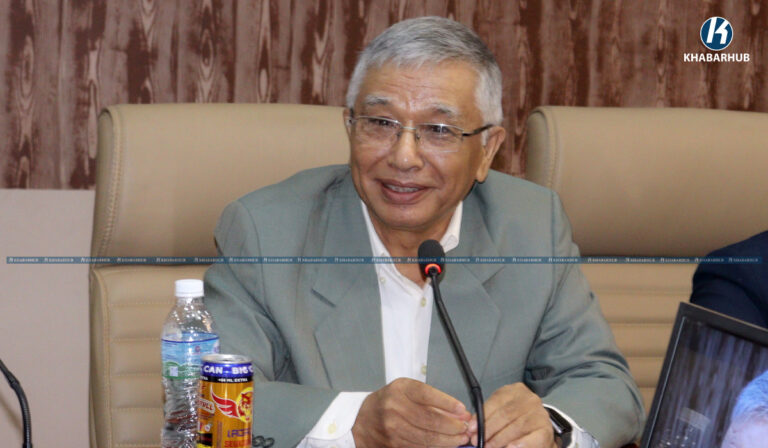
Shrestha said people injured and disfigured in the Bhotekoshi disaster should also be considered for assistance from compensation received through the Loss and Damage Fund. He emphasized the need to draw lessons from the disaster while planning and developing infrastructure in the future.
He also said climate justice should be pursued through international cooperation and goodwill rather than by creating divisions between neighboring countries and third countries.
Kanchanmani Dixit, executive director of the Institute for Social and Environmental Transition-Nepal, said young people should be actively involved in disaster risk reduction efforts.

Dixit stressed the need to strengthen research and evidence-based studies, noting that it is difficult to conclusively establish whether a particular disaster was caused by climate change. He said universities and think tanks should be strengthened to conduct such research.
Young environmentalist Sandhya Dhungana emphasized the need to increase investment in researchers and climate change-related studies.
Similarly, ISSR member Harimaya Dahal said greater emphasis should be placed on preventing disasters rather than focusing solely on managing their consequences after they occur.
The programme was facilitated by Prem Kandel, former secretary at the Ministry of Environment. Basanta Raj Adhikari, director of the Disaster Studies Center at the Institute of Engineering, presented a working paper at the event.
Addressing the closing session, Chairman of ISSR Shankardas Bairagi said Nepal should seek compensation from the Loss and Damage Fund for the Bhotekoshi disaster. He emphasized the need for a comprehensive assessment of the human, economic, infrastructural and cultural losses caused by the disaster and called for serious research to support such an assessment.
He also stressed the need to strengthen Nepal’s negotiating capacity to secure compensation from the fund, saying that fact-based research is essential to support the country’s case.
He emphasized the importance of international cooperation in disaster management, risk reduction and emergency response. He said disasters should be addressed from a human security perspective rather than through the lens of geopolitics.






Comment