




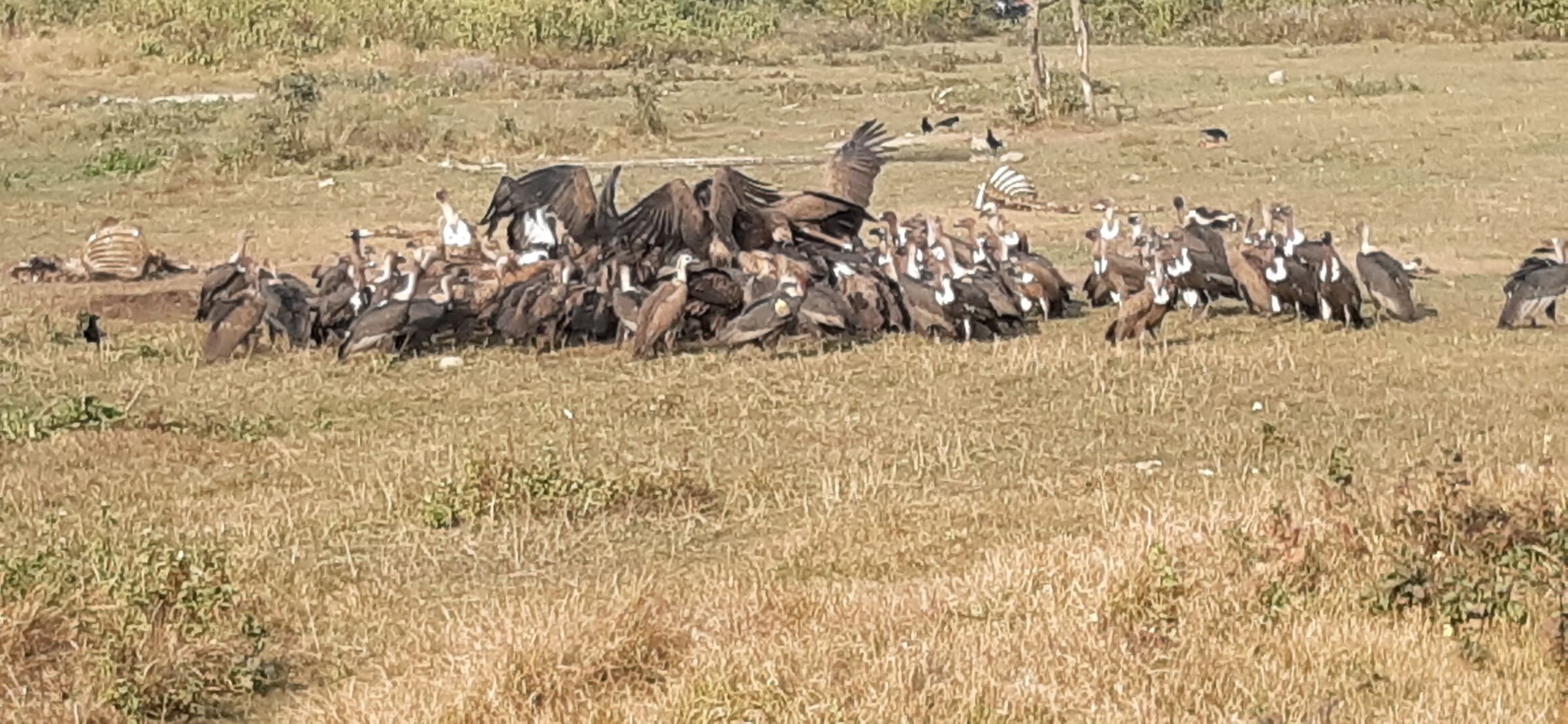
NAWALPUR: What sounds like a restaurant for people is, in fact, one of Nepal’s most successful wildlife conservation initiatives.
The Jatayu Restaurant, located inside the Namuna Buffer Zone Community Forest in Kawasoti Municipality, Nawalpur, has evolved from a safe feeding site for endangered vultures into a thriving centre for eco-tourism, research and environmental education.
The conservation facility was established in 2006 after vulture populations declined sharply due to the veterinary drug diclofenac, which proved fatal when vultures fed on the carcasses of treated livestock. Following scientific confirmation of the drug’s devastating impact, Nepal banned its veterinary use.
Eight vulture species recorded
According to Jatayu Restaurant coordinator DB Chaudhary, eight of the nine vulture species found in Nepal have been recorded at the site.
Four species are resident, while the remaining four migrate from the Himalayan region during winter.
“Since the restaurant was established, vulture numbers have increased significantly, and local communities have become much more aware of the importance of conserving these birds,” Chaudhary said.
He noted that residents, who once paid little attention to vulture conservation, are now actively participating in protection efforts after recognising the birds’ vital ecological role.
Safe habitat for endangered birds
The conservation area spans around 50 hectares within the Namuna Buffer Zone Community Forest, covering wards 7, 12 and 13 of Kawasoti Municipality.
According to staff member Yam Nepali, the site provides a safe habitat by planting tall trees such as silk cotton (Simal), maintaining clean water sources, supplying uncontaminated livestock carcasses as food, and monitoring and treating injured or weakened vultures.
Tourism and research destination
The Jatayu Restaurant has increasingly become a destination for birdwatchers, students and researchers from across Nepal and abroad.
Visitors can observe vultures feeding from a specially constructed C-shaped viewing hide (C-Block), allowing close-range observation without disturbing the birds.
The site has attracted growing interest from those studying wildlife conservation, biodiversity and ornithology, while also boosting nature-based tourism in the region.
Community-led conservation model
Officials say the initiative’s success is largely driven by strong community participation and long-term commitment to conservation.
Subash Adhikari, Information Officer at the Nawalpur Division Forest Office, said the project has become one of Nepal’s leading examples of integrating wildlife conservation, eco-tourism and scientific research.
He added that local ownership has not only contributed to the recovery of endangered vultures but has also played an important role in maintaining ecological balance.
The Division Forest Office continues to support conservation efforts through various programmes aimed at strengthening vulture protection in the area.



Comment