




When discussing monetary policy, it is equally important to examine the national budget, as the two are closely interconnected. Monetary policy alone cannot be effective if it is not aligned with fiscal policy.
The budget has a spillover effect on the economy. If economic activity slows in one area, monetary policy should help fill the gap by supporting liquidity and credit. Conversely, if the economy overheats, monetary policy should act to contain inflationary pressures. This is why the long-established principle is that the national budget should be announced before the monetary policy.
Finance Minister Dr. Swarnim Wagle has acknowledged that the budget for the upcoming fiscal year is around 25 percent larger than the revised estimate for the current fiscal year. When asked whether the budget was too large, he said he had faced pressure to present a budget of Rs 2.5 trillion but reduced it by Rs 400 billion. Whether the budget is ultimately too large or too small, however, depends on broader economic realities rather than its nominal size.
Successive finance ministers have argued that Nepal’s growing development aspirations require alternative sources of financing beyond traditional revenue and borrowing. That debate is not new. What is new in this year’s budget is the proposal to utilize a portion of the country’s foreign exchange reserves through a development fund.
Foreign exchange reserves are held by the central bank primarily to safeguard external stability and meet international payment obligations. They are normally invested in highly secure foreign government securities that guarantee both the principal and timely interest payments.
The proposal in the budget to invest part of these reserves in a domestic development fund raises serious concerns. If foreign exchange reserves are diverted for domestic investment, Nepal could face significant risks. Should the country fail to meet its external obligations or be unable to return foreign investors’ capital and profits when required, its international credibility and financial stability could be undermined.
Apart from this provision, much of the budget follows previous trends. It projects a fiscal deficit of around Rs 600 billion and plans to finance a large share through borrowing. Borrowing to refinance existing debt is not in itself problematic, but it does little to create additional fiscal space.
There also appears to be a disconnect between fiscal and monetary policy. While the government has targeted inflation of up to 6 percent, Nepal Rastra Bank aims to keep it within 5 percent. Similarly, the central bank has set a private sector credit growth target of 11 percent, slightly lower than the 12 percent target for the current fiscal year.
If the government is serious about achieving its ambitious revenue target, it needs to address delays in key revenue-generating sectors. Reforms related to real estate transactions remain pending despite strong market activity, while delays in power purchase agreements by the Nepal Electricity Authority continue to hold back investment in the energy sector.
Although the government argues that taxes have been eased to support the economy during the slowdown, tax burdens have increased in other areas. This could inject more money into the market but may also contribute to higher inflationary pressures.
There are many areas where the government should focus its energy to strengthen the economy. Instead, much of its attention appears to be directed toward targeting entrepreneurs and businesses in the name of good governance, rather than creating an environment that encourages investment and growth.
The monetary policy also appears to have remained in the shadow of the budget, with limited room to address broader structural issues independently.
The budget has proposed allowing Nepalis to invest abroad, an issue directly related to capital account convertibility. Nepal currently maintains convertibility only on the current account, while the capital account remains only partially liberalized. Foreign investors can repatriate profits and capital only with approval from Nepal Rastra Bank.
Any framework for allowing outward investment by Nepali citizens should ideally have been developed by the central bank. However, the latest monetary policy remains silent on this issue.
Even so, achieving the government’s target of 7 percent economic growth remains possible if the financial system succeeds in expanding private sector credit by the targeted 11 percent.
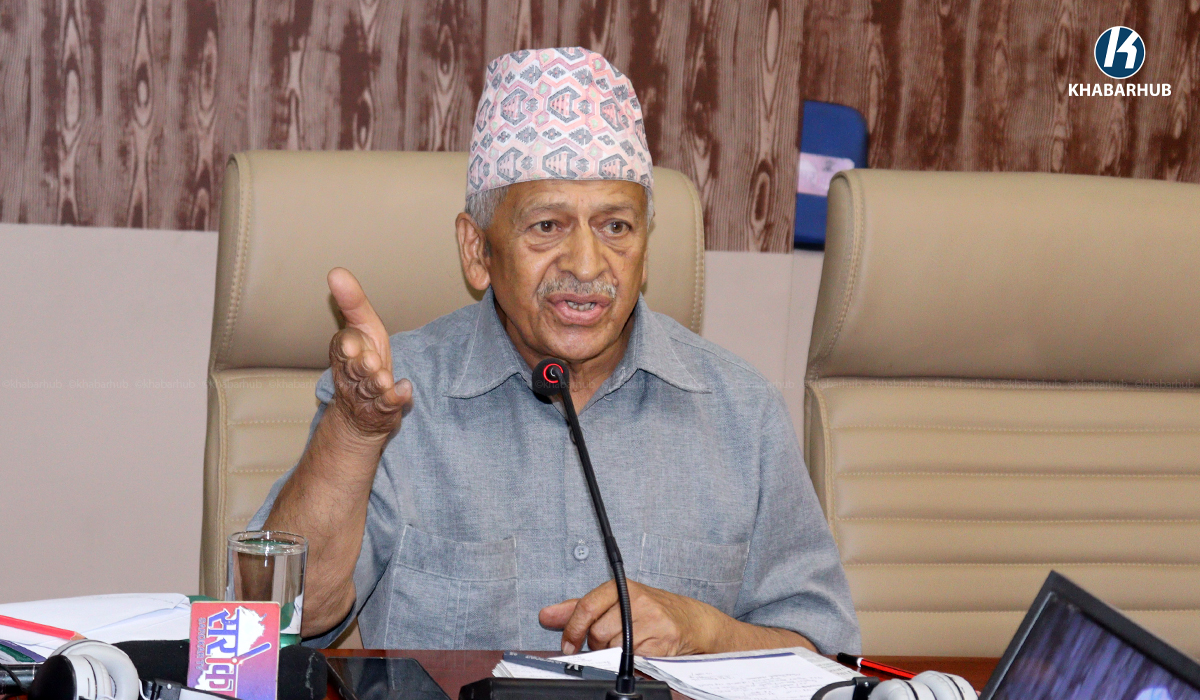
(Edited excerpt of remarks by former Nepal Rastra Bank Governor Dr. Dipendra Bahadur Chhetri at a discussion organized by the Institute for Strategic and Socio-Economic Research (ISSR) on Tuesday.)




Comment